Choosing between a lead-acid battery and a lithium motorcycle battery is an important decision for electric motorcycle manufacturers, battery distributors, replacement suppliers, and fleet operators. The battery affects much more than riding range. It also influences vehicle weight, acceleration, charging time, service life, maintenance needs, user experience, and long-term operating cost.
Lead-acid batteries are still used in many electric motorcycles because they are affordable, familiar, and easy to source. For entry-level models or short-distance riding, they can still be a practical option. However, as electric motorcycle users expect lighter vehicles, longer range, faster charging, and better long-term reliability, lithium batteries are becoming the preferred choice for many modern electric motorcycle projects.
That does not mean lithium is always the right answer for every vehicle. A good battery decision should be based on the full system, including voltage, capacity, BMS protection, charger compatibility, installation space, discharge current, safety requirements, and total cost of ownership.
This guide compares lead-acid and lithium batteries for electric motorcycles and explains what buyers should know before choosing or upgrading to a lithium motorcycle battery.
What Is a Lead-Acid Battery for Electric Motorcycles?
A lead-acid battery is a traditional rechargeable battery that has been used for many years in vehicles, backup power systems, and low-cost electric mobility applications.
For electric motorcycles, lead-acid batteries are often chosen because they are:
- Lower in upfront cost
- Widely available
- Familiar to users and repair shops
- Available in standard sizes
- Simple to replace in many markets
Lead-acid batteries can support basic electric motorcycle applications, especially where purchase price is the main concern. They may be suitable for low-speed models, short-distance riding, and entry-level markets.
However, lead-acid batteries also have clear limitations. They are usually heavier, have shorter usable cycle life, and may lose capacity faster under deep discharge or frequent daily use. For modern electric motorcycles, these limitations can affect range, handling, maintenance, and long-term value.
What Is a Lithium Motorcycle Battery?
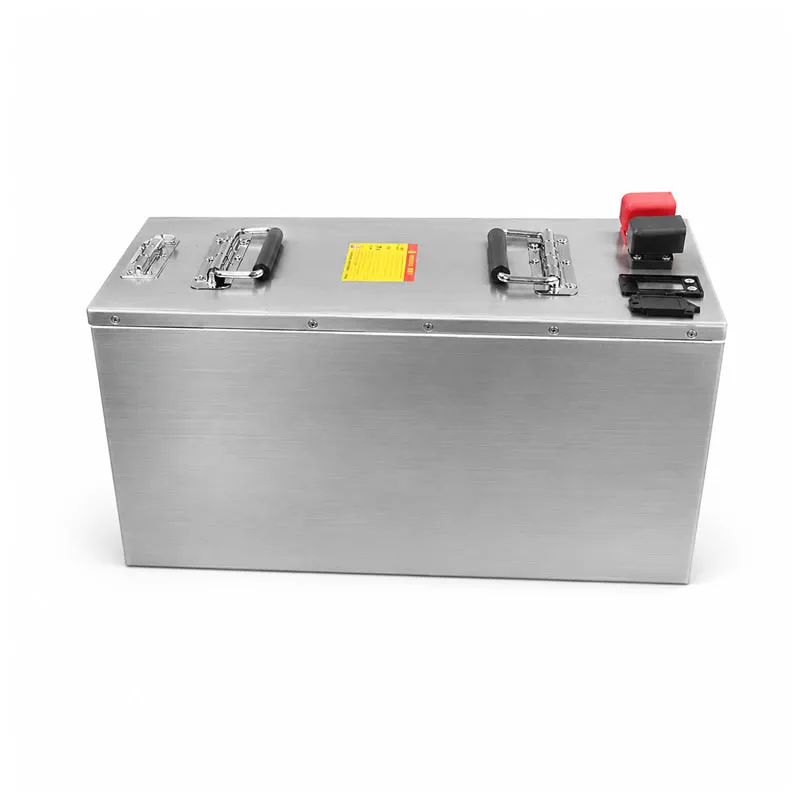
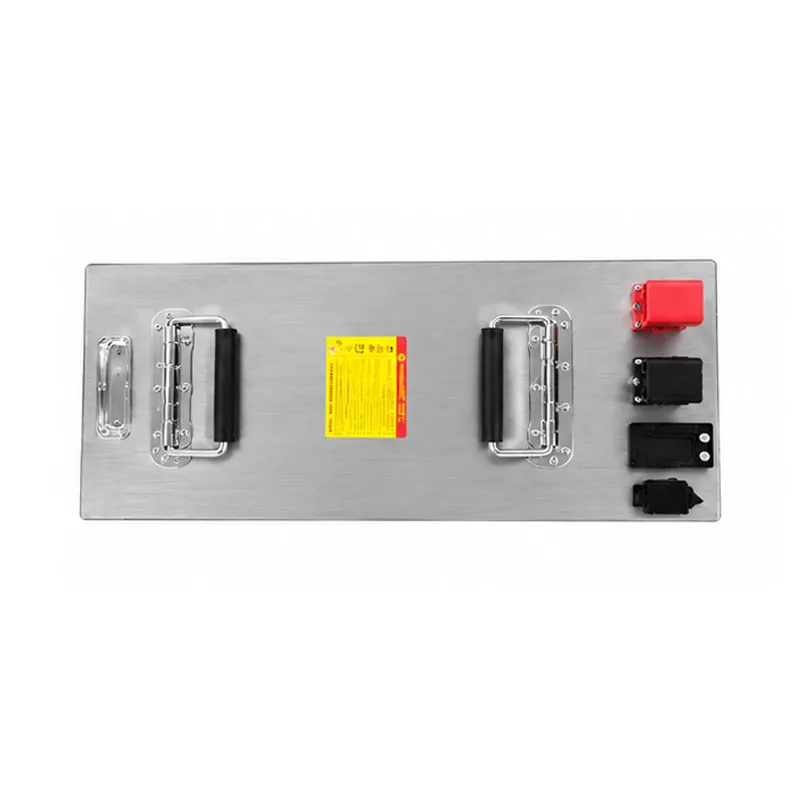
A lithium motorcycle battery is a rechargeable lithium battery pack designed for electric motorcycle power systems. Depending on the project requirements, it may use different lithium chemistries, such as lithium-ion or LiFePO4.
A typical lithium motorcycle battery pack includes:
- Lithium cells
- Battery Management System
- Protective casing
- Internal connection structure
- Output cables
- Connectors
- Charging interface
- Thermal and electrical protection design
Compared with lead-acid batteries, lithium batteries are usually lighter, more energy-dense, more efficient, and better suited for electric motorcycles that require stronger performance and longer service life.
For manufacturers, distributors, and replacement battery projects, lithium battery packs can also be customized by voltage, capacity, battery size, discharge current, BMS function, connector type, casing design, charger matching, waterproof structure, and branding requirements.
This flexibility makes lithium batteries useful for many electric motorcycle platforms, from daily commuting models to delivery motorcycles and higher-performance vehicles.
What Are the Main Differences Between Lead-Acid and Lithium Motorcycle Batteries?

The biggest differences between lead-acid and lithium batteries are weight, usable energy, cycle life, charging efficiency, maintenance, and long-term cost.
| Comparison Factor | Lead-Acid Battery | Lithium Motorcycle Battery |
|---|---|---|
| Upfront cost | Lower | Higher |
| Weight | Heavier | Lighter |
| Energy density | Lower | Higher |
| Cycle life | Usually shorter | Usually longer |
| Charging speed | Usually slower | Can support faster charging if designed properly |
| Maintenance | May require more attention | Lower maintenance |
| Usable capacity | More limited under deep discharge | Better usable energy depending on design |
| Performance consistency | Can decline faster under heavy use | More stable under proper use |
| Customization | More limited | More flexible |
| Long-term value | Better for low-use, low-cost applications | Better for many long-term and higher-use applications |
Lead-acid batteries may still make sense for low-cost and low-use applications. But for electric motorcycles that need better range, lower weight, stronger daily performance, and longer service life, lithium batteries usually provide better overall value.
Is a Lithium Motorcycle Battery Lighter Than Lead-Acid?
Yes. In most electric motorcycle applications, a lithium motorcycle battery is much lighter than a lead-acid battery with similar usable energy.
Battery weight matters because it affects the whole vehicle. A heavier battery can reduce riding range, slow acceleration, increase energy consumption, and make the motorcycle feel less responsive. It can also place more stress on the frame, tires, and suspension.

A lighter lithium battery can help improve:
- Vehicle efficiency
- Riding range
- Acceleration
- Handling
- Climbing performance
- Battery installation flexibility
- Removable battery convenience
For city commuting and delivery motorcycles, lower weight can make daily use easier and more efficient. For removable battery designs, weight is even more important because users may need to carry the battery for charging or replacement.
This is one of the main reasons many electric motorcycle manufacturers and battery replacement projects are moving from lead-acid to lithium.
Does a Lithium Motorcycle Battery Provide Longer Range?
A lithium motorcycle battery can often support better real-world range than a lead-acid battery, especially when weight, usable energy, and discharge efficiency are considered.
However, range does not depend on battery chemistry alone. It depends mainly on total battery energy, usually measured in watt-hours:
Watt-hours = Voltage × Amp-hours
For example:
- 60V 30Ah = 1,800Wh
- 72V 30Ah = 2,160Wh
- 72V 40Ah = 2,880Wh
A lithium battery with higher usable energy and lower weight can help improve riding distance. But real range also depends on motor power, controller efficiency, vehicle weight, rider weight, cargo load, riding speed, road conditions, tire condition, temperature, stop-and-go frequency, and battery aging.
Lead-acid batteries may experience more noticeable voltage sag and capacity loss under heavy load or deep discharge. Over time, this can reduce real-world range and make the vehicle feel weaker.
When comparing lead-acid and lithium batteries, buyers should not only compare Ah capacity. Watt-hours, usable capacity, discharge performance, and weight are more useful for judging real riding range.
Which Battery Has Better Cycle Life?
Cycle life is one of the strongest advantages of lithium batteries. A well-designed lithium motorcycle battery usually supports more charge-discharge cycles than a typical lead-acid battery.
Cycle life matters because electric motorcycles are charged and discharged repeatedly. Every ride and recharge affects the battery. A battery with longer cycle life can help reduce replacement frequency and improve long-term value.
Lead-acid batteries may lose capacity faster when they are deeply discharged or used frequently. This can become a problem for daily commuting, delivery motorcycles, rental vehicles, and shared mobility projects.
Lithium batteries, especially LiFePO4 battery packs, are often selected for applications where long cycle life and stable daily use are important.
However, cycle life still depends on more than battery chemistry. It is also affected by cell quality, depth of discharge, charging current, operating temperature, BMS protection, discharge rate, and supplier quality control.
Before placing large orders, buyers should ask how the cycle life was tested and under what conditions, instead of only looking at a cycle number in the specification sheet.
Which Battery Charges Faster?
Lithium batteries can often support faster charging than lead-acid batteries, but fast charging must be designed properly.

A lithium motorcycle battery should be matched with the correct charger, BMS, wiring, connectors, and thermal design. If the battery pack is not designed for high charging current, fast charging may shorten battery life or create safety risks.
Lead-acid batteries usually require slower charging and are less suitable for high-frequency daily use. For delivery riders or fleet operators, long charging time can reduce vehicle availability and affect daily work efficiency.
Lithium batteries can be a better fit for applications that need:
- Shorter charging time
- Higher daily utilization
- Opportunity charging
- Fleet charging management
- Better charging efficiency
For serious electric motorcycle projects, the battery and charger should be treated as one system. The charger must match the lithium battery voltage, chemistry, current limit, connector, and BMS requirements.
Which Battery Requires Less Maintenance?
A lithium motorcycle battery usually requires less maintenance than a lead-acid battery.
Lead-acid batteries may require more attention depending on the type and application. Some lead-acid batteries need careful charging management, ventilation, regular inspection, or maintenance to avoid early failure.
Lithium batteries do not require the same type of routine maintenance. A well-designed lithium battery pack with a reliable BMS can manage protection functions such as overcharge, over-discharge, overcurrent, short circuit, and temperature protection.
Lower maintenance can help reduce:
- User complaints
- Service workload
- Replacement frequency
- Vehicle downtime
- After-sales cost
- Training requirements
This is one reason lithium batteries are becoming more attractive for delivery vehicles, rental motorcycles, and electric motorcycle brands that want to improve long-term customer satisfaction.
Is Lead-Acid Cheaper Than Lithium?
Lead-acid batteries usually have a lower upfront cost. This is their main advantage.
For price-sensitive markets or entry-level electric motorcycle models, lead-acid can still be attractive because the first purchase cost is lower.
However, the lowest upfront cost is not always the lowest long-term cost. A battery that needs more frequent replacement, delivers shorter range, adds more weight, or causes more maintenance problems may cost more over time.
A lithium motorcycle battery usually costs more at the beginning, but it may provide better long-term value through:
- Longer service life
- Lower replacement frequency
- Lighter vehicle weight
- Better usable energy
- Lower maintenance
- Better customer experience
- Reduced after-sales pressure
- Stronger product positioning
For commercial use, the better comparison is not only “lead-acid price vs lithium price.” The more useful comparison is total cost of ownership.
How Does Battery Weight Affect Electric Motorcycle Performance?
Battery weight directly affects electric motorcycle performance. A heavier battery increases the load that the motor must move.
Extra weight can lead to:
- Shorter range
- Slower acceleration
- Higher energy consumption
- Reduced climbing performance
- More stress on tires and suspension
- Less flexible vehicle design
Lead-acid batteries are usually much heavier than lithium batteries. For small and medium electric motorcycles, the difference can be very noticeable.
A lithium motorcycle battery can reduce weight and make the vehicle more efficient. This is useful for city commuting, delivery use, and performance-oriented models.
For removable battery designs, lower weight is even more valuable because users may need to lift, carry, charge, or swap the battery.
How Does Battery Safety Compare?
Both lead-acid and lithium batteries require proper design and safe use.
Lead-acid batteries are mature and widely used, but they still need correct charging, handling, and ventilation depending on the battery type. Poor use or overcharging can cause problems.
Lithium batteries need reliable BMS protection, correct charger matching, quality cells, and safe pack structure. A lithium motorcycle battery should include protection against:
- Overcharge
- Over-discharge
- Overcurrent
- Short circuit
- Overtemperature
- Low-temperature charging when needed
- Cell imbalance
- Abnormal voltage
Lithium batteries are not automatically safe just because they are modern. Battery safety depends on engineering quality.
A high-quality lithium battery with a strong BMS, reliable cells, proper casing, and matched charger can be safe and stable. A low-quality lithium battery with weak protection can create real risk.
This is why buyers should evaluate supplier capability, testing process, BMS design, charger compatibility, and pack construction before making a decision.
Can You Replace a Lead-Acid Battery With a Lithium Motorcycle Battery?
In many cases, a lead-acid battery can be replaced with a lithium motorcycle battery. However, replacement should not be done only by matching voltage.

Before upgrading, check:
- Battery voltage
- Controller compatibility
- Motor compatibility
- Charger compatibility
- Battery size
- Connector type
- Cable layout
- Discharge current
- BMS settings
- Charging current
- Mounting method
- Waterproof requirements
- Communication needs
For example, a 60V lead-acid system should not automatically use any 60V lithium battery. The lithium battery must match the controller voltage range, charger profile, BMS current rating, and installation space.
A wrong replacement can cause charging failure, weak performance, electrical damage, or safety risks.
For distributors and replacement projects, it is better to work with a supplier that understands lead-acid to lithium conversion and can provide matched battery and charger solutions.
What Should Buyers Check Before Switching to Lithium?
Before switching from lead-acid to lithium, buyers should evaluate the whole electric motorcycle system.
Important questions include:
- What is the original battery voltage?
- What is the original battery capacity?
- What is the controller voltage range?
- What is the motor power?
- What discharge current is required?
- Can the existing charger be used?
- Does the battery compartment fit the lithium pack?
- What connector is required?
- Does the battery need communication?
- Is waterproof protection required?
- What cycle life is expected?
- What testing does the supplier perform?
A successful lithium upgrade should improve real-world performance, not just reduce weight or increase capacity on paper.
For delivery or fleet use, the battery may need higher cycle life, stronger BMS protection, better thermal management, and a matched charger.
Which Battery Is Better for Delivery Electric Motorcycles?
For delivery electric motorcycles, lithium batteries are usually a better choice than lead-acid batteries.
Delivery vehicles are used more intensively than personal commuting vehicles. They often carry cargo, run for long hours, stop and start frequently, and need dependable daily charging.
A lithium motorcycle battery can support:
- Longer service life
- Better usable range
- Lower weight
- Faster charging potential
- More stable discharge
- Lower maintenance
- Reduced downtime
- Better daily operation efficiency
Lead-acid batteries may still work for low-cost delivery models, but frequent cycling and heavy use can shorten their lifespan and increase replacement needs.
For delivery fleets, lithium batteries may reduce total cost over time, even if the initial purchase cost is higher.
Which Battery Is Better for Light Commuting?
For light commuting, both lead-acid and lithium batteries can work, depending on the target market and vehicle positioning.
Lead-acid may be acceptable for low-speed, short-distance, price-sensitive models. If the user rides only short distances and initial cost is the main priority, lead-acid can still be used.
Lithium is better when the user expects:
- Longer range
- Lighter weight
- Better acceleration
- Lower maintenance
- Longer battery life
- Easier charging
- Better long-term value
For manufacturers and distributors, lithium can help improve product competitiveness and user satisfaction. But in extremely price-sensitive markets, the product strategy may still require a lead-acid option.
Which Battery Is Better for High-Performance Electric Motorcycles?
For high-performance electric motorcycles, lithium batteries are usually the better choice.
High-performance vehicles require stronger power output, better discharge capability, lower weight, and more stable voltage under load. Lead-acid batteries are usually not ideal for these requirements because of weight and performance limitations.
A lithium motorcycle battery can be designed with:
- Higher voltage
- Higher discharge current
- Stronger BMS
- Better thermal management
- More compact structure
- Better power-to-weight ratio
However, not every lithium battery is suitable for high-performance use. Buyers need high-quality cells, proper BMS rating, strong connectors, reliable cables, and a well-designed pack structure.
For high-power electric motorcycles, battery engineering is just as important as battery chemistry.
What Are Common Mistakes When Comparing Lead-Acid and Lithium Batteries?
Buyers often make mistakes when comparing lead-acid and lithium batteries.
Common mistakes include:
- Comparing only Ah capacity
- Ignoring watt-hours
- Ignoring usable capacity
- Ignoring battery weight
- Using the wrong charger
- Ignoring BMS protection
- Ignoring discharge current
- Assuming any lithium battery can replace lead-acid
- Choosing only by low price
- Not checking battery dimensions
- Ignoring waterproof and vibration requirements
- Not considering real riding conditions
For example, two batteries with the same Ah rating may not provide the same energy if their voltage is different. Also, lead-acid and lithium batteries may behave differently under load and deep discharge.
A fair comparison should include total energy, weight, cycle life, maintenance, charging, safety protection, and long-term cost.
How Should Buyers Choose Between Lead-Acid and Lithium?
The right choice depends on vehicle positioning, target users, application scenario, and long-term value.
Lead-acid may be suitable when:
- The market is highly price-sensitive
- The vehicle is low-speed
- The riding distance is short
- Battery weight is not a major concern
- Initial replacement cost matters most
- The product is positioned as entry-level
Lithium may be suitable when:
- Longer range is needed
- Lower weight is important
- Charging efficiency matters
- The vehicle is used daily
- The application involves delivery or fleet use
- Lower maintenance is expected
- Long-term value is important
- The product needs stronger market competitiveness
For many modern electric motorcycle projects, lithium batteries provide better overall value. But the final choice should match the vehicle system and market strategy.
How Can Custom Lithium Battery Solutions Support Electric Motorcycle Projects?
Custom lithium battery solutions can help match different electric motorcycle platforms more effectively.
Customization can include:
- Voltage
- Capacity
- Battery dimensions
- Cell type
- BMS function
- Continuous discharge current
- Peak discharge current
- Connector type
- Cable length
- Charger matching
- Communication protocol
- Waterproof design
- Casing structure
- Branding and labeling
For OEM and ODM projects, custom battery development can help match the motor, controller, charger, vehicle frame, and market requirements.
For distributors, custom lithium battery packs can support lead-acid replacement projects and different local market needs.
For fleet operators, smart BMS and matched charging solutions can help improve battery management and reduce downtime.
A lithium motorcycle battery should not be treated as a generic product. The best battery is the one that matches the real application.
Which Is Better: Lead-Acid or Lithium Battery for Electric Motorcycles?
Lead-acid batteries still have value in low-cost and short-distance electric motorcycle applications. They are affordable and familiar, which makes them suitable for some entry-level markets.
However, for most electric motorcycle projects that require better range, lower weight, longer service life, lower maintenance, and stronger long-term value, lithium batteries are often the better choice.
A lithium motorcycle battery can help improve vehicle performance, reduce replacement frequency, and create a better user experience. It can also reduce after-sales pressure and improve product competitiveness for manufacturers, distributors, and fleet operators.
The key is to choose the right lithium battery solution. Voltage, capacity, discharge current, BMS protection, charger compatibility, size, casing, and supplier quality all matter.
Febatt provides customized lithium motorcycle battery solutions for electric motorcycle applications, including voltage, capacity, BMS, casing, connector, charger, and communication customization. For OEM, ODM, distributor, and fleet projects, a properly matched battery solution can help support better performance, safer operation, and long-term value.
FAQ About Lead-Acid vs Lithium Motorcycle Battery
Is a lithium motorcycle battery better than lead-acid?
In many electric motorcycle applications, a lithium motorcycle battery is better because it is lighter, longer-lasting, more efficient, and requires less maintenance. However, lead-acid may still be used for low-cost and short-distance applications.
Can I replace a lead-acid battery with a lithium motorcycle battery?
Yes, but the replacement must be matched correctly. Buyers should check voltage, charger compatibility, controller compatibility, battery size, connector type, discharge current, and BMS protection before replacing lead-acid with lithium.
Does a lithium motorcycle battery last longer than lead-acid?
A high-quality lithium motorcycle battery usually has longer cycle life than a lead-acid battery. Actual life depends on battery chemistry, cell quality, BMS, charging habits, temperature, and usage conditions.
Is a lithium motorcycle battery lighter than lead-acid?
Yes. Lithium batteries are usually much lighter than lead-acid batteries with similar usable energy. Lower weight can improve range, handling, acceleration, and vehicle efficiency.
Is lead-acid still good for electric motorcycles?
Lead-acid can still be used for low-speed, short-distance, and price-sensitive electric motorcycles. However, it may not be ideal for users who need longer range, lighter weight, fast charging, or lower long-term maintenance.
Do lithium motorcycle batteries need a special charger?
Yes. A lithium motorcycle battery should use a charger designed for its voltage, chemistry, charging current, connector, and BMS requirements. A lead-acid charger may not be suitable.
What should buyers check before choosing lithium batteries?
Buyers should check voltage, capacity, cell quality, BMS functions, discharge current, charger compatibility, battery size, connector type, waterproof design, vibration resistance, testing process, and supplier customization ability.