Golf carts are no longer used only on golf courses. Today, they are widely used in resorts, campuses, gated communities, airports, parks, factories, warehouses, and commercial fleet operations. As usage scenarios become more demanding, buyers need batteries that can deliver stable power, longer runtime, faster charging, lower maintenance, and better long-term value.
For many B2B buyers, an LFP Golf Cart Battery has become a practical upgrade from traditional lead-acid systems. LFP, also known as lithium iron phosphate, offers strong safety, long cycle life, stable discharge performance, and lower maintenance requirements. These advantages are especially valuable for fleet operators and businesses that rely on golf carts every day.
Choosing the right LFP Golf Cart Battery is not only about voltage or capacity. Buyers also need to evaluate discharge current, BMS protection, battery weight, charging compatibility, casing design, certifications, and supplier capability. This guide explains the key features to consider before purchasing or upgrading golf cart battery systems.
What Is an LFP Golf Cart Battery?
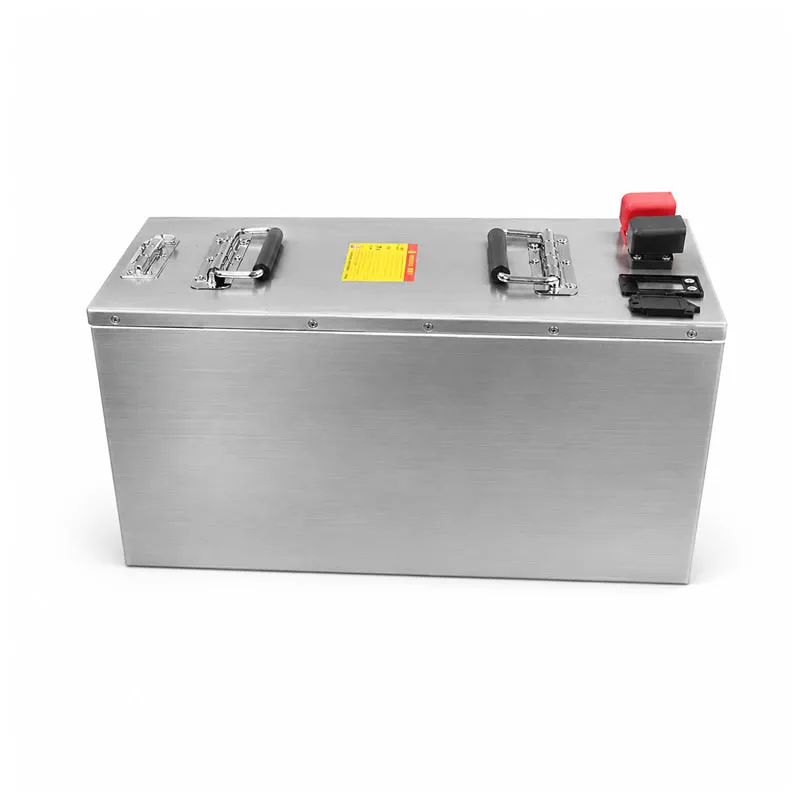
An LFP Golf Cart Battery is a lithium iron phosphate battery pack designed to power golf carts and similar low-speed electric vehicles. It stores electrical energy and supplies power to the motor, controller, lights, and other onboard electrical systems.
Compared with lead-acid batteries, LFP batteries provide a more stable voltage curve. This means the golf cart can maintain more consistent power during use instead of becoming noticeably weaker as the battery discharges. For commercial operations, this can improve the user experience and reduce performance complaints.
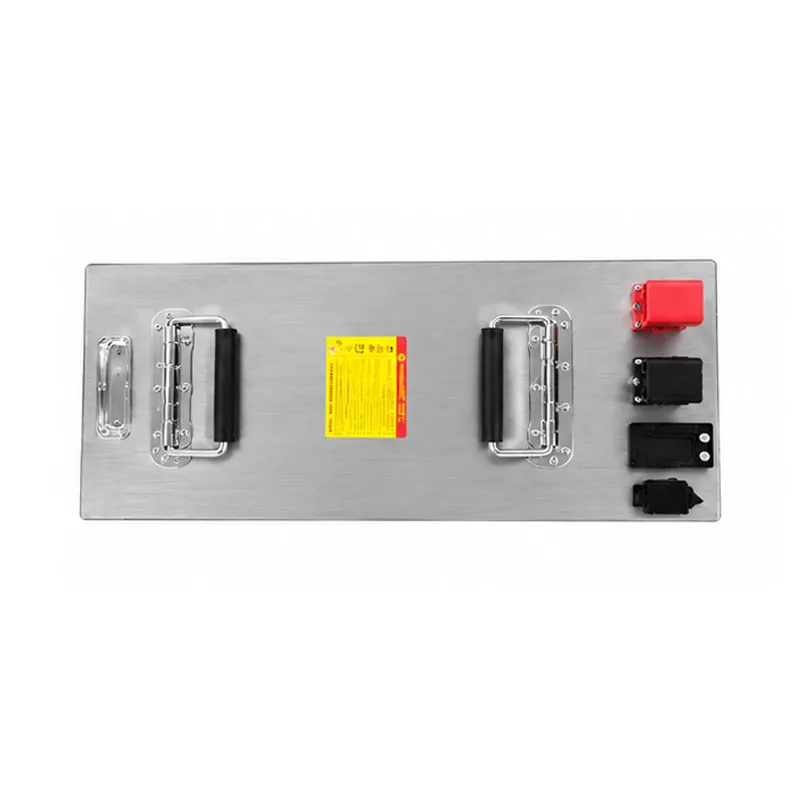
A complete LFP Golf Cart Battery usually includes battery cells, a Battery Management System, internal wiring, connectors, insulation materials, casing, and protection components. The BMS is especially important because it helps monitor voltage, current, temperature, and cell balance.
For buyers comparing different golf cart power solutions, this golf cart battery category can be used as a product reference.
Why Are LFP Batteries Becoming the Preferred Choice?
LFP batteries are becoming popular because they solve several common problems found in lead-acid golf cart batteries. Lead-acid batteries are heavy, require regular maintenance, charge more slowly, and usually have a shorter cycle life. For businesses that operate carts frequently, these problems can increase labor cost and downtime.
An LFP Golf Cart Battery can offer several practical advantages:
- Longer cycle life
- Lower maintenance requirements
- Faster charging capability
- More stable voltage output
- Lighter weight
- Better usable capacity
- Stronger safety performance
- Lower long-term replacement cost
For commercial fleets, these benefits directly affect total cost of ownership. A battery with a higher upfront price may still be more cost-effective if it lasts longer, charges faster, and reduces maintenance work.
This is why many fleet operators are considering lithium upgrades. If you are evaluating whether a lithium conversion is worthwhile, this guide on lithium golf cart battery conversion can provide additional context.
LFP Golf Cart Battery vs Lead-Acid Battery: What Is the Difference?

Before choosing an LFP Golf Cart Battery, buyers should understand how it compares with lead-acid batteries.
| Comparison Item | LFP Golf Cart Battery | Lead-Acid Golf Cart Battery |
|---|---|---|
| Cycle Life | Usually much longer | Shorter under deep-cycle use |
| Maintenance | Much lower maintenance | Requires watering and regular checks |
| Weight | Lighter | Heavier |
| Charging Speed | Faster charging possible | Usually slower |
| Usable Capacity | Higher usable energy | Less usable capacity under deep discharge |
| Voltage Stability | More stable output | Voltage drops more noticeably |
| Upfront Cost | Higher | Lower |
| Long-Term Cost | Often lower for frequent use | Higher replacement and maintenance cost |
| Safety | Strong thermal stability | Mature but maintenance-sensitive |
For light occasional use, lead-acid may still be selected because of its lower upfront cost. But for commercial operations, resorts, campuses, and fleet users, an LFP Golf Cart Battery is often the better long-term choice because it reduces maintenance pressure and replacement frequency.
What Discharge Performance Should You Look For?

Voltage selection should match the golf cart’s motor, controller, charger, workload, and terrain. Common voltage platforms include 36V, 48V, and 72V.
| Voltage Platform | Suitable Use | Main Advantage | Buyer Consideration |
|---|---|---|---|
| 36V | Light-duty carts, flat terrain, basic transport | Simple and cost-effective | Limited power for heavier loads or slopes |
| 48V | Most standard golf carts and commercial use | Balanced power, range, and cost | Usually the most practical fleet option |
| 72V | Heavy-duty carts, hilly areas, high-performance use | Stronger acceleration and climbing ability | Requires correct motor and controller matching |
A 36V LFP Golf Cart Battery may be suitable for basic carts used on flat ground. A 48V system is often the most balanced choice for many golf carts because it supports good power delivery without unnecessary system complexity. A 72V system may be better for carts that carry heavier loads, operate on hilly routes, or require stronger acceleration.
However, higher voltage is not always automatically better. The battery voltage must match the cart’s electrical system. Using the wrong voltage can cause controller issues, poor efficiency, or safety risks. For buyers considering 36V systems, this 36V golf cart battery guide can help with comparison.
What Capacity Is Suitable for a Golf Cart Battery?
Battery capacity affects how long the cart can operate before recharging. Capacity is usually measured in ampere-hours, but buyers should also compare watt-hours for a clearer energy estimate.
The basic formula is:
Voltage × Amp-hours = Watt-hours
For example:
36V × 100Ah = 3,600Wh
48V × 100Ah = 4,800Wh
48V × 150Ah = 7,200Wh
72V × 100Ah = 7,200Wh
A higher Wh value usually supports longer runtime. However, actual range depends on many factors, including cart weight, passenger load, terrain, driving speed, tire condition, motor efficiency, temperature, and road surface.
For commercial fleets, buyers should not choose an LFP Golf Cart Battery only by advertised mileage. Instead, define the actual working conditions first. For example, a resort cart carrying passengers all day needs a different battery configuration than a golf course cart used for shorter trips.
Before selecting capacity, confirm:
- Average daily mileage
- Number of passengers or cargo load
- Terrain type
- Required operating hours
- Charging window
- Motor power
- Space available for the battery pack
- Fleet replacement schedule
A correctly sized LFP Golf Cart Battery should support the daily duty cycle without excessive weight, unnecessary cost, or frequent deep discharge.
What Discharge Performance Should You Look For?
Discharge performance determines how well a battery can deliver power during acceleration, hill climbing, and heavy-load operation. This is especially important for carts used in resorts, campuses, industrial sites, and hilly areas.
When evaluating an LFP Golf Cart Battery, buyers should check both continuous discharge current and peak discharge current.
Continuous discharge current shows how much current the battery can provide steadily during normal operation. Peak discharge current shows how much current the battery can provide for a short time, such as when starting, accelerating, or climbing.
Both numbers matter, but continuous discharge performance is more important for long-term reliability. A battery that only has a high peak current but weak continuous output may perform well for a few seconds and then suffer from voltage sag under real working conditions.
Good discharge performance helps provide:
- Smoother acceleration
- Better hill-climbing ability
- More stable torque
- Reduced voltage drop
- Better driving consistency
- Lower stress on the power system
For B2B buyers, the battery supplier should be able to match discharge current with the cart’s motor and controller requirements.
What Safety Features Should an LFP Golf Cart Battery Have?
Safety is one of the biggest reasons buyers choose LFP chemistry. LFP is known for strong thermal stability, but the battery pack still needs proper system-level protection.

A high-quality LFP Golf Cart Battery should include a reliable BMS with key protection functions, such as:
- Overcharge protection
- Over-discharge protection
- Overcurrent protection
- Short-circuit protection
- Temperature monitoring
- Cell balancing
- Charging protection
- Discharging protection
- Low-temperature charging protection
- SOC monitoring
- Optional communication functions
Cell balancing is important because it helps keep the cells operating consistently. If cells become unbalanced, the battery may lose usable capacity faster or trigger protection earlier than expected.
Low-temperature protection is also important in colder markets. LFP batteries can usually discharge in cold conditions, but charging at very low temperatures requires careful control. A battery with low-temperature charging protection can help reduce the risk of battery damage.
The casing design also matters. Golf carts may operate outdoors and face vibration, dust, moisture, grass, mud, or road splash. A durable enclosure, secure mounting, and reliable connectors help protect the LFP Golf Cart Battery in real operating environments.
How Does Battery Weight Affect Golf Cart Performance?
Battery weight has a direct impact on golf cart performance. Lead-acid batteries are heavy, and this extra weight can affect acceleration, braking, energy efficiency, and suspension wear. One of the major advantages of an LFP Golf Cart Battery is weight reduction.
A lighter battery can help improve:
- Acceleration response
- Energy efficiency
- Driving range
- Braking performance
- Vehicle handling
- Payload flexibility
- Suspension and tire wear
For fleet operators, weight reduction can also improve the user experience. A cart that feels lighter and more responsive is easier to drive, especially in resorts, campuses, and commercial facilities where carts are used continuously.
However, buyers should not only choose the lightest battery. The battery still needs enough capacity, structural strength, safety protection, and discharge capability. The right LFP Golf Cart Battery should balance weight, runtime, safety, and performance.
How Long Does an LFP Golf Cart Battery Last?
Battery life depends on cell quality, BMS design, charging habits, depth of discharge, temperature, usage frequency, and operating conditions. In general, LFP batteries usually offer much longer cycle life than lead-acid batteries.
A quality LFP Golf Cart Battery can often support thousands of charge-discharge cycles under proper use. This makes it suitable for commercial applications where carts are charged and discharged frequently.
However, buyers should be careful with cycle life claims. A supplier may advertise a high cycle number, but the test conditions matter. Ask about:
- Depth of discharge used in testing
- Charging rate
- Discharge rate
- Test temperature
- Remaining capacity standard
- Cell grade
- BMS protection settings
For more general battery lifespan information, this article on how long golf cart batteries last may help buyers compare lifespan expectations across different battery types.
How Fast Should an LFP Golf Cart Battery Charge?
Charging speed affects cart availability, especially for fleets. A faster charging battery can reduce downtime and help carts return to service more quickly. This is useful for resorts, campuses, rental fleets, and commercial operations.
However, fast charging should be managed carefully. Charging too aggressively without proper battery design, BMS protection, and thermal control can reduce battery life.
When evaluating charging performance, buyers should confirm:
- Charger voltage
- Charging current
- Charging time
- Charging connector type
- BMS charging protection
- Low-temperature charging control
- Compatibility with existing charging equipment
- Whether fast charging affects warranty terms
A good LFP Golf Cart Battery should support the charging strategy required by the business model without sacrificing safety or long-term battery health.
How to Evaluate an LFP Golf Cart Battery Supplier
Supplier selection is just as important as battery selection. A strong supplier can help buyers reduce technical risk, improve product consistency, and solve after-sales issues faster.
When choosing an LFP Golf Cart Battery supplier, evaluate the following areas:
| Evaluation Area | What to Check | Why It Matters |
|---|---|---|
| Manufacturing Capability | Production line, assembly process, testing equipment | Ensures stable batch quality |
| Cell Quality | Cell grade, sourcing stability, traceability | Affects cycle life and consistency |
| BMS Design | Protection functions, current rating, communication | Affects safety and system reliability |
| Customization | Voltage, capacity, casing, connectors, branding | Supports OEM and fleet needs |
| Testing Process | Capacity test, aging test, insulation test, charge-discharge test | Reduces failure risk |
| Documentation | UN38.3, MSDS, CE, RoHS, IEC-related reports | Supports shipping and market access |
A reliable supplier should be able to explain how the battery is built, tested, protected, and supported. If a supplier cannot provide technical details, consistent documentation, or clear warranty terms, buyers should be cautious.
For B2B buyers, the cheapest LFP Golf Cart Battery is not always the best choice. The better choice is the battery that delivers stable performance, safe operation, predictable service life, and reliable supplier support.
FAQ About LFP Golf Cart Battery
1.How Long Does an LFP Golf Cart Battery Last?
An LFP Golf Cart Battery can usually last much longer than a lead-acid battery when used and charged properly. Actual lifespan depends on cell quality, charging habits, depth of discharge, temperature, and daily operating conditions. B2B buyers should check cycle life data and test conditions before comparing products.
2.Is an LFP battery better than a lead-acid battery for golf carts?
For most commercial and frequent-use golf carts, LFP is usually better than lead-acid because it is lighter, charges faster, lasts longer, and requires much less maintenance. Lead-acid may still be used for low-cost applications, but it often creates higher maintenance and replacement costs over time.
3.How many miles can a golf cart travel on a single charge?
Range depends on battery capacity, voltage, cart weight, passenger load, terrain, driving speed, motor efficiency, and temperature. A standard cart may travel different distances under different operating conditions, so buyers should ask for test data based on realistic use cases.
4.Can LFP golf cart batteries operate in cold weather?
Yes, an LFP Golf Cart Battery can discharge in cold weather, but charging at very low temperatures needs protection. Buyers in cold regions should choose batteries with low-temperature charging protection or heating options when required.
5.What capacity battery is suitable for commercial golf cart fleets?
Many commercial golf cart fleets use 48V lithium systems with capacity selected according to daily mileage, load, terrain, and charging schedule. For heavier use, higher capacity may be needed. The best solution should be based on actual fleet operation rather than a fixed capacity number.
6.Can an LFP Golf Cart Battery replace a lead-acid battery directly?
In many cases, yes, but the replacement must be checked carefully. Buyers should confirm voltage compatibility, battery size, charger compatibility, controller requirements, mounting method, and connector design before replacing lead-acid with LFP.
Conclusion
Choosing an LFP Golf Cart Battery is a system-level decision. Buyers should evaluate voltage, capacity, discharge current, BMS protection, charging compatibility, casing design, battery weight, certifications, and supplier capability.
For golf courses, resorts, campuses, airports, industrial sites, and commercial fleets, the right battery can reduce maintenance work, improve cart performance, extend service life, and lower long-term operating costs.
A high-quality LFP Golf Cart Battery is not just a replacement for lead-acid. It is a practical upgrade for businesses that need stable runtime, safer operation, lower downtime, and better fleet efficiency.