Low-temperature effects on motorcycle lithium batteries are not limited to “less range in winter.” For delivery fleets, shared-mobility operators, OEM programs, and distributors, cold conditions can change usable energy, voltage response under load, charge acceptance, and the way the battery management system protects the pack. These changes can reduce route completion rates or create charging bottlenecks even when the nominal battery specification has not changed.
A commercial battery specification should define how the complete motorcycle battery pack behaves across the project’s actual operating temperature range. Cell chemistry matters, but so do current demand, pack resistance, thermal design, enclosure sealing, BMS thresholds, charger coordination, and the fleet’s duty cycle. Procurement teams should verify that the proposed battery can meet the vehicle’s power, range, charging, and safety requirements under the coldest conditions the fleet is expected to encounter.
What Changes First When an Electric Motorcycle Battery Gets Cold?
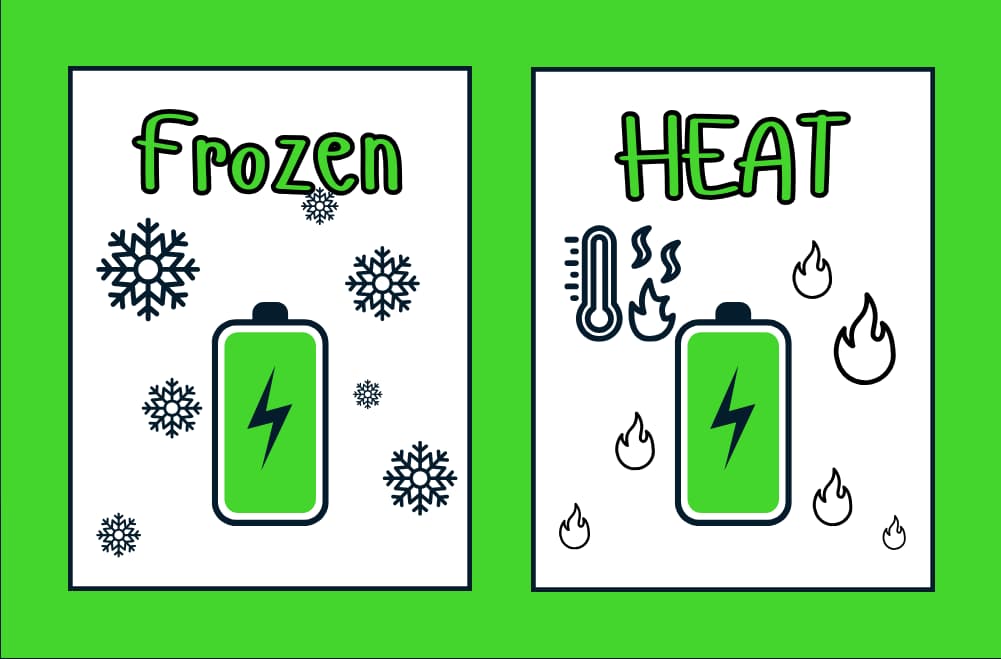
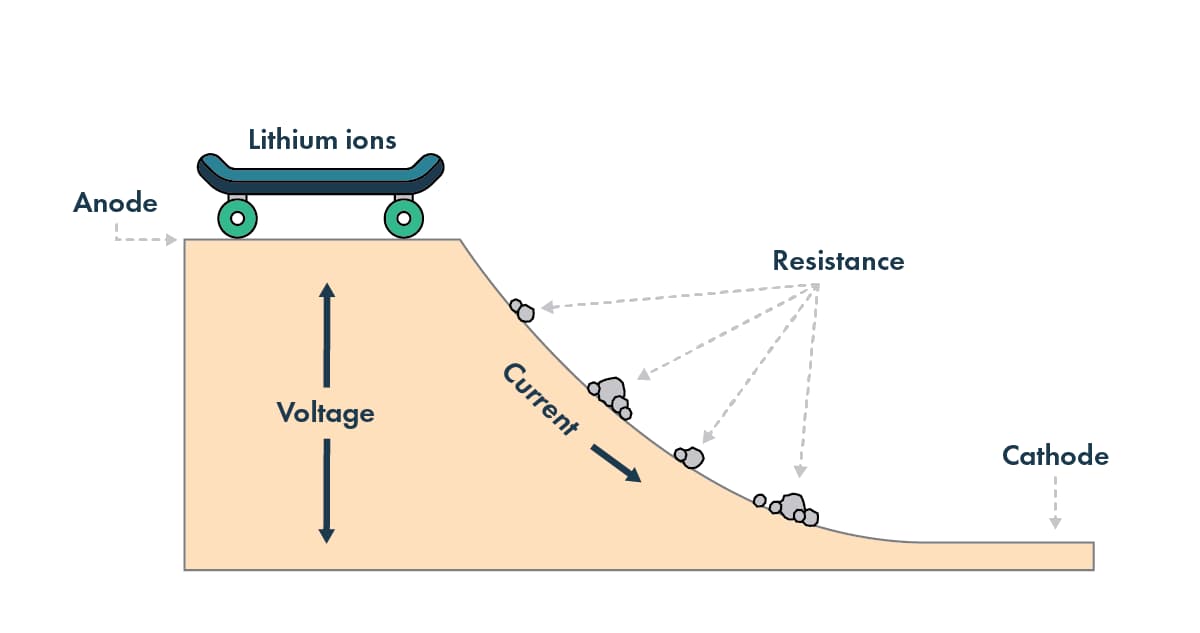
Cold temperatures slow electrochemical processes and increase internal resistance. In a commercial motorcycle, the first operational symptom may be voltage sag during acceleration or hill climbing rather than an obvious battery fault. A pack that performs normally in a warm workshop can therefore reach a BMS power limit sooner when the same vehicle is dispatched on a cold morning with a full payload.
Usable energy can also fall because the pack reaches its low-voltage protection point earlier under load. For fleet planners, this is more important than a single laboratory capacity number. Route range is determined by the battery’s usable watt-hours under the vehicle’s actual current profile, temperature, payload, speed, stop-start frequency, and accessory load.
Charging requires separate consideration. The allowed charge current and minimum charging temperature depend on the selected cells and the pack manufacturer’s validated limits. Buyers should not assume that every lithium pack can accept its normal charge current immediately after a vehicle returns from a freezing route. The BMS and charger must follow the cell supplier’s approved temperature-current envelope.
Which Fleet KPIs Should Be Tested in Cold Conditions?
For fleet and OEM projects, cold-weather approval should be based on measurable vehicle and battery KPIs rather than generic claims such as “winter ready.” The validation plan should reproduce the route conditions that matter to the operation.
| KPI | What to verify in cold conditions | Why it matters to the fleet |
|---|---|---|
| Usable energy | Watt-hours delivered from the approved upper SOC to the operational lower limit at the required temperature | Determines whether the vehicle can finish its route with a realistic reserve |
| Voltage sag | Minimum pack voltage during launch, hill climbing, or other high-current events | Shows whether low-temperature resistance can trigger power derating or low-voltage protection |
| Continuous / peak current | Current capability and duration at low temperature and low SOC | Confirms that the pack supports the controller and motor without nuisance trips |
| Charge acceptance | Permitted charge current versus battery temperature | Prevents an unrealistic depot turnaround plan |
| Recovery behavior | How current limits and charging permission change as the pack warms | Helps operations plan vehicle release and charging sequence |
| Fault logging | Temperature, voltage, current, and protection events available to technicians | Makes recurring cold-weather problems diagnosable instead of anecdotal |
Charger Limitations in the Cold
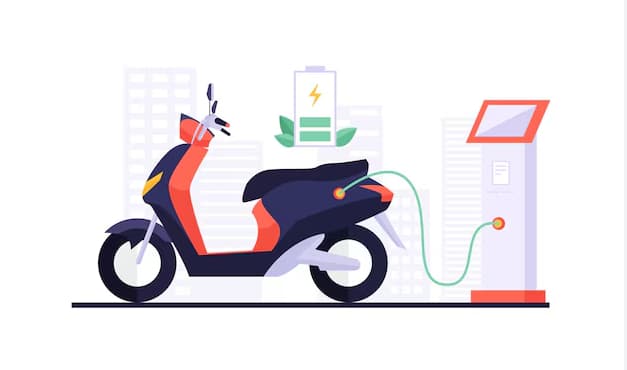
Chargers for electric motorcycles are optimized for 41°F (5°C) to 113°F (45°C), but winter chills below 32°F (0°C) force them to throttle current or halt entirely. This is due to slowed diffusion rates in the battery, which unevenly distribute charge and diminish endurance.
Safety concerns arise from potential overvoltage or plating during fast charging in the cold—key risks linked to Low-Temperature Effects on Motorcycle Lithium Batteries—increasing fire hazards despite built-in safeguards in brands like Energica. In snowy mornings around 20°F (-7°C), chargers may become unresponsive, leaving riders stranded: a frustrating disruption driven by Low-Temperature Effects on Motorcycle Lithium Batteries.
Opt for smart chargers that adjust to temperature, and check weather before using public stations. Slow charging is safer and preserves range—patience here prevents risks and maintains battery health.
How Should Fleets Size Energy Reserve for Cold Routes?
Do not apply a universal winter range-loss percentage to every project. The correct reserve comes from route measurements and cold-condition testing. Start with the fleet’s measured energy consumption in Wh/km under representative payload and speed, then compare it with usable pack energy at the target temperature and current profile.
A practical procurement calculation is: Required usable energy = planned route distance × measured Wh/km × operating reserve factor. The reserve factor should be agreed from route variability, cold test results, battery aging allowance, detours, and the fleet’s minimum return SOC. If the project has several routes, size the battery against the highest realistic energy demand rather than the average route alone.
This method prevents two common procurement errors: oversizing a pack based on an arbitrary “winter percentage,” or selecting a nominal Ah rating that looks sufficient on paper but cannot deliver the required usable energy under cold, high-current operation.
What Low-Temperature BMS Logic Should a B2B Buyer Specify?
The BMS is the control layer that should translate cell limits into predictable vehicle behavior. For commercial motorcycles, buyers should request the actual protection and derating logic rather than accepting a generic statement that the pack has “low-temperature protection.”
- Charge inhibit or charge-current reduction below the cell manufacturer’s approved temperature threshold.
- Discharge-current derating when temperature, SOC, or voltage conditions cannot safely support the requested power.
- Multiple temperature sensors positioned to detect meaningful thermal differences across the pack.
- Clear recovery logic after the battery returns to the permitted temperature range.
- Fault/event records that identify whether a route interruption was caused by low temperature, low voltage, overcurrent, or another protection event.
- Defined communication behavior with the vehicle controller and, where applicable, CAN-based fleet diagnostics.
For projects that use active heating, request the heating power, activation conditions, energy consumption, temperature uniformity, and the effect on departure readiness. Heating should be treated as an engineered subsystem, not as a feature checkbox.
How Should Enclosure and Condensation Risks Be Handled?
Cold operation is often combined with moisture. A motorcycle may move from a cold outdoor environment into a warmer depot, creating condensation on connectors and enclosure surfaces. The battery specification should therefore address sealing, pressure equalization, drainage strategy where relevant, connector selection, harness strain relief, and the inspection procedure after water exposure.
Instead of recommending consumer fixes for an iced or wet charging port, a fleet project should define what the operator is allowed to inspect, when the vehicle must be isolated, and when a trained technician must perform diagnostics. This creates repeatable safety behavior across dozens or hundreds of vehicles.
Overall Reduced Capacity and Range
Winter ultimately slashes lithium battery capacity by 20-50% in temps like 20°F (-7°C), due to combined inefficiencies in ion movement and resistance. This faster drain leaves less for recharges, compounding endurance loss.
Safety issues include casing cracks from expansion in freezing storage, risking leaks or failures. Avoid riding below -4°F (-20°C) or storing under 32°F (0°C) to prevent irreversible harm.
Maximize by steady riding to generate heat, using regenerative braking, and storing at 50% charge indoors. These habits restore range and avert dangers.
What Evidence Should Buyers Request Before Approving a Cold-Weather Pack?
A supplier should be able to connect the proposed battery specification with test evidence. The goal is not to collect certificates for presentation; it is to confirm that the exact cells, BMS settings, current limits, enclosure, and charger used in the project can support the stated operating window.
| Buyer request | Useful evidence | Procurement question it answers |
|---|---|---|
| Cell and pack temperature limits | Cell datasheet plus pack-level validation plan/results | Are the advertised limits based on the selected cell and final pack? |
| Cold discharge performance | Voltage/current/energy data at representative temperatures and SOC | Will the motorcycle maintain required power and route energy? |
| Cold charging behavior | Charge-current limits and BMS/charger control logic | Can the depot charge schedule work after cold routes? |
| Environmental validation | Sealing, vibration, connector and enclosure test evidence appropriate to the project | Will the pack tolerate the vehicle environment, not just bench operation? |
| Transport compliance | UN 38.3 test summary/report linkage for the shipped battery configuration | Can the approved configuration be shipped through the intended logistics route? |
| Change control | Traceability of cells, BMS firmware, key components and production tests | Will mass-production packs remain equivalent to the validated sample? |
Cold-Weather RFQ Checklist for Electric Motorcycle Fleets
To receive a technically meaningful quotation, send the battery supplier more than voltage and Ah. A cold-weather motorcycle RFQ should include:
- Motor rating, controller continuous/peak current, and low-voltage cutoff.
- Daily distance, measured Wh/km if available, payload, average speed, and steepest route grade.
- Lowest expected operating temperature and lowest battery temperature at the start of charging.
- Target range, minimum return SOC, charge window, and required vehicle turnaround time.
- Battery compartment dimensions, mounting constraints, connector interface, and maximum pack mass.
- Required BMS communication, diagnostic data, fault logging, and fleet telematics interface.
- Annual quantity, target market, transport route, and required compliance documentation.
FEBATT can use these inputs to review whether the proposed cell chemistry, usable energy, current capability, BMS limits, thermal strategy, and enclosure design fit the project before prototype validation begins.
Conclusion
Managing low-temperature effects on motorcycle lithium batteries is a system-engineering task. A fleet-ready specification should define cold-route energy, power under load, charging permissions, BMS responses, moisture protection, diagnostic visibility, and validation evidence. When these requirements are agreed before mass production, OEMs and fleet operators can reduce winter route failures without relying on generic range claims or oversized batteries.
Planning a cold-weather electric motorcycle project? Send FEBATT your route distance, payload, motor/controller current, battery bay, minimum operating temperature, charging window, target market, and annual volume. We can review the battery specification and cold-condition validation requirements before prototyping.
Frequently Asked Questions
Do low temperatures permanently damage a motorcycle lithium battery?
Cold operation does not automatically mean permanent damage. The main immediate effects are higher resistance, lower available power, reduced usable energy, and restricted charging. Damage risk increases when the battery is operated or charged outside the cell and pack manufacturer’s validated limits. Fleet procedures and BMS logic should therefore prevent out-of-range charging and repeated protection events.
Can an electric motorcycle lithium battery be charged below 0°C?
There is no single charging rule for every lithium chemistry and cell design. Many conventional lithium-ion cells require restricted or inhibited charging at low cell temperature, but the exact threshold and allowable current must come from the selected cell specification and pack validation. B2B buyers should request the temperature-current charging envelope for the final pack.
How much extra battery capacity is needed for winter fleet routes?
Use route data and cold testing rather than a universal percentage. Calculate the route’s required usable Wh, add an operating reserve for temperature, aging and route variability, then verify that the battery can deliver that energy at the required temperature and current profile.
What is the most important cold-weather battery data for an OEM?
Prioritize usable energy, voltage sag, continuous and peak current, charging limits, BMS temperature logic, environmental validation, and production traceability. These data connect the battery directly to vehicle performance and depot operations.