Choosing the right 51.2V golf cart battery capacity is one of the most important decisions for golf cart manufacturers, fleet operators, resorts, golf courses, campuses, dealers, and B2B battery buyers. A battery that is too small may require frequent charging and reduce vehicle availability. A battery that is too large may increase upfront cost without delivering enough practical return.
Among modern lithium golf cart batteries, 51.2V LiFePO4 systems are widely used because they offer stable voltage, long cycle life, faster charging, lower routine maintenance, and better energy efficiency than many traditional lead-acid battery systems. However, buyers still need to decide which 51.2V golf cart battery capacity is more suitable: 80Ah, 100Ah, or 120Ah.
There is no single capacity that fits every project. The best 51.2V golf cart battery capacity depends on daily mileage, operating hours, passenger load, terrain, charging frequency, fleet size, and total cost of ownership. For a light-duty golf course cart, 80Ah may be enough. For most commercial fleets, 100Ah often provides a balanced solution. For resorts, airports, industrial parks, and high-use vehicles, 120Ah may provide stronger endurance.
This guide compares 80Ah, 100Ah, and 120Ah options in range, runtime, weight, cost, applications, and B2B purchasing value. It will help you choose the right 51.2V golf cart battery capacity for real operating conditions instead of relying only on amp-hour numbers.
What Does 51.2V Golf Cart Battery Capacity Mean?
51.2V golf cart battery capacity refers to how much electrical energy a 51.2V battery can store and deliver before it needs to be recharged. Capacity is usually measured in ampere-hours, or Ah. In a golf cart battery system, voltage affects the power platform, while capacity affects runtime and driving range.
The three common commercial choices are:
| Battery Capacity | Nominal Energy |
|---|---|
| 80Ah | Approximately 4.1 kWh |
| 100Ah | Approximately 5.12 kWh |
| 120Ah | Approximately 6.14 kWh |

The basic calculation is:
Battery Energy = Voltage × Capacity
For example:
51.2V × 80Ah = 4,096Wh
51.2V × 100Ah = 5,120Wh
51.2V × 120Ah = 6,144Wh
A higher 51.2V golf cart battery capacity generally provides longer runtime, longer driving range, fewer charging interruptions, and better support for heavier loads. However, the largest battery is not always the best investment. The correct choice should match actual daily use, not just theoretical maximum performance.
Which 51.2V Golf Cart Battery Capacity Is Right for Your Business?
Selecting the right 51.2V golf cart battery capacity starts with the application. Different industries use golf carts in very different ways.
Golf Courses
Golf courses usually have predictable routes, moderate driving speed, and overnight charging access. For many standard golf course fleets, 80Ah or 100Ah can be suitable.
Recommended capacity:
- 80Ah
- 100Ah
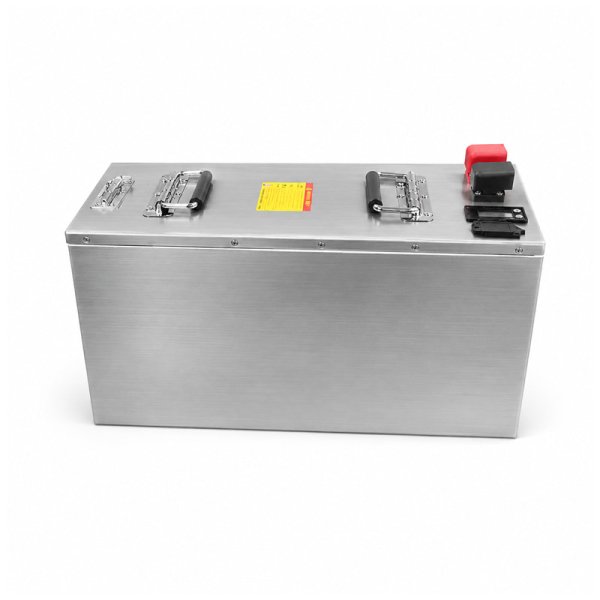
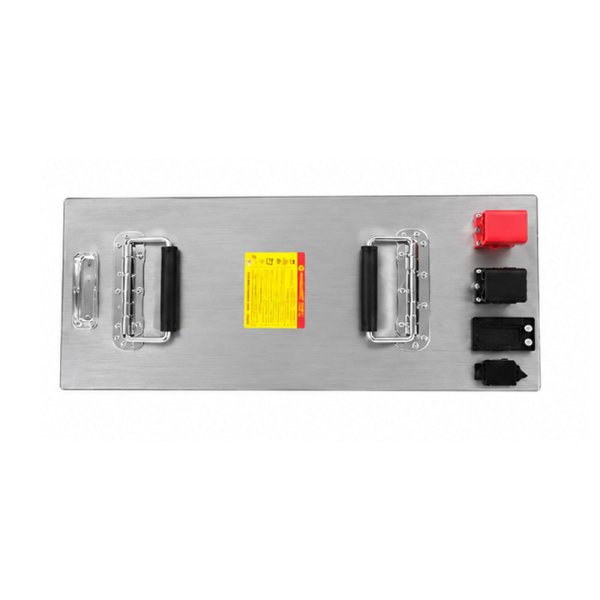
For buyers comparing a lighter lithium upgrade, this 51.2V 80Ah LFP golf cart battery can be used as a reference for light-duty or moderate-use carts.
Resorts and Hotels
Resorts and hotels often use golf carts for guest transport, luggage movement, maintenance work, and daily service operations. These carts may run more frequently and carry more passengers.
Recommended capacity:
- 100Ah
- 120Ah
A 100Ah battery can offer a strong balance between cost and runtime. For many hospitality fleets, this 51.2V 100Ah LFP golf cart battery is a practical reference for medium-duty commercial use.
Industrial Parks and Campuses
Industrial parks, campuses, factories, and large facilities often require longer driving distances and heavier loads. Maintenance teams may carry tools, spare parts, or equipment across wide areas.
Recommended capacity:
- 100Ah
- 120Ah
Airports and High-Use Fleets
Airports, tourist attractions, large resorts, and security patrol fleets often need long daily runtime and fewer charging interruptions. In these applications, a higher 51.2V golf cart battery capacity can improve vehicle availability.
Recommended capacity:
- 120Ah
For intensive commercial operation, this 51.2V 120Ah LFP golf cart battery can be used as a reference for long-runtime fleet applications.
Residential Communities
Residential communities usually involve shorter routes, lower passenger loads, and less continuous operation. In many cases, 80Ah can be enough if charging is available regularly.
Recommended capacity:
- 80Ah
The key is not to ask which 51.2V golf cart battery capacity is universally best. The better question is which capacity reduces charging interruptions, controls cost, and matches the real duty cycle of the fleet.

How Does an 80Ah 51.2V Golf Cart Battery Perform?
An 80Ah option is the entry-level 51.2V golf cart battery capacity for many lithium golf cart upgrades. It offers lower upfront cost, lighter weight, and faster charging compared with larger-capacity options.
Main Advantages of 80Ah
1. Lower Initial Investment
An 80Ah battery uses fewer cells than 100Ah or 120Ah models, so it is usually more cost-effective at the beginning.
2. Reduced Vehicle Weight
A lighter battery can support easier installation and may slightly improve handling or energy efficiency.
3. Faster Charging
Because it stores less total energy, an 80Ah battery usually requires less charging time than larger capacities.
4. Good Fit for Light-Duty Use
For golf courses, residential communities, campuses, and vehicles with shorter daily routes, this 51.2V golf cart battery capacity can be sufficient.
Potential Limitations of 80Ah
The main limitation is shorter runtime. If the vehicle operates continuously, carries heavy loads, travels on hilly terrain, or has limited charging opportunities, 80Ah may require midday charging.
An 80Ah battery is best when the buyer wants lower cost and the fleet does not need full-day intensive operation.
When Should You Choose a 100Ah 51.2V Golf Cart Battery?
For many commercial buyers, 100Ah is the most balanced 51.2V golf cart battery capacity. It provides more runtime than 80Ah while avoiding the higher upfront cost of 120Ah.
Compared with 80Ah, a 100Ah battery stores about 25% more energy. This extra capacity can help vehicles complete longer daily routes with fewer charging interruptions.
Why 100Ah Is Often the Balanced Choice
Better Daily Runtime
A 100Ah battery can support longer operation for golf courses, resorts, campuses, and property management fleets.
Improved Fleet Productivity
Fewer charging breaks mean better vehicle availability and simpler daily scheduling.
Good Performance Under Load
Golf carts carrying four to six passengers, tools, luggage, cleaning supplies, or maintenance equipment can benefit from the extra energy reserve.
Strong Total Cost Balance
For many B2B buyers, 100Ah offers the best balance between purchase cost, usable range, weight, and operational flexibility.
If a buyer is not sure whether 80Ah is enough or 120Ah is necessary, 100Ah is often the safest middle option.
Is a 120Ah 51.2V Golf Cart Battery Worth the Investment?
A 120Ah battery is the highest 51.2V golf cart battery capacity among the three options in this comparison. It stores around 50% more energy than an 80Ah battery and is designed for high-utilization vehicles.
Best Applications for 120Ah
A 120Ah battery is suitable for:
- Airports
- Large resorts
- Tourist attractions
- Industrial parks
- Security patrol fleets
- Manufacturing plants
- Heavy-use commercial golf carts
- Multi-shift operating environments
Main Advantages of 120Ah
1. Longest Runtime
Lorem ipsum dolor sit amet, consectetur adipiscing elit. Ut elit tellus, luctus nec ullamcorper mattis, pulvinar dapibus leo.
2. Better Support for Accessories
Commercial golf carts may include lighting, GPS, communication equipment, warning lights, refrigeration boxes, or utility attachments. A 120Ah battery provides more reserve energy for these accessories.
3. Reduced Charging Interruptions
Every charging session removes a vehicle from operation. A higher-capacity battery can help maintain service continuity.
4. Potentially Longer Calendar Service Life in Heavy Use
Because a 120Ah battery may require fewer charging cycles per year, it may accumulate cycles more slowly in intensive applications.
When 120Ah May Not Be Necessary
A 120Ah battery is not always the best choice for light-duty use. If a vehicle only runs a few hours per day, the extra energy may not be fully used. In that case, the higher upfront cost may not deliver enough practical return.
For B2B buyers, the best 51.2V golf cart battery capacity should be selected based on real daily operation, not only maximum capacity.
How Far Can 80Ah, 100Ah, and 120Ah Batteries Drive?
Range is one of the most important factors when comparing 51.2V golf cart battery capacity. Actual driving distance depends on terrain, passenger load, tire pressure, driving behavior, vehicle condition, and auxiliary power consumption.
Most commercial golf carts consume approximately 80–120Wh per kilometer under normal operating conditions.
| Battery Capacity | Estimated Range on Flat Terrain | Estimated Range on Mixed Terrain |
|---|---|---|
| 80Ah, 4.1 kWh | 35–55 km | 25–40 km |
| 100Ah, 5.12 kWh | 45–70 km | 35–55 km |
| 120Ah, 6.14 kWh | 55–90 km | 45–70 km |
A higher 51.2V golf cart battery capacity does not only increase distance. It also provides more reserve power for heavier loads, hills, and accessory systems. This can make performance more stable during demanding use.
How Long Will Each Battery Run Before Recharging?
Runtime is often more useful than theoretical range for fleet operators. A golf cart may stop frequently, carry different loads, or operate in short routes throughout the day.
Assuming average consumption of 1.2–1.5kW during operation, estimated continuous runtime is:
Lorem ipsum dolor sit amet, consectetur adipiscing elit. Ut elit tellus, luctus nec ullamcorper mattis, pulvinar dapibus leo.
Add Your Heading Text Here
Lorem ipsum dolor sit amet, consectetur adipiscing elit. Ut elit tellus, luctus nec ullamcorper mattis, pulvinar dapibus leo.
| Battery Capacity | Estimated Continuous Runtime |
|---|---|
| 80Ah, 4.1 kWh | About 2.5–3.5 hours |
| 100Ah, 5.12 kWh | About 3.5–4.5 hours |
| 120Ah, 6.14 kWh | About 4.5–6 hours |
In real commercial environments, operation is often intermittent. Actual working time can be longer than these values because the cart is not always driving continuously.
For high-utilization fleets, a larger 51.2V golf cart battery capacity can reduce midday charging and improve scheduling flexibility.
How Much Weight Difference Is There Between These Capacities?
Weight affects handling, suspension, installation, and energy efficiency. One advantage of LiFePO4 batteries is that they are usually much lighter than comparable lead-acid systems.
Typical lithium battery weight ranges are:
| Battery Capacity | Approximate Weight |
|---|---|
| 80Ah | 38–45 kg |
| 100Ah | 48–55 kg |
| 120Ah | 58–65 kg |
The weight difference between 80Ah, 100Ah, and 120Ah may look moderate for one vehicle. But for a fleet of dozens or hundreds of golf carts, the cumulative impact can be more noticeable.
A lower 51.2V golf cart battery capacity may support lighter vehicle weight and lower upfront cost, while a higher capacity provides longer runtime and fewer charging interruptions. Buyers should balance both factors.
Which Capacity Delivers the Lowest Total Cost of Ownership?
Total cost of ownership is more important than purchase price alone. The best 51.2V golf cart battery capacity is the one that matches the workload and reduces long-term operational waste.
TCO should include:
- Purchase price
- Charging frequency
- Downtime cost
- Maintenance requirements
- Service life
- Energy efficiency
- Replacement cycle
- Fleet scheduling impact
- Labor cost
- Vehicle availability
80Ah TCO Profile
80Ah offers lower upfront cost and good value for light-duty fleets. However, if used in high-demand applications, it may require more frequent charging and create operational interruptions.
100Ah TCO Profile
100Ah often provides the best total cost balance for many B2B users. It improves runtime without overinvesting in unused capacity.
120Ah TCO Profile
120Ah has the highest upfront cost but can offer strong value in intensive-use fleets by reducing charging interruptions and supporting longer daily operation.
For B2B buyers, the lowest TCO usually comes from matching 51.2V golf cart battery capacity with actual duty cycle intensity.
Can a Higher-Capacity Battery Improve Golf Cart Performance?
A higher 51.2V golf cart battery capacity does not directly increase motor power. Motor speed and peak torque are mainly controlled by the motor and controller.
However, higher capacity can improve performance stability by reducing voltage sag under load. This can support:
- More stable acceleration
- Better performance on inclines
- Improved consistency under passenger load
- Better support for auxiliary equipment
- More reliable operation near the end of the battery cycle
In practical use, a 120Ah battery may feel smoother in demanding conditions than an 80Ah battery, even if the top speed remains the same.
What Should B2B Buyers Consider Before Choosing Battery Capacity?
Choosing 51.2V golf cart battery capacity is a business decision as well as a technical decision. Procurement teams should consider actual operating data instead of only comparing Ah ratings.
Key factors include:
Daily Duty Cycle
How many hours does each vehicle operate per day? This is the most important factor.
Fleet Size
Large fleets often benefit more from longer runtime because scheduling and charging management become more complex.
Charging Infrastructure
If charging stations are limited, higher capacity may reduce charging pressure.
Terrain
Hilly terrain increases energy consumption and may require higher capacity.
Payload
Passenger load, tools, luggage, and accessories all increase power demand.
Climate
Hot or cold environments can affect battery performance and charging behavior.
Future Expansion
If the fleet will expand, choosing a scalable battery platform can simplify future procurement.
The correct 51.2V golf cart battery capacity should improve daily operation while keeping total investment under control.
Should You Replace Lead-Acid Batteries with a 51.2V LiFePO4 Battery?
Replacing lead-acid batteries with LiFePO4 batteries is a common upgrade path for commercial golf cart fleets. A properly selected 51.2V golf cart battery capacity can improve range, charging efficiency, service life, and ease of maintenance.
Main Advantages of LiFePO4 Replacement
1. Higher Energy Efficiency
Lorem ipsum dolor sit amet, consectetur adipiscing elit. Ut elit tellus, luctus nec ullamcorper mattis, pulvinar dapibus leo.
Longer Cycle Life
Lead-acid batteries often offer around 500–1,000 cycles, while LiFePO4 batteries can commonly provide 4,000–6,000 cycles under proper use.
Lower Routine Maintenance
LiFePO4 batteries do not require water topping or acid maintenance, reducing labor and safety concerns.
Faster Charging
Lithium systems can support shorter charging times when matched with a suitable charger.
Stable Voltage Output
Stable voltage helps maintain consistent driving performance during operation.
However, replacement should not be done blindly. Buyers must confirm voltage, compartment size, charger compatibility, BMS settings, connectors, mounting, and weight balance before upgrading.

80Ah vs 100Ah vs 120Ah: Which Capacity Should You Choose?
The following table gives a practical decision summary for B2B buyers comparing 51.2V golf cart battery capacity options.
| Capacity | Best For | Main Advantage | Main Limitation |
|---|---|---|---|
| 80Ah | Golf courses, communities, light-duty carts | Lower cost, lighter weight, faster charging | Shorter runtime |
| 100Ah | Most commercial fleets, resorts, campuses | Balanced range, cost, and runtime | Not the maximum endurance option |
| 120Ah | Airports, large resorts, patrol fleets, heavy use | Longest runtime and fewer charging interruptions | Higher upfront cost |
For most B2B buyers, 100Ah is often the most balanced 51.2V golf cart battery capacity. For lighter use, 80Ah can be enough. For intensive use, 120Ah offers stronger endurance.
FAQ About 51.2V Golf Cart Battery Capacity
1.Is an 80Ah battery sufficient for commercial golf carts?
Yes, an 80Ah battery can be sufficient for light-duty commercial golf carts, golf courses, residential communities, campuses, and short-route vehicles with regular charging access. However, for high-utilization fleets, large resorts, airports, heavy passenger loads, or long daily routes, 100Ah or 120Ah is usually a safer 51.2V golf cart battery capacity choice.
2.Is a 100Ah battery the best balance between cost and performance?
For many golf cart fleets, yes. A 100Ah battery provides approximately 5.12kWh of nominal energy and often offers a strong balance between upfront cost, range, runtime, weight, and charging frequency. It is suitable for many commercial golf carts used in resorts, golf courses, campuses, property management, and medium-duty fleet operations.
3.When is a 120Ah battery the better investment?
A 120Ah battery is usually the better investment when vehicles operate for long hours, carry heavier loads, serve large resorts or airports, support accessories, or have limited charging opportunities. This 51.2V golf cart battery capacity provides approximately 6.14kWh of nominal energy and helps reduce charging interruptions in high-demand applications.
4.Can I upgrade from an 80Ah battery to a 120Ah battery without replacing the motor?
In many cases, yes, if the voltage remains 51.2V and the motor/controller system is compatible. Increasing Ah mainly increases stored energy, similar to using a larger fuel tank. However, buyers must confirm battery dimensions, weight, BMS settings, charger compatibility, connector type, mounting method, and vehicle space before upgrading.
5.How many years can a 51.2V LiFePO4 golf cart battery last?
A 51.2V LiFePO4 golf cart battery can often last 8 to 10 years under proper use, with many designs supporting around 3,000 to 5,000 charge cycles. Actual service life depends on cell quality, depth of discharge, charging habits, temperature, BMS protection, and daily workload.
6.Which battery capacity provides the best value for fleet operators?
For many fleet operators, 100Ah provides the best overall value because it balances usable range, purchase cost, weight, and charging frequency. However, the best 51.2V golf cart battery capacity depends on the duty cycle. Light-duty fleets may choose 80Ah, while high-utilization fleets may get better value from 120Ah.
Conclusion
Selecting the right 51.2V golf cart battery capacity is a strategic decision for B2B buyers. The choice should be based on real operation, not only battery size. Daily mileage, passenger load, terrain, charging availability, fleet utilization, and lifecycle cost all affect the best capacity choice.
An 80Ah battery is suitable for light-duty carts and cost-sensitive projects. A 100Ah battery is often the most balanced option for commercial fleets. A 120Ah battery is better for high-demand use where longer runtime and fewer charging interruptions are more important than lower upfront cost.
For golf courses, resorts, campuses, airports, industrial parks, and fleet operators, a well-matched 51.2V golf cart battery capacity can improve range, runtime, scheduling efficiency, and total cost of ownership. Before purchasing, buyers should compare energy, weight, charging time, compatibility, BMS protection, supplier support, and long-term application needs.