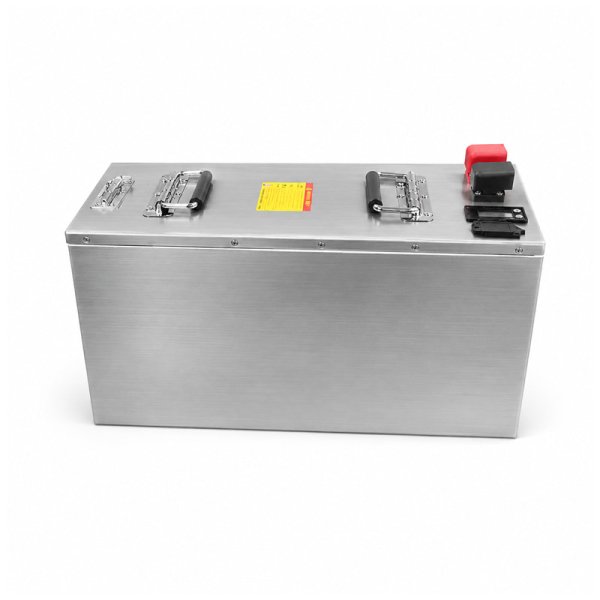
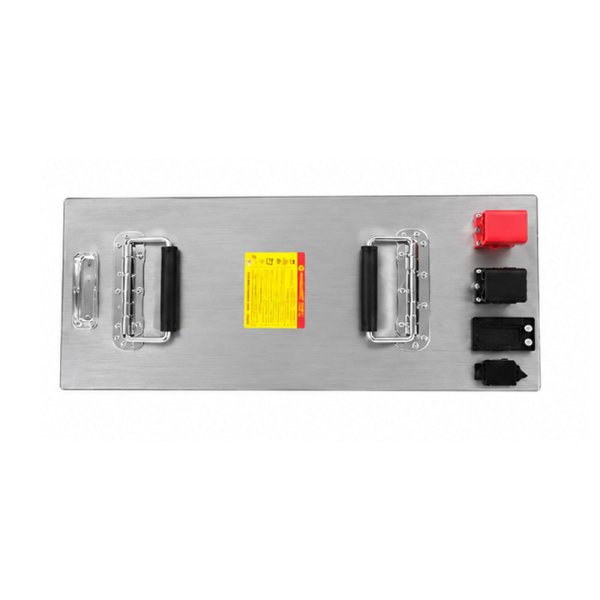
A specification such as “48V 400Ah lithium battery” tells you nominal voltage and charge capacity, but it does not prove that a vehicle will complete an eight-hour shift. Fleet managers must convert those ratings into kilowatt-hours, compare the available energy with real hourly consumption, and then adjust for payload, route, temperature, operator behavior, auxiliary loads, and depth of discharge. This is the starting point for industrial electric vehicle battery capacity planning.
For procurement teams, industrial electric vehicle battery capacity is the basis of runtime planning, charging strategy, equipment availability, and cost control. Too little industrial electric vehicle battery capacity can cause mid-shift downtime. Too much industrial electric vehicle battery capacity can increase purchase cost, charging time, and installation demands without adding useful productivity.
Why Industrial Electric Vehicle Battery Capacity Matters
Industrial vehicles rarely operate at one constant load. A forklift may travel unloaded, lift a heavy pallet, climb a ramp, idle during scanning, and repeat the cycle hundreds of times. A golf cart may carry changing passenger loads and operate on slopes. A tow tractor may pull different trailer weights over long routes. Because each duty cycle is different, industrial electric vehicle battery capacity must be matched to actual work.
The goal is enough battery capacity for the required shift and a practical reserve, while matching peak current, charging windows, installation space, voltage, communication, and BMS limits. Industrial electric vehicle battery capacity should also support likely route or workload changes.
Three Metrics Behind Industrial Electric Vehicle Battery Capacity
1. Amp-Hours and Kilowatt-Hours
Amp-hours measure electrical charge at a stated voltage. Kilowatt-hours measure stored energy and allow direct comparison between batteries with different voltages. For fleet planning, industrial electric vehicle batteries capacity should normally be expressed in kWh.
Nominal Energy (kWh) = Nominal Voltage (V) × Rated Capacity (Ah) ÷ 1,000
For a 48V 400Ah system, industrial electric vehicle battery capacity equals:
48 × 400 ÷ 1,000 = 19.2 kWh

This nominal industrial electric vehicle battery capacity is not fully usable. The BMS and operating plan may reserve part of the energy to prevent an unplanned shutdown.
Voltage is essential when comparing industrial electric vehicles battery capacity. A 24V 400Ah pack stores 9.6 kWh, while a 48V 400Ah pack stores 19.2 kWh. Both are rated at 400Ah, but industrial electric vehicle battery capacity is different, so industrial electric vehicle battery capacity comparisons must include voltage. This is why kWh is more useful than Ah alone for multi-voltage fleets. Record industrial electric vehicle battery capacity in both Ah and kWh.
2. Kilowatts and Power Demand
Kilowatts measure the rate at which energy is delivered or consumed. A higher-power motor can support faster acceleration, heavier lifting, or steeper grades, but actual energy use depends on how often and how long that power is required.
Industrial electric vehicles battery capacity determines the total energy available. Motor power, hydraulic demand, traction load, and auxiliary systems determine how quickly industrial electric vehicle battery capacity is consumed. A forklift may use moderate power during level travel and much higher power while lifting. A tow tractor may maintain high average demand while pulling loaded trailers.
Industrial electric vehicle battery capacity must also meet peak-current requirements across the cells, busbars, contactors, cables, connectors, and BMS. Verify industrial electric vehicle battery capacity against the vehicle’s maximum current profile.
3. Energy Consumption per Operational Hour
The strongest runtime input is average total energy consumption, normally expressed as kWh per operational hour. This figure should include traction, lifting, hydraulics, onboard electronics, lighting, communication equipment, heating, cooling, and other auxiliary loads.
Lower consumption extends runtime from the same industrial electric vehicle battery capacity. Prefer telematics or charger data; otherwise, use a conservative estimate and verify it through a site trial.

Formula for Calculating Industrial Electric Vehicle Battery Capacity and Runtime
First calculate nominal energy. Then apply the permitted depth of discharge to determine usable energy. Finally, divide usable energy by average hourly consumption.
Usable Energy (kWh) = Nominal Industrial Electric Vehicle Battery Capacity × Usable DoD
Estimated Runtime (hours) = Usable Energy ÷ Average Energy Consumption
A more conservative model includes an operating factor:
Estimated Runtime = Nominal Industrial Electric Vehicle Battery Capacity × Usable DoD × Operating Factor ÷ Average Energy Consumption
The operating factor may cover conversion losses, battery age, route uncertainty, or reserve. Base it on vehicle data, specifications, or field testing because real conditions affect industrial electric vehicle battery capacity.
Electric Forklift Example
A forklift uses a 48V 600Ah lithium battery. Its nominal industrial electric vehicle battery capacity is:
48 × 600 ÷ 1,000 = 28.8 kWh
Assume average consumption is 4.0 kWh per operational hour and approved usable DoD is 85%.
Estimated Runtime = 28.8 ÷ 4.0 × 0.85 = 6.12 hours
The result is about 6.12 active hours, not necessarily 6.12 clock hours. Industrial electric vehicle battery capacity must still be checked against lifting current, pallet weight, ramps, route length, and charging opportunities.
For related configurations, review FEBATT’s electric forklift battery solutions, including application-specific voltage, capacity, structure, communication, and connector options.
Commercial Golf Cart Example
A utility golf cart uses a 51.2V 160Ah battery. Its nominal industrial electric vehicle battery capacity is:
51.2 × 160 ÷ 1,000 = 8.192 kWh
If average consumption is 1.2 kWh per active hour and usable DoD is 90%:
Estimated Runtime = 8.192 ÷ 1.2 × 0.90 = 6.144 hours
Estimated runtime is 6.14 active hours. Passenger load, slopes, tire pressure, stops, and accessories can change industrial electric vehicle battery capacity requirements, so use the busiest realistic route.
FEBATT’s commercial golf cart batteries provide an internal reference for passenger transport, utility carts, and fleet projects.
Heavy-Duty Tow Tractor Example
A tow tractor uses an 80V 500Ah lithium battery. Its nominal industrial electric vehicle battery capacity is:
80 × 500 ÷ 1,000 = 40.0 kWh
If consumption is 6.5 kWh per operational hour and usable DoD is 85%:
Estimated Runtime = 40.0 ÷ 6.5 × 0.85 = 5.23 hours
The larger industrial electric vehicle battery does not produce the longest runtime because towing demand is high. Vehicle mass, trailer weight, rolling resistance, gradients, acceleration frequency, and route congestion determine how quickly industrial electric vehicle battery capacity is used.
Illustrative Industrial Electric Vehicle Battery Capacity Comparison
The following figures are calculation examples using the stated battery ratings, consumption assumptions, and 85% usable DoD. They are not universal performance guarantees. Final industrial electric vehicle battery capacities must be validated for the vehicle, facility, and duty cycle. Every industrial electric vehicle battery capacity figure should be treated as application-specific.
| Vehicle | Battery | Energy | Use | Weight | Runtime |
|---|---|---|---|---|---|
| Light warehouse tugger | 24V 200Ah | 4.80 kWh | 0.80 kWh/h | 450 kg | 5.10 h |
| Commercial utility vehicle | 48V 150Ah | 7.20 kWh | 1.10 kWh/h | 780 kg | 5.56 h |
| Counterbalance forklift | 48V 450Ah | 21.60 kWh | 3.50 kWh/h | 3,200 kg | 5.24 h |
| Heavy-duty reach truck | 48V 600Ah | 28.80 kWh | 4.20 kWh/h | 4,100 kg | 5.83 h |
| Airport ground-support tug | 80V 620Ah | 49.60 kWh | 7.50 kWh/h | 5,400 kg | 5.62 h |
A heavier vehicle may require much more industrial electric vehicle batteries capacity to match a smaller vehicle’s runtime. Replace the sample consumption rates with measured fleet data.
Five Variables That Change Industrial Electric Vehicle Battery Capacity in Practice

1. Payload and Vehicle Weight
Additional load requires more torque for acceleration, climbing, and rolling resistance. A loaded forklift or tow tractor consumes industrial electric vehicle battery capacities faster than the same vehicle running light.
Record average payload, maximum payload, lifting height, load frequency, and gradients. Sizing industrial electric vehicle battery capacity around average load alone may be risky when heavy work is concentrated during peak production periods.
2. Mechanical Drag and Floor Conditions
Rough concrete, gravel, damaged floors, steep ramps, misaligned wheels, low tire pressure, worn bearings, and dragging brakes increase energy consumption. These conditions can create the appearance of inadequate industrial electric vehicle battery capacity even when the original sizing was reasonable.
Before increasing industrial electric vehicle battery capacities, inspect tires, brakes, bearings, wheel alignment, hydraulic systems, and drivetrain efficiency. Correcting mechanical drag may improve runtime without increasing industrial electric vehicle battery capacity.
3. Operator Behavior and Regenerative Braking
Aggressive acceleration causes high current demand and additional heat. Sudden braking may reduce the opportunity for energy recovery. Smooth acceleration, controlled speed, and suitable regenerative-braking settings can improve use of industrial electric vehicle battery capacity, although results vary by vehicle, controller, route, and operator.
Telematics can compare routes, shifts, and drivers. Unusually high industrial electric vehicle batteries capacity use may reveal acceleration, idling, congestion, or regenerative-braking problems.
4. Temperature and Thermal Management
Cold conditions can increase internal resistance and reduce available energy and power. Hot conditions can increase thermal stress and may cause the BMS to limit current or activate cooling. Heating and cooling systems also consume industrial electric vehicle battery capacity.
For cold stores, outdoor yards, or hot facilities, evaluate industrial electric vehicle battery capacity at the expected operating temperature rather than only at room temperature. Confirm permitted charging and discharging ranges, thermal-management design, and power limitations with the supplier. A monitored site trial provides the strongest evidence for final industrial electric vehicles battery capacity.
5. Duty Cycle, Speed, and Stop Frequency
Frequent starts, stops, turns, lifts, and positioning movements can consume more energy than steady travel. Order-picking vehicles and forklifts repeat short acceleration events throughout the shift, and each event draws from industrial electric vehicle battery capacity.
Average speed alone cannot define industrial electric vehicle battery capacity. The calculation should include active travel, lifting, idle time, accessory use, queue time, and charging. A realistic duty-cycle map allows battery capacity to be matched to the work rather than to a simplified distance estimate.
Laboratory Ratings Versus Real Industrial Electric Vehicle Battery Capacity
Published industrial electric vehicle batteries capacity ratings are useful, but test conditions may differ from the buyer’s facility. Temperature, payload, floor condition, route, speed, accessories, and test method all affect industrial electric vehicle battery capacity and runtime.
Controlled tests may use stable temperature, defined payload, repeatable routes, and consistent speed. Real sites add cold docks, ramps, traffic, heavy pallets, and frequent lifting, so results are not site-specific guarantees of industrial electric vehicle battery capacity.
Do not apply one universal percentage reduction to every project. Where reliable data exists, use the highest realistic daily consumption plus an agreed reserve. Where data is limited, select industrial electric vehicle battery capacity conservatively and validate it through a monitored trial before full deployment.
How to Select Industrial Electric Vehicle Battery Capacity?
Audit the Duty Cycle
Record operating hours, energy used, payload, route, lifting frequency, idle time, temperature, and charging windows. Data from several representative days is more useful than one light shift. The audit should identify average and peak requirements for industrial electric vehicle battery capacity. Update industrial electric vehicle battery capacity assumptions when routes, loads, or shifts change.
Use charger records and telematics for existing fleets. For new equipment or conversions, use controller data, temporary metering, estimates, or a pilot vehicle to verify industrial electric vehicle battery capacity.
Define an Operating Reserve
A reserve protects operations from heavier loads, route changes, battery aging, temperature changes, and scheduling delays. Too little reserve can make industrial electric vehicle battery capacity unreliable during peak work. Too much reserve may add unnecessary cost.
Document the reserve according to downtime cost, backup availability, charging access, and workload variability within the industrial electric vehicle battery capacity calculation.
Match Industrial Electric Vehicle Battery Capacity to Charging
A single-shift fleet with overnight charging may need enough industrial electric vehicle battery capacity to complete the day without interruption. A multi-shift fleet may use larger packs, opportunity charging, battery exchange, or fast charging.
Charging time depends on industrial electric vehicle battery capacity to be replaced, charger output, efficiency, and the permitted charge rate. Larger industrial electric vehicle battery capacity may require a higher-power charger or longer charging window. Battery and charger specifications should be developed together.
Confirm Electrical and Mechanical Compatibility
Confirm nominal voltage, operating voltage range, continuous current, peak current, communication protocol, connector type, cable direction, mounting points, enclosure dimensions, protection level, vibration requirements, and service access.
Industrial electric vehicle battery capacity is only useful when industrial electric vehicle battery capacity can be safely installed and integrated. A pack with the correct kWh but the wrong voltage, communication, connector, or discharge capability is not a suitable replacement.
Compare Total Operating Requirements
Compare runtime, charging infrastructure, maintenance, downtime, energy use, service, and utilization. The best industrial electric vehicle battery capacity supports required work with a reasonable reserve and compatible charging.
Relevant Technical FAQ
1.What is the technical difference between Amp-hours and Kilowatt-hours?
Amp-hours measure total electrical charge at the stated operating voltage. Kilowatt-hours measure total stored electrical energy. Converting industrial electric vehicle battery capacity to kWh makes it easier to compare 24V, 48V, and 80V batteries and to compare stored energy with vehicle consumption.
The conversion is voltage multiplied by amp-hours, divided by 1,000. For example, 48V × 400Ah ÷ 1,000 equals 19.2 kWh. Because Ah alone does not include voltage, it should not be used by itself to compare industrial electric vehicle battery capacity across different voltage platforms.
2.Why does forklift energy consumption increase during heavy lifting?
Lifting requires hydraulic and electric systems to work against gravity. Higher load weight and greater lift height require more mechanical work and normally create higher current demand than level travel. Repeated lifting therefore consumes industrial electric vehicle battery capacity faster than light horizontal movement.
The exact increase depends on forklift design, hydraulic efficiency, motor efficiency, load weight, lift height, travel pattern, and operator behavior. Include representative lifting cycles when calculating average consumption and required industrial electric vehicle battery capacity.
3.How does Depth of Discharge affect runtime and battery life?
Depth of Discharge is the percentage of rated capacity used before recharging. If a 20 kWh pack is operated to 80% DoD, the planned usable energy is 16 kWh before other reserve or efficiency factors are applied.
Operating outside the limits defined by the cell and battery manufacturer can accelerate degradation or trigger BMS protection. Industrial electric vehicle battery capacity calculations should therefore use the approved usable DoD instead of assuming 100% of nominal energy is available. The correct limit must come from the battery specification and operating strategy.
4.Can a higher-powered motor improve overall energy efficiency?
Not necessarily. A higher-powered motor can support heavier loads, faster acceleration, or steeper ramps, but it does not automatically reduce energy consumption. If the extra power is used aggressively, average demand may rise and industrial electric vehicle battery capacity will be consumed faster.
Efficiency depends on motor sizing, controller settings, drivetrain efficiency, operating point, payload, route, and driver behavior. Evaluate the complete vehicle system rather than assuming a higher kW rating will extend electric vehicle battery capacity or runtime.
5.How can fleet managers use regenerative-braking data?
Telematics can show recovered energy and compare how regenerative braking affects industrial electric vehicle battery capacity across vehicles, routes, and operators. Low recovery may reflect a route with few braking opportunities, a controller setting, a vehicle limitation, or abrupt driving behavior.
Fleet managers should analyze regenerative-braking data together with total energy consumption, speed, payload, and stop frequency. This supports training, route improvement, and more accurate industrial electric vehicle battery capacity planning. Regeneration can reduce net consumption, but it should not be treated as a fixed percentage benefit in every application.
Conclusion
Calculating industrial electric vehicle battery capacity requires more than reading voltage and amp-hours from a specification sheet. Buyers must convert ratings to kWh, determine usable energy, measure or estimate average consumption, and account for payload, temperature, route, mechanical condition, operator behavior, charging windows, and reserve.
The most reliable industrial electric vehicle battery decision is based on representative field data and verified through a controlled site trial. Review industrial electric vehicle battery capacity after commissioning and during fleet expansion. When industrial electric vehicle battery capacity, discharge capability, communication, mechanical structure, and charger design are matched to the duty cycle, fleets can reduce avoidable downtime and make better purchasing decisions.
For B2B projects, industrial electric vehicle batteries capacity should be treated as part of a complete vehicle-energy system. A technically suitable solution combines enough usable energy for the shift, sufficient current for peak work, compatible charging, safe integration, and a reserve that reflects the real operating environment.