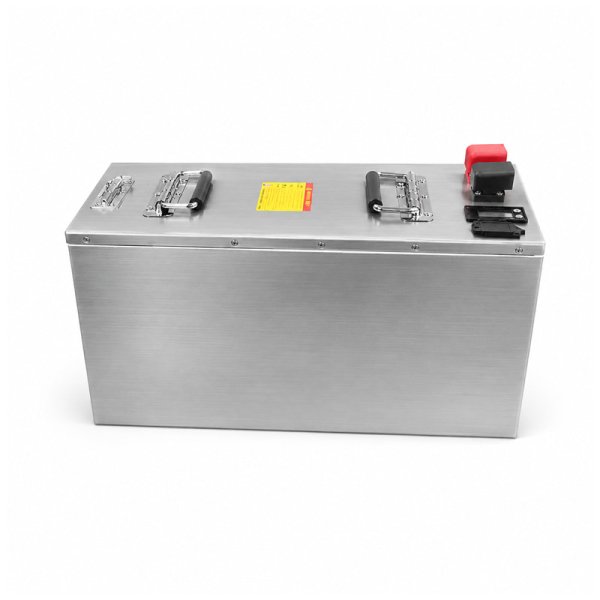
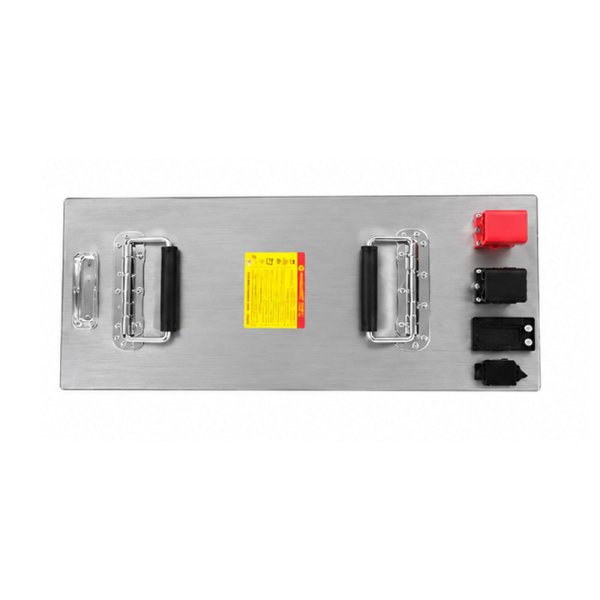
A 100Ah lithium rv battery can usually run a 12V fridge for about 20 to 50 hours, depending on fridge size, compressor efficiency, outdoor temperature, ventilation, thermostat setting, and how often the fridge door is opened.
For RV owners, this question matters because the fridge is one of the most important appliances in an off-grid power system. Food safety, cold drinks, medicine storage, and travel comfort all depend on stable refrigeration. A 12V fridge is usually efficient, but it still needs continuous power support. If your rv battery is too small, the fridge may shut down earlier than expected. If your battery system is properly sized, your fridge can run through the night, through a weekend trip, or even longer with solar charging.
A 100Ah lithium battery is one of the most common choices for RVs, camper vans, truck campers, and portable fridge setups. It is compact, lightweight, and powerful enough for many basic off-grid needs. But the real runtime is not decided by battery capacity alone. It depends on how much energy the fridge uses every hour and how much of the rv battery is available for other loads.
To get a useful answer, you need to understand watt-hours, average fridge consumption, duty cycle, temperature, and real-world usage habits.
Why Can a 100Ah Lithium RV Battery Run a 12V Fridge for 20 to 50 Hours?
A 100Ah lithium rv battery typically stores about 1,280 watt-hours of energy if it uses a 12.8V LiFePO4 design.
The basic calculation is:
12.8V × 100Ah = 1,280Wh
This means the battery has about 1,280 watt-hours of stored energy. In theory, it could provide 1,280 watts for one hour, 128 watts for ten hours, or 32 watts for forty hours. A 12V fridge does not usually run at full power all the time. Most compressor fridges cycle on and off during the day.
When the compressor is running, the fridge may use 40W to 80W. When the fridge reaches the target temperature, the compressor stops or slows down, and power consumption drops sharply. This cycling pattern is the reason a 100Ah lithium rv battery can often run a fridge much longer than a simple running-watt number suggests.
For example, if a fridge draws 60W while running but only runs 40% of the time, its average power use is about 24W.
60W × 40% = 24W average power
Then the estimated runtime is:
1,280Wh ÷ 24W = about 53 hours
But if the same fridge runs in hot weather and the compressor works 70% of the time, the average power use becomes 42W.
60W × 70% = 42W average power
Then the runtime becomes:
1,280Wh ÷ 42W = about 30 hours
This is why the answer is usually a range, not a single fixed number. A 100Ah lithium rv battery may run a small efficient fridge for more than two days, but it may run a larger fridge in hot weather for only about one day.
How Do You Calculate 12V Fridge Runtime with an RV Battery?
The most practical way to calculate fridge runtime is to use watt-hours. Amp-hours are helpful, but watt-hours give a clearer picture because they include voltage.
Use this formula:
Battery watt-hours ÷ fridge average watts = estimated runtime
For a 100Ah lithium rv battery:
12.8V × 100Ah = 1,280Wh
Now compare that with different fridge consumption levels.
If your 12V fridge averages 25W:
1,280Wh ÷ 25W = 51.2 hours
If your fridge averages 35W:
1,280Wh ÷ 35W = 36.5 hours
If your fridge averages 50W:
1,280Wh ÷ 50W = 25.6 hours
If your fridge averages 65W:
1,280Wh ÷ 65W = 19.6 hours
This gives you a useful estimate. However, real-world runtime may be lower because the rv battery may also power lights, fans, phone chargers, water pumps, diesel heater controllers, or small electronics.
A safe planning method is to reduce the theoretical result by 10% to 20%. If the calculation says 40 hours, plan for 32 to 36 hours. This gives you reserve power and reduces the chance of the fridge shutting down unexpectedly.
For serious off-grid travel, guessing is not enough. A battery monitor can show actual watt-hour use, current draw, and remaining capacity. With a monitor, you can see how your rv battery performs in real camping conditions instead of relying only on product labels.
How Much Energy Does a 12V RV Fridge Usually Consume?
A 12V RV fridge usually consumes between 250Wh and 800Wh per day. Some small portable fridges may use less, while larger built-in RV fridges or dual-zone fridges may use more.
A small 30L to 40L compressor fridge may use around 250Wh to 400Wh per day in mild weather. A medium 45L to 60L fridge may use around 400Wh to 600Wh per day. A larger 70L to 90L fridge may use 600Wh to 900Wh per day, especially when the RV interior is warm.
Here is a practical range:
- Small portable 12V fridge: 250Wh to 400Wh per day
- Medium RV fridge: 400Wh to 600Wh per day
- Large 12V fridge: 600Wh to 900Wh per day
- Dual-zone fridge or hot-weather use: 700Wh to 1,000Wh+ per day
If your fridge uses 400Wh per day, a 100Ah lithium rv battery with 1,280Wh can theoretically run it for about 3.2 days. In real use, after reserve and other loads, you may get closer to 2 to 2.5 days.
If your fridge uses 600Wh per day, the same rv battery can theoretically run it for about 2.1 days. In real use, the practical result may be around 1.5 to 2 days.
If your fridge uses 900Wh per day, a 100Ah battery may run it for about 1.4 days before considering other devices. In that case, a larger rv battery bank or solar charging becomes much more important.
The fridge’s rated wattage is not always the best number to use. What matters most is average energy use over 24 hours. This depends on insulation, compressor design, cooling temperature, surrounding heat, and how the fridge is used.
Why Does Fridge Duty Cycle Matter So Much?
The duty cycle is the percentage of time the compressor runs. It is one of the biggest factors affecting rv battery runtime.
A fridge may draw 60W while the compressor is active, but it does not need to run constantly. Once the inside temperature reaches the set point, the compressor pauses. When the temperature rises again, the compressor starts again.
For example:
- 60W running power at 25% duty cycle = 15W average
- 60W running power at 40% duty cycle = 24W average
- 60W running power at 60% duty cycle = 36W average
- 60W running power at 80% duty cycle = 48W average
With a 100Ah lithium rv battery, this makes a big difference.
At 15W average power:
1,280Wh ÷ 15W = about 85 hours
At 24W average power:
1,280Wh ÷ 24W = about 53 hours
At 36W average power:
1,280Wh ÷ 36W = about 35 hours
At 48W average power:
1,280Wh ÷ 48W = about 26 hours
This explains why two RV owners using the same battery size may report very different runtime. One may camp in mild weather with a well-ventilated fridge. Another may camp in summer heat with poor airflow around the fridge cabinet. The rv battery capacity is the same, but the fridge duty cycle is completely different.
If you want better runtime, your goal is to reduce the duty cycle. You can do this by improving ventilation, lowering cabin temperature, pre-chilling food, keeping the fridge closed, and avoiding extreme thermostat settings.
What Factors Can Shorten the Runtime of a 100Ah Lithium RV Battery?
Several real-world factors can reduce how long a 100Ah lithium rv battery runs a 12V fridge. The biggest one is heat.
A fridge placed in a cool, shaded RV will run less often. A fridge installed inside a hot van, truck camper, or RV parked in direct sunlight will work much harder. If the cabin temperature rises, the compressor cycles more frequently, which drains the rv battery faster.
Poor ventilation is another common issue. A fridge removes heat from the inside and releases it outside through the condenser area. If the fridge is trapped in a cabinet with weak airflow, heat builds up around the unit. The compressor then runs longer and consumes more battery power.
Frequent door opening also matters. Every time the fridge door opens, warm air enters. The fridge then has to cool that air again. Families, road trip groups, and work crews often open the fridge more often than they realize.
Other factors include:
- High outdoor temperature
- Direct sunlight on the RV
- Poor airflow behind or around the fridge
- Warm food or drinks loaded into the fridge
- Thermostat set colder than necessary
- Long or undersized wiring
- Multiple appliances using the same rv battery
- Dirty fridge vents or blocked condenser area
- Weak charging from solar or alternator
Warm food is a bigger issue than many people expect. If you load room-temperature drinks into the fridge right before departure, the fridge must use a lot of energy to cool them down. Pre-chilling food and drinks before loading can make the rv battery last longer.
How Does Temperature Change the Runtime of an RV Battery Fridge Setup?
Temperature affects fridge runtime more than almost anything else. A 12V fridge may perform very efficiently in spring or fall, but it may consume much more power during summer camping.
In mild weather, the fridge may only need to run 25% to 40% of the time. In hot weather, it may run 50% to 80% of the time. That can cut runtime dramatically.
For example, a 55L fridge may use 400Wh per day in mild conditions. The same fridge may use 650Wh or more per day in a hot RV. With a 100Ah lithium rv battery, that difference can reduce runtime from around three theoretical days to less than two theoretical days.
Cabin temperature matters more than outdoor temperature alone. An RV parked in direct sunlight can become much hotter inside than the outside air. If the fridge is surrounded by hot air, the compressor must work harder.
To improve runtime in hot weather:
- Park in shade when possible
- Use reflective window covers
- Keep roof vents open when safe
- Improve airflow around the fridge
- Avoid placing the fridge near heaters or direct sun
- Use an insulated cover for portable fridges
- Keep the thermostat at a reasonable setting
- Reduce unnecessary door opening
A lithium rv battery can provide strong power output, but it cannot change the laws of energy use. If the fridge is fighting extreme heat all day, the battery will drain faster.
How Long Will Different Fridge Sizes Run on a 100Ah Lithium RV Battery?
Fridge size gives a useful estimate, although it is not the only factor. Compressor quality, insulation thickness, ambient temperature, and usage habits also matter.
Here are realistic examples using a 100Ah lithium rv battery with about 1,280Wh of energy.
A small 35L fridge averaging 20W:
1,280Wh ÷ 20W = 64 hours
A medium 50L fridge averaging 30W:
1,280Wh ÷ 30W = 42.6 hours
A 60L fridge averaging 40W:
1,280Wh ÷ 40W = 32 hours
A larger 75L fridge averaging 50W:
1,280Wh ÷ 50W = 25.6 hours
A dual-zone fridge averaging 65W:
1,280Wh ÷ 65W = 19.6 hours
These numbers assume the fridge is the main load. If your rv battery also powers fans, lights, pumps, cameras, laptops, or an inverter, runtime will be shorter.
For weekend camping, a small or medium 12V fridge and a 100Ah lithium battery can work well. For longer off-grid trips, hot climates, or larger fridges, 200Ah or more may be a better choice.
A good rule is simple: if the fridge uses less than 500Wh per day, a 100Ah lithium rv battery can usually support short trips comfortably. If the fridge uses 700Wh to 1,000Wh per day, you should consider more battery capacity or reliable solar charging.
Can a 100Ah Lithium RV Battery Power Other Devices at the Same Time?
Yes, but every extra device reduces fridge runtime. This is where many RV owners miscalculate their power system.
A fridge may be the largest continuous load, but it is rarely the only load. Most RV setups also include LED lights, fans, water pumps, phone chargers, routers, cameras, and sometimes an inverter. These loads may seem small, but they add up over a full day.
For example:
- Fridge: 500Wh per day
- LED lights: 80Wh per day
- Roof fan: 160Wh per day
- Phone charging: 50Wh per day
- Water pump: 40Wh per day
- Small electronics: 100Wh per day
Total daily use:
500Wh + 80Wh + 160Wh + 50Wh + 40Wh + 100Wh = 930Wh
A 100Ah lithium rv battery with 1,280Wh can support that load for about 1.3 days before accounting for reserve. That means the fridge may not be the only reason your battery drains quickly. The full energy budget matters.
Inverter use deserves special attention. If you use an inverter to power AC devices, there will be conversion loss. Laptops, coffee makers, microwaves, induction cookers, and electric kettles can drain a battery very quickly. A 100Ah lithium rv battery is not designed to support heavy AC loads for long periods.
For best results, use 12V appliances whenever possible, avoid unnecessary inverter use, and monitor total daily consumption.
How Can Solar Panels Help a 100Ah RV Battery Run a Fridge Longer?
Solar panels can greatly extend fridge runtime by replacing part or all of the energy used during the day. Without solar, your rv battery is only a storage tank. With solar, the system can refill while the fridge keeps running.
For example, if your 12V fridge uses 500Wh per day and your solar setup produces 700Wh per day, the solar panels can cover the fridge and still leave some energy for other small loads.
A 200W solar panel system may produce around 600Wh to 1,000Wh per day in good sunlight. A 300W system may produce more, depending on weather, season, panel angle, and shading. In ideal conditions, solar can make a 100Ah lithium rv battery feel much larger because the battery is recharged during daylight hours.
However, solar output is not guaranteed. Shade, clouds, dust, short winter days, and poor panel angle can reduce production. A panel rated at 200W does not produce 200W all day. It reaches peak output only under strong sunlight and good conditions.
A balanced RV fridge setup may look like this:
- 100Ah lithium rv battery for weekend use
- 200W solar for light off-grid camping
- 300W to 400W solar for longer trips
- 200Ah battery capacity for more reserve
- Battery monitor for accurate power tracking
Solar is especially useful because a fridge runs 24 hours a day. During the day, solar can power the fridge and recharge the battery. At night, the rv battery carries the load until the sun returns.
Is a 100Ah Lithium RV Battery Enough for Weekend Camping?
For many weekend trips, yes. A 100Ah lithium rv battery is often enough for a 12V fridge and light RV loads if the fridge is efficient and the weather is not extreme.
If you leave Friday evening and return Sunday afternoon, a 100Ah lithium setup may be enough for a compact or medium fridge. It works even better if you pre-chill the fridge, load cold food, limit fan use, avoid unnecessary inverter loads, and have some solar charging during the day.
A practical weekend estimate:
- Small fridge only: 2 to 3 days
- Medium fridge plus light loads: 1.5 to 2 days
- Large fridge plus regular RV loads: around 1 day
- Hot-weather camping: shorter runtime
- With solar support: much longer, depending on sunlight
For short trips, a 100Ah lithium rv battery is a strong and practical choice. It keeps the system simple and lightweight. It is also easier to install in compact RVs, vans, and truck campers.
For longer trips, 100Ah may feel tight. If you want to run the fridge, lights, fans, water pump, chargers, and other devices for several days without hookups, a larger rv battery bank gives more comfort and reserve.
How Can You Make a 100Ah RV Battery Last Longer with a 12V Fridge?
You can extend runtime without buying a larger battery. Better fridge habits can reduce power consumption and help the rv battery last longer.
Start by pre-cooling the fridge before the trip. If possible, plug it into shore power or another power source the night before. Load cold food and drinks instead of room-temperature items. This reduces the heavy cooling demand at the beginning of the trip.
Keep the fridge reasonably full. Cold items help stabilize internal temperature. If the fridge is nearly empty, add cold water bottles. But do not pack the fridge so tightly that air cannot circulate.
Improve airflow around the fridge. Portable fridges need space around the vents. Built-in fridges need proper cabinet ventilation. If hot air cannot escape, the compressor runs longer.
Use the right temperature setting. A refrigerator compartment does not need to be colder than necessary. Overcooling wastes energy and shortens rv battery runtime.
Helpful habits include:
- Pre-chill the fridge before travel
- Load cold food and drinks
- Keep the fridge out of direct sunlight
- Open the lid or door quickly
- Use an insulated cover for portable fridges
- Improve ventilation around the condenser
- Avoid setting the thermostat too low
- Keep the battery fully charged before departure
- Use a battery monitor to track real consumption
These steps are simple, but they work. They reduce compressor runtime and help the 100Ah lithium rv battery deliver more usable hours.
What Should You Know About Lithium Battery Discharge and Safe Use?
A quality lithium rv battery is designed for deep-cycle use, but that does not mean you should ignore battery management. Good habits help protect long-term battery life and improve system reliability.
Most lithium RV batteries include a built-in BMS, or battery management system. The BMS helps protect the battery from over-discharge, overcharge, short circuit, high temperature, and sometimes low-temperature charging.
Even with a BMS, it is better not to drain the battery to zero regularly. Keeping some reserve capacity is healthier and more practical. If your fridge and other loads drain the rv battery too low, recharge it as soon as possible.
For safe use:
- Use a lithium-compatible charger
- Use proper fuses and breakers
- Choose the correct wire size
- Keep battery terminals secure
- Avoid extreme heat around the battery
- Do not charge below freezing unless the battery supports it
- Monitor state of charge during off-grid use
- Follow the battery manufacturer’s instructions
A 12V fridge is usually a safe and steady load for a lithium battery. Problems are more likely to come from poor wiring, incorrect charging equipment, bad installation, or ignoring low state of charge.
If your fridge has low-voltage protection, check the settings. Some fridge cut-off settings may stop the fridge before the lithium battery is deeply discharged. This can protect your system, but it may also reduce usable runtime if the setting is too conservative.
Why Is a Battery Monitor Useful for RV Fridge Runtime?
A battery monitor is one of the most useful tools for RV owners. It helps you stop guessing and start measuring.
Lithium batteries hold voltage relatively stable during much of the discharge cycle. Because of that, voltage alone is not always the best way to judge remaining capacity. A proper battery monitor measures current going in and out of the battery. It can estimate state of charge, watt-hours used, amp-hours consumed, and charging input.
With a monitor, you can see exactly how much power your fridge uses over 24 hours. You can also see how solar charging affects the rv battery during the day.
A good monitor may show:
- Battery percentage
- Current draw in amps
- Power draw in watts
- Amp-hours consumed
- Watt-hours consumed
- Charging current
- Estimated remaining time
- Battery voltage
Some lithium batteries include Bluetooth monitoring. This can be very useful for RV owners because you can check battery status from your phone. You can see whether the fridge is drawing power, whether solar is charging, and whether the rv battery is getting low.
If your trip depends on refrigeration, a battery monitor is not just a nice extra. It is a practical tool that helps prevent food spoilage and power anxiety.
Should You Choose 100Ah, 200Ah, or More for a 12V Fridge?
A 100Ah lithium rv battery is a good starting point for small and medium fridge setups. But the right battery size depends on trip length, fridge size, climate, and total daily loads.
Choose 100Ah if:
- You use a small or medium 12V fridge
- You take weekend trips
- You have solar or alternator charging
- You run only light electrical loads
- You want a compact and lightweight setup
Choose 200Ah if:
- You camp off-grid for several days
- You use a larger fridge
- You travel in hot weather
- You run fans, lights, pumps, and electronics daily
- You want more reserve capacity
Choose 300Ah or more if:
- You live in the RV full-time
- You use high-power appliances
- You rely heavily on inverter power
- You camp without hookups for long periods
- You want strong backup capacity for cloudy days
For many RV users, 200Ah is a comfortable middle ground. It gives more freedom and reduces the need to constantly watch the battery level. But for simple fridge use and short trips, a 100Ah lithium rv battery can be enough.
The best choice is not always the largest battery. The best choice is the battery system that matches your real energy use.
What Is a Real Example of a 100Ah Lithium RV Battery Running a Fridge?
Here is a realistic camping example.
Assume your setup includes:
- 100Ah lithium rv battery
- 8V nominal voltage
- 1,280Wh total battery energy
- 55L compressor fridge
- Fridge use: 450Wh per day
- Other loads: 250Wh per day
- Total daily use: 700Wh per day
The estimated runtime is:
1,280Wh ÷ 700Wh per day = 1.8 days
After allowing for reserve and real-world variation, you should expect around 1.5 days of comfortable use.
Now add 200W of solar that produces 600Wh per day in decent sun.
Your daily use is 700Wh. Solar replaces 600Wh. The net battery drain is only 100Wh per day.
In that case, the rv battery can support the fridge much longer because solar is replacing most of the daily energy use.
But if cloudy weather reduces solar output to 200Wh per day, the net battery drain becomes:
700Wh – 200Wh = 500Wh per day
Now the same 100Ah lithium rv battery may last about two days before it gets low.
This example shows why there is no single universal answer. The fridge, the weather, solar charging, and daily loads all affect runtime.
What Should B2B Buyers Consider When Choosing an RV Battery for Fridge Applications?
For B2B buyers, RV builders, distributors, and energy storage suppliers, fridge runtime is an important selling point. Customers often ask simple questions, but the correct answer needs technical accuracy.
A good product explanation should not promise one fixed runtime for every situation. A better answer is: a 100Ah lithium rv battery can usually run a typical 12V fridge for about 20 to 50 hours, depending on fridge consumption and operating conditions.
For business buyers, important selection factors include:
- Usable capacity
- Battery cell quality
- BMS protection functions
- Cycle life rating
- Low-temperature charging protection
- Bluetooth or communication features
- Compatibility with solar charge controllers
- Compatibility with DC-DC chargers
- Warranty support
- Safety certifications
- Stable supply capacity
RV manufacturers should match the fridge and battery system carefully. A high-efficiency 12V fridge paired with a properly sized lithium rv battery gives users a better off-grid experience. A poor match can lead to complaints, even when the battery itself is working correctly.
Distributors should also educate buyers about energy calculations. When customers understand watt-hours and daily consumption, they are more likely to choose the right battery capacity and less likely to blame the product for unrealistic expectations.
How Can You Give a Clear Answer to “How Long Will It Run?”
The clearest answer is:
A 100Ah lithium rv battery can run a typical 12V fridge for about one to two days in normal conditions. With a small efficient fridge, it may run for more than two days. With a larger fridge or hot-weather use, it may run closer to one day.
For quick planning:
- Small fridge: about 40 to 60+ hours
- Medium fridge: about 25 to 45 hours
- Large fridge: about 20 to 30 hours
- Hot-weather use: expect shorter runtime
- Solar support: runtime can increase significantly
A 100Ah lithium battery is a strong option for weekend trips, camper vans, small RVs, truck campers, and portable refrigerator systems. It gives enough capacity for many basic off-grid setups while keeping the system simple and lightweight.
For longer trips, more demanding loads, or hotter climates, a larger rv battery bank gives better peace of mind. A fridge runs all day and all night, so reserve capacity matters. The best setup is not just the one that works in perfect conditions. It is the one that still works when the weather is hot, the solar output is low, and other devices are also using power.
If you want the most practical rule, use this: calculate your fridge’s daily watt-hour use, add your other daily loads, then choose an rv battery with enough capacity for your trip length plus a safety margin. That approach gives a far more reliable result than guessing from amp-hours alone.