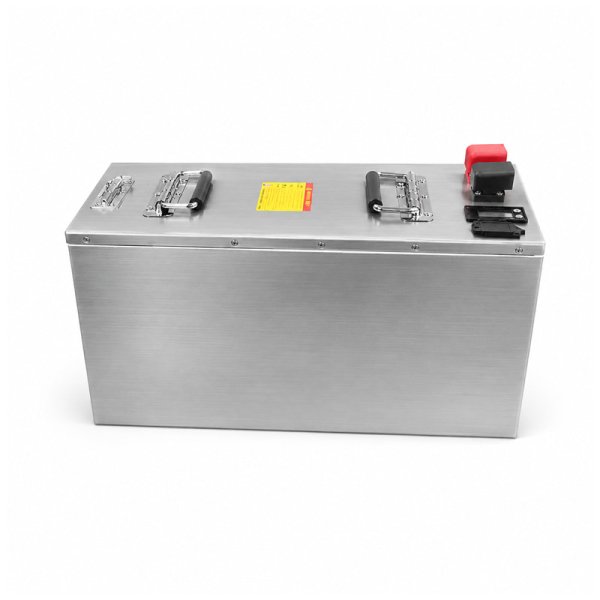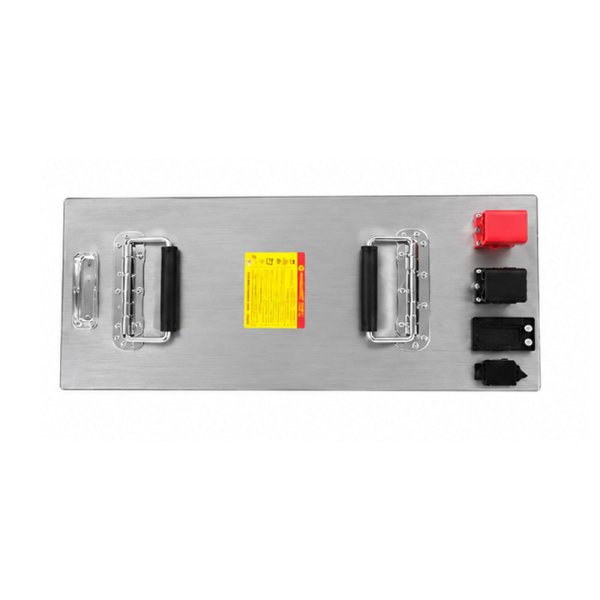
For a commercial tricycle fleet, the battery is not just a component. It determines how much payload the vehicle can carry, how consistently it can finish a route, how often technicians replace packs, how much charging time is needed, and how much unplanned downtime the fleet absorbs. A tricycle battery that looks inexpensive on a quotation can become expensive once range loss, replacement labor, missed deliveries, or maintenance are included.
For high-utilization cargo, delivery, vending, municipal, and utility three-wheelers, LiFePO4 is often the strongest default chemistry to evaluate first. It combines long cycle-life potential, high usable depth of discharge, good efficiency, and stronger intrinsic thermal stability than NMC. Lead-acid can still fit low-use and highly price-sensitive operations, while NMC can remain useful when pack mass and volume are the dominant constraints.
The right decision therefore starts with the duty cycle, not the cheapest tricycle battery or the chemistry with the highest single specification. A tricycle battery should be judged by the work it enables across the full service period.
Why Is Tricycle Battery Selection a Fleet-Cost Decision?
A fleet operator rarely loses money because a battery specification looks unattractive on paper. The real losses appear when vehicles cannot complete a shift, packs need to be swapped or replaced unexpectedly, charging windows interfere with dispatch, or battery mass reduces useful payload.
Before selecting a tricycle battery, a B2B buyer should define route distance, payload, road grade, stop-start frequency, ambient temperature, charging windows, motor and controller power, expected peak current, available installation space, and the target replacement interval. These factors determine whether the pack will spend its life in a comfortable operating range or near its thermal and current limits.
This is also why a commercial tricycle battery should be evaluated by total cost of ownership rather than purchase price alone. Battery cost, replacement frequency, service labor, charging losses, spare inventory, downtime, and integration work all belong in the same calculation.
How Do Lead-Acid, NMC, and LFP Compare for Tricycle Fleets?
The three chemistries solve different problems, so a fleet should compare them against the same route, payload, service-life, and downtime requirements.
| Fleet factor | Lead-acid | NMC | LiFePO4 |
|---|---|---|---|
| Upfront cost | Usually lowest | Higher | Higher than lead-acid; often competitive with NMC |
| Cycle-life potential | Lower under repeated deep cycling | Moderate | High for frequent cycling |
| Usable energy window | Typically narrower | Wide | Wide |
| Pack mass | High | Lowest for a given energy target | Much lower than lead-acid; higher than NMC |
| Thermal stability | Different hazard profile; mature technology | Requires tighter thermal control | Strong intrinsic thermal stability |
| Best fit | Low-use, budget-led fleets | Space/weight-constrained platforms | High-use cargo and delivery fleets |
A PNNL technology comparison uses representative reference values of about 2,000-3,000 cycles for LFP, 300-1,000 cycles for NMC, and about 400 cycles for lead-acid. The same comparison lists about 85% depth of discharge for lithium-ion versus about 50% for lead-acid, and efficiency above 93% for lithium-ion versus above 80% for lead-acid. These figures are technology-level references under stated assumptions, not guarantees for a specific tricycle battery.
Why Does LiFePO4 Often Win for High-Use Tricycle Fleets?
The commercial advantage of LFP becomes clearer as daily utilization rises. A cargo tricycle that cycles most of its battery every day needs different priorities from a vehicle that moves only a few times per week.
First, LiFePO4 cycle life can reduce replacement frequency. Fewer replacements mean fewer battery purchases, fewer technician hours, less vehicle downtime, and less uncertainty around spare-pack planning. For a fleet of dozens or hundreds of vehicles, those avoided interruptions can be more valuable than the initial price difference between chemistries.

Second, LFP can support a wider usable energy window than conventional lead-acid under typical technology comparisons. That allows the fleet to get more productive energy from the nominal pack capacity instead of oversizing a tricycle battery simply to avoid deep discharge.
Third, lithium-ion efficiency is generally higher than lead-acid. Across a high-use fleet, lower charging and discharging losses mean more of the electricity purchased becomes usable route energy rather than heat and conversion loss.
These are the main reasons a LiFePO4 tricycle battery is often a better commercial fit for delivery, cargo, vending, and utility operations that depend on predictable daily availability.
Fleet buyers who need a broader specification framework can review the commercial electric tricycle battery guide before finalizing voltage, capacity, current, enclosure, charger, and BMS requirements.
How Much Does Tricycle Battery Weight Affect Payload and Energy Use?
Battery mass is operating mass. Every kilogram assigned to the battery is a kilogram the chassis must accelerate, brake, support, and carry over the route. In a cargo fleet, battery weight can also compete directly with payload allowance.
Lead-acid systems are heavy because their specific energy is much lower than modern lithium-ion systems. LFP is not as energy-dense as NMC, but it still provides a major packaging and mass advantage over lead-acid for the same usable-energy target.
IEA data for the latest generation of cells puts LFP at up to about 205 Wh/kg and NMC at up to about 265 Wh/kg. That difference explains why NMC can still be attractive where mass and volume are extremely constrained. For most commercial three-wheelers, however, maximum cell energy density is only one part of the decision. Cycle life, safety margin, price, usable SOC, and serviceability can matter more.
A lighter tricycle battery can create more packaging freedom, reduce non-revenue vehicle mass, and help protect payload capacity. The exact fleet benefit depends on the vehicle’s gross weight rating, chassis design, route, and cargo profile.

Does LiFePO4 Provide a Better Safety Margin Than NMC?
In general, LiFePO4 has higher intrinsic thermal stability than NMC, but no battery chemistry should be described as failure-proof.
A 2025 peer-reviewed comparison of LFP and NMC622 cells reported thermal-runaway onset temperatures of 196.4 C for LFP and 154.6 C for NMC622 under the study conditions. The LFP cell also reached a lower peak temperature, 652.3 C versus 948.4 C, and released less total heat. Those results support the use of LFP where thermal margin is an important fleet requirement.
The same study found higher combustible-gas content from the tested LFP cells. That is an important qualification: a safer chemistry does not remove the need for venting, enclosure design, fault isolation, fusing, BMS protection, mechanical protection, and validation.

For a commercial tricycle battery mounted close to the driver, cargo, wiring, and controller, pack-level safety engineering matters as much as chemistry selection. LFP provides a strong starting point, but the supplier must still prove how the complete pack manages overcharge, overdischarge, overcurrent, short circuit, temperature, vibration, water ingress, and cell imbalance.
How Does Usable Energy Affect Route Completion?
Fleet operators buy nominal Ah, but they operate on usable Wh. Two packs with the same label can support different routes if their safe SOC windows, voltage sag, temperature behavior, and current limits are different.
This is where LFP can improve route planning. A wider usable energy window can reduce the amount of nominal capacity required to deliver the same scheduled energy. It can also reduce the temptation to oversize the tricycle battery solely to compensate for the limitations of lead-acid deep cycling.
However, usable energy should be validated at the pack level. The fleet should know how much energy remains available at the expected payload, temperature, current, and end-of-life condition. A route that is comfortable with a new pack may become marginal after years of capacity fade unless the original design includes reserve.
How Should Buyers Size a Tricycle Battery for Payload and Route?
The correct size starts with energy and power demand, not a fixed percentage of extra Ah.
Calculate daily energy from actual routes or representative field tests. Include cargo mass, hills, road surface, stop-start frequency, auxiliary loads, seasonal temperature, and driver behavior. Then define the reserve required for traffic, detours, aging, and operational uncertainty.
Next, check power. A tricycle battery must support the motor and controller’s continuous current as well as short peak events such as acceleration, hill starts, and heavy-load launch. An undersized pack may technically have enough energy but still suffer voltage sag, heat, or BMS trips under load.
Voltage must also match the vehicle system. Nominal pack voltage, full-charge voltage, controller limits, charger output, and any DC-DC or auxiliary systems must be checked as a complete architecture.
For example, the 48V 45Ah LFP power battery pack provides 2,160 Wh and is listed for electric motorcycles and three-wheel tricycle projects. It can be a useful reference point for some light-to-medium duty platforms, but actual suitability still depends on route energy, current demand, compartment dimensions, controller limits, and charging strategy.
A properly sized tricycle battery should complete the normal duty cycle without operating at its limits every day. That tricycle battery should also retain enough power and energy margin as the pack ages.
What Should Fleet Buyers Check Beyond Voltage and Ah?
Voltage and capacity are only the beginning of a B2B battery specification.
A commercial buyer should verify continuous current, peak current and duration, cell chemistry and grade, BMS protection thresholds, temperature sensing, balancing strategy, communication protocol, charger compatibility, connector rating, cable size, fuse strategy, enclosure strength, sealing requirement, vibration resistance, service access, and end-of-line testing.
The required enclosure protection should come from the real environment. A tricycle battery used in rain, dust, washdown, unpaved roads, or food-delivery service may need a different sealing target from a battery used under a protected body panel. There is no universal IP rating that fits every vehicle.
The same applies to low-temperature operation. If the fleet works in cold climates, buyers should confirm the validated charge and discharge temperature range, whether heating is required, how heating is controlled, and how much energy the thermal system consumes. A generic promise of -20 C operation is not enough.
Traceability also matters. For a multi-vehicle fleet, serial numbers, cell-batch records, BMS logs, fault codes, and warranty diagnostics can reduce the time required to identify whether a problem belongs to the battery, charger, controller, or vehicle wiring.
When Does Lead-Acid Still Make Sense?
Lead-acid is not automatically the wrong tricycle battery. It can remain practical when vehicles are lightly used, purchase budget is extremely constrained, battery mass is acceptable, existing service infrastructure is already built around lead-acid, and downtime or replacement labor has little economic impact.
A low-utilization fleet may never cycle enough to recover the higher purchase price of lithium through longer cycle life. In that situation, a well-maintained lead-acid system can remain commercially rational.
The decision changes when the fleet operates daily. As cycle count, route length, maintenance labor, and downtime increase, lead-acid battery operating cost becomes more visible and LFP usually becomes easier to justify.
When Can NMC Be the Better Choice?
NMC can be the better tricycle battery chemistry when pack volume or mass is the dominant constraint. The IEA’s latest cell-level comparison shows NMC retaining an energy-density advantage over LFP, which can be valuable for compact vehicles with demanding range targets.
Low-temperature performance can also favor NMC in some applications. But buyers should evaluate that advantage alongside thermal-management requirements, expected cycle life, replacement cost, and the consequences of operating close to the pack’s limits.
For a high-cycle cargo tricycle with enough installation space, LFP will often be the more balanced commercial choice. For a space-constrained premium platform, NMC may still be justified.
How Should Fleets Calculate Tricycle Battery Total Cost of Ownership?
A useful TCO model should compare the entire service period, not just the first battery invoice.
Include the initial pack and integration cost, expected replacement count, battery replacement cost, technician labor, vehicle downtime, spare-pack inventory, charger changes, charging energy, maintenance, diagnostic work, and end-of-life logistics.
Then divide the total cost by productive years, operating hours, routes, or delivered energy. This makes the tricycle battery decision comparable across different chemistries and fleet sizes.
For high-utilization fleets, LFP often performs well in this model because longer cycle-life potential, higher usable energy, lower routine maintenance, and fewer replacement events can offset a higher initial purchase price.
The result should still be calculated with project-specific numbers. Avoid universal claims such as “LFP always saves 50%” or “one battery will last eight years.” The correct business case depends on annual energy throughput, operating conditions, battery price, labor cost, and downtime value.
Which Tricycle Battery Is the Best Default for Commercial Operations?
For many high-use commercial operations, LiFePO4 is the best tricycle battery chemistry to evaluate first. It offers a strong combination of cycle-life potential, usable energy, efficiency, thermal stability, and manageable lifecycle cost.
That does not make LFP automatically suitable for every vehicle. The pack still needs the right voltage, energy, current, enclosure, BMS, charger, connectors, thermal limits, and mechanical design. A poorly engineered LiFePO4 tricycle battery can still cause downtime, while a correctly specified system can become a predictable fleet asset.
For B2B buyers, the most productive procurement process is to start with the route and payload, translate them into energy and power requirements, compare chemistry trade-offs, and then validate the complete tricycle battery system before mass production. The final tricycle battery specification should be tied to measurable fleet KPIs.
Frequently Asked Questions About Tricycle Batteries
1.What is the best battery for an electric tricycle?
For high-use cargo and delivery fleets, LiFePO4 is often the best starting chemistry because it balances cycle life, usable energy, thermal stability, and operating cost. Final selection still depends on the vehicle duty cycle.
2.How long does a tricycle battery last?
Service life depends on chemistry, depth of discharge, current, temperature, charging, and pack quality. PNNL reference values show LFP cycle-life potential well above conventional lead-acid under stated test assumptions.
3.Is LiFePO4 better than lead-acid for electric tricycles?
For daily commercial use, often yes. LiFePO4 can provide longer cycle-life potential, more usable energy, higher efficiency, lower mass, and less routine service, while lead-acid keeps the advantage in upfront price.
4.What size battery does an electric tricycle need?
Size should come from route energy, payload, motor/controller current, hills, temperature, reserve, and installation space. Matching only nominal voltage and Ah can leave a fleet short on range or power.
5.How do you choose a battery for a cargo tricycle?
Start with daily energy and peak power, then verify chemistry, voltage, BMS, charger, enclosure, temperature range, vibration, service access, and replacement plan. Fleet TCO should be checked before production approval.
Conclusion
The original question is not whether LiFePO4 is perfect. It is whether the chemistry solves the problems that matter most to a commercial tricycle fleet.
For fleets that carry cargo, operate every day, and lose money when a vehicle is unavailable, LFP usually provides the most balanced answer. Its cycle-life potential, usable energy, efficiency, and thermal stability can reduce replacement pressure and make fleet planning more predictable.
Lead-acid remains a valid low-cost option for light utilization, and NMC remains useful when energy density dominates. But for the typical high-use commercial tricycle battery project, LiFePO4 is often the strongest default – provided the complete pack is engineered around the real route, load, current, temperature, and service requirements.