A warehouse should buy a factory-integrated reach truck with lithium battery when its existing equipment is approaching replacement, its operating requirements have changed, or it needs a clearer path to whole-vehicle support. Retrofitting an otherwise reliable truck may be the better investment when its remaining service life, integration approvals and charging arrangements are demonstrably sound.
The decisive question is which reach truck with lithium battery strategy protects throughput without creating supplier-accountability gaps.
What Does a Reach Truck with Lithium Battery Actually Include?
A reach truck with lithium battery is a complete working system, not merely a truck carrying lithium cells. It encompasses traction power, a battery management system (BMS), truck interfaces, charging, diagnostics and commissioning.

Three superficially similar offers create different obligations:
- Factory-integrated truck: The truck OEM approves the battery configuration and service arrangement.
- Lithium-compatible new truck: An approved lithium option is offered, possibly with separate battery and charger contracts.
- Retrofit package: An existing truck is converted following engineering review, authorization and validation.
A purchase order for a reach truck with lithium battery should therefore identify exactly who supplies and approves each component. Do not assume the quoted truck includes a charger, commissioning, software updates or an extended battery warranty.
Toyota confirms lithium compatibility for many electric reach truck models, not universal interchangeability.
The procurement schedule should include the truck serial-number range, approved parts revision and expected software version. These seemingly administrative details can determine whether a replacement pack or charger remains supported several years later.
For mixed-age fleets, classify each reach truck with lithium battery offer before comparing prices.
When Should Warehouses Buy a New Lithium Reach Truck?
A new reach truck with lithium battery makes sense when a high-bay warehouse or 3PL needs to replace more than its energy source.
Favor factory integration when:
- Existing trucks face mounting mast, hydraulic, steering or electronic repairs, making retrofit savings illusory.
- A facility is changing rack heights, aisle geometry or pallet handling requirements, so the current truck configuration may soon be inadequate.
- Multi-shift operations need consistent diagnostics, service response and operator training across a standardized fleet.
- Cold-store work requires an approved combination of truck protection, battery temperature management and charging procedures.
- Lease expiry or replacement schedules already support renewal.

A factory-supported reach truck with lithium battery can reduce interface ambiguity, but cannot guarantee higher throughput or a unified warranty.
Request truck price, charger scope, lead time, parts availability, service terms and battery warranty separately. A new reach truck with lithium battery only becomes a stronger commercial choice when those terms match the site’s utilization and support requirements.
In a high-rack replenishment operation, also distinguish equipment productivity from energy availability. If congestion, visibility or reach performance limits pallet cycles, a new reach truck with lithium battery may solve bottlenecks a battery retrofit cannot.
Buying new is less persuasive when the present truck remains operationally suitable and its only serious constraint is battery-related downtime.
When Is Retrofitting Existing Reach Trucks the Better Decision?
Retrofit is attractive when trucks remain serviceable, layouts are stable and dealers can document compatibility.
A reach truck with lithium battery retrofit still has three procurement gates.

First, verify residual vehicle value. Review repair history, mast, hydraulics, controller support and planned overhauls. A cheap conversion cannot rescue a worn-out truck.
Second, establish the required modification approval. In the United States, OSHA’s powered industrial truck rule requires prior manufacturer written approval for modifications that affect truck capacity or safe operation, together with applicable marking updates. OSHA has also described limited circumstances in which approval by a qualified registered professional engineer may be accepted when manufacturer approval cannot be obtained. Any alternative approval pathway requires appropriate engineering assessment and documentation. Buyers should confirm the applicable requirements before authorizing a lithium battery conversion.
Third, demonstrate system fit. Verify battery mass, stability, restraint, controller behavior and BMS communication on the actual truck. Before approving a lithium retrofit, verify the truck manufacturer’s specified minimum and maximum battery weights, battery compartment dimensions, mounting requirements and stability limits. Replacing a heavy lead-acid battery with a lighter lithium pack must not compromise the truck’s approved load capacity or handling characteristics. Where additional mass or mounting modifications are necessary, use only an engineered, properly authorized solution supported by the applicable truck documentation. Do not assume that matching voltage and dimensions is sufficient for safe installation. For installation-level questions, the existing narrow-aisle reach truck battery guide covers the technical checks in greater depth.
A reach truck with lithium battery retrofit needs traceable acceptance records and must preserve approved operating limits. Reject a project that depends on improvised ballast, undocumented controller changes or a verbal assurance that a pack will simply “drop in.”
A converted reach truck with lithium battery also needs a workable service plan after the installer leaves. Confirm access to replacement harnesses, diagnostic software, trained technicians and technical drawings. The savings disappear quickly if one proprietary part strands the truck.
For mixed generations, one reach truck with lithium battery conversion plan will not fit every model.
Who Is Accountable for Battery, Charger and Truck Integration?
A reach truck with lithium battery may involve five parties. Undefined responsibilities turn faults into warranty disputes.
Use a signed matrix, not a vague “compatible” claim.
| Deliverable | Responsible Party to Name in the Contract | Evidence the Buyer Should Receive |
|---|---|---|
| Truck Compatibility and Permitted Modification | Truck OEM or Authorized Engineering Party | Model-specific approval and updated documentation where required |
| Battery Performance and BMS Behavior | Battery Supplier or Approved Integrator | Test results, interface specification and battery warranty |
| Charger Compatibility and Protection | Charger Provider plus System Integrator | Approved charger list, settings and communication validation |
| Installation, Diagnostics and Fault Escalation | Named Lead Integrator or Servicing Dealer | Commissioning record, fault-response route and escalation times |
| Site Acceptance and Operating Controls | Fleet Owner with Qualified Service Partners | Signed test record, operator instructions and service plan |
For a factory-integrated reach truck with lithium battery, verify distinct warranty periods, exclusions and claims; one invoice does not mean one warranty.
For a third-party reach truck with lithium battery retrofit, name one technical lead for the entire system. Negotiate cross-vendor diagnosis and escalation before delivery; each party remains liable only under its agreed terms.
The critical clause is simple: who restores the truck to service, by when, and at whose cost when the cause is initially uncertain?
For a reach truck with lithium battery assembled from multiple suppliers, include a no-fault-first diagnostic procedure: one named contact investigates, preserves operating logs and arranges corrective work before the parties apportion commercial liability.
How Should Buyers Compare Lifecycle Cost and Downtime?
Compare each reach truck with lithium battery option on identical workloads over a realistic, shared planning horizon; do not value an old truck beyond its remaining service life.
Include truck or conversion, approvals, chargers, site electrics, installation, maintenance, training, deployment disruption, finance and residual value.
Next, value availability. Suppose ten trucks each avoid twelve minutes of genuinely productive downtime per working day over 250 days. That represents 500 potential truck-hours annually (10 × 12 ÷ 60 × 250). This is illustrative, not a performance benchmark. Monetize only hours that demonstrably avoid real expenditure.
| Decision Factor | Factory-Integrated Purchase | Existing-Truck Retrofit |
|---|---|---|
| Initial Expenditure | Higher because a complete truck is acquired | Usually lower, but conversion engineering adds cost |
| Equipment Life | Begins with a new vehicle | Limited by residual truck condition |
| System Responsibility | Potentially simpler if contractually unified | Needs explicit multi-supplier coordination |
| Service Interruption | Delivery, training and commissioning | Truck withdrawal, conversion and pilot testing |
| Residual Value | Depends on truck and market | Depends on modified-truck acceptability and approval |
A cheap reach truck with lithium battery can be expensive if it blocks critical aisles; buying all new trucks can also waste usable assets.
Model normal operation, a missed charging window and delayed service. Use the multi-shift forklift charging guide to define credible charging assumptions.
Approve a reach truck with lithium battery investment on documented uptime, risk allocation and cost per productive truck-hour—not optimistic payback claims.
How Can Warehouses Roll Out Lithium Reach Trucks Safely?
Moving to a reach truck with lithium battery fleet requires a phased rollout that exposes problems before fleet-wide disruption.
Stage 1 — Segment the fleet. Group trucks by model, age, condition, workload and criticality; allocate new, retrofit or retain. One reach truck with lithium battery policy need not fit every warehouse zone.
Stage 2 — Issue two comparable requests for quotation. Require like-for-like new-truck and approved retrofit quotations with identical workloads, charger assumptions and warranty scope.
Stage 3 — Pilot under actual conditions. Test peak pallet movements, high lifts, handovers, temperature extremes and a missed charging window. Record availability, faults and service response. A reach truck with lithium battery must pass the warehouse’s busiest realistic operating pattern, not only a demonstration run.
Stage 4 — Define acceptance and stop criteria. Sign off on safety, interfaces, uptime, diagnostics and fault ownership. Do not scale a reach truck with lithium battery configuration until unresolved faults have a named owner and corrective action.
Stage 5 — Expand by fleet cohort. Train staff, reserve spares and review each deployment batch. A successful rollout requires every production batch to match the validated configuration without field improvisation.
Frequently Asked Questions About Reach Truck with Lithium Batteries
Q: Is a factory-integrated lithium reach truck better than a retrofit?
A: A factory-integrated reach truck with lithium battery may simplify coordination and suit aging fleets. Retrofitting is often more economical when trucks remain serviceable and approved integration is available.
Q: Can an existing reach truck be upgraded to lithium power?
A: Yes, some models can become a reach truck with lithium battery after a model-specific engineering review. Confirm approval, battery weight, stability, electrical interfaces and commissioning before ordering.
Q: Do lithium reach trucks always come with dedicated chargers?
A: No. A reach truck with lithium battery may be quoted with or without a charger. Confirm the approved charger model, communication settings, installation work and supplier responsibility in the contract.
Q: Who provides warranty support for a third-party lithium reach truck battery?
A: For a retrofitted reach truck with lithium battery, the pack supplier normally covers its own warranty obligations. Truck, charger and integration claims depend on separate contracts and agreed fault triage.
Q: How should warehouses compare lithium reach truck solutions?
A: Compare each reach truck with lithium battery proposal using identical duty cycles, approved integration, total fleet cost, downtime exposure, service coverage and documented acceptance criteria.
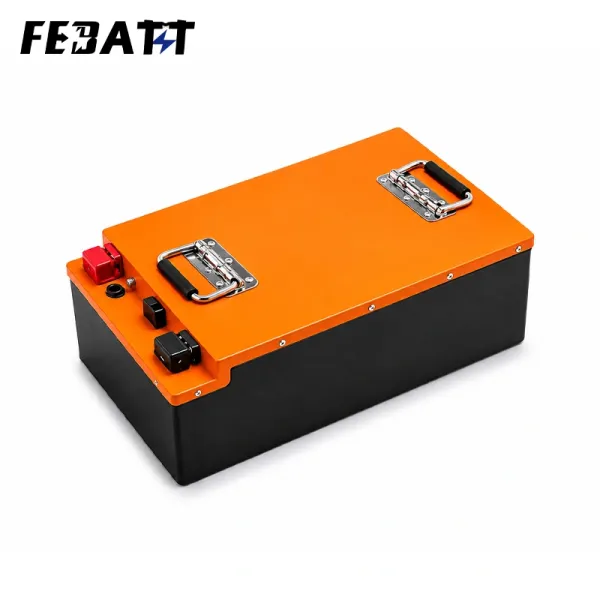
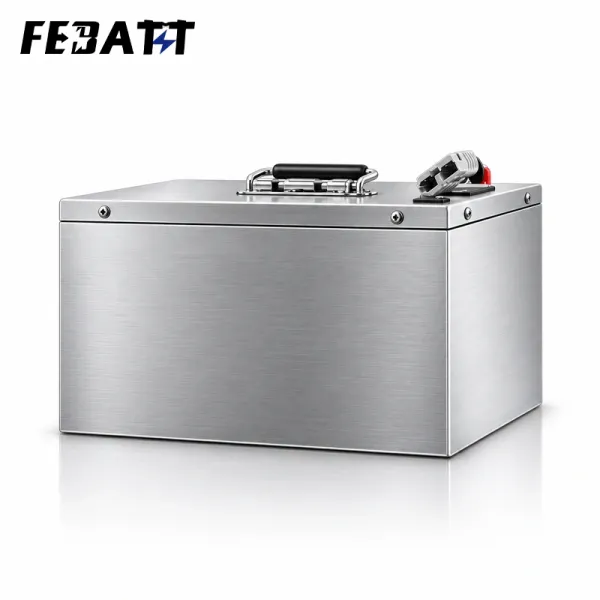
Considering a lithium battery retrofit for an existing reach truck fleet? FEBATT supports custom LiFePO4 battery engineering and OEM/ODM supply projects based on equipment specifications, operating requirements and approved system integration.
Share your truck manufacturer and model, existing battery voltage and capacity, battery compartment dimensions, required battery weight, charging arrangements, operating hours and estimated order quantity.
FEBATT can review the proposed battery requirements and discuss customization, BMS integration, prototype testing and supply options. Final compatibility and any required vehicle modifications must be validated and approved through the applicable truck manufacturer or authorized engineering process.
Explore FEBATT’s custom power battery solutions to discuss your project.