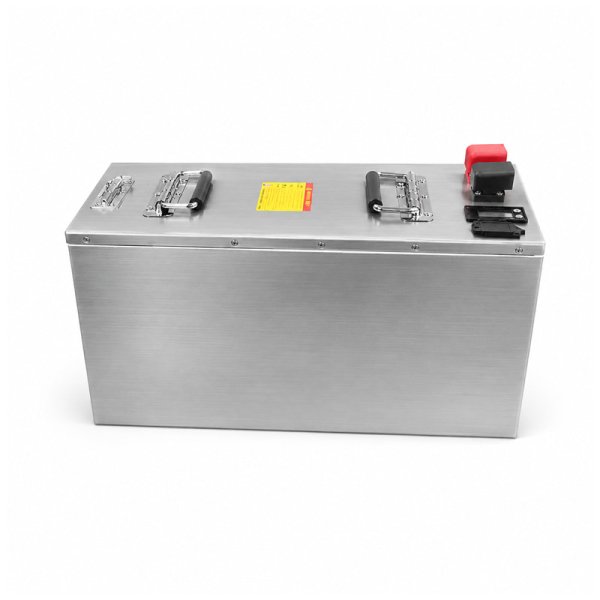
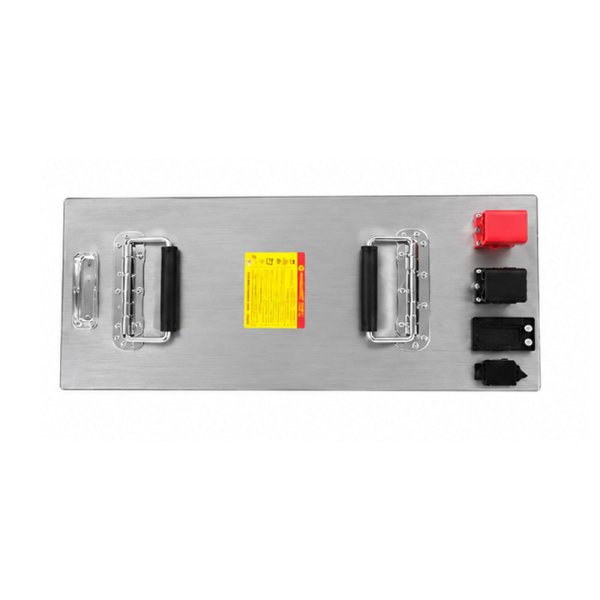
A commercial electric-tricycle program can fail even when the prototype performs well. The real procurement risk begins when a lithium battery pack moves from approved sample to repeated production: cells may come from another lot, a connector may be substituted, BMS parameters may drift, assembly torque may vary, or test records may not prove which unit received which process.
For an OEM, the objective is not simply to buy a lithium battery pack that works. It is to establish a production system in which every delivered lithium battery pack remains inside an agreed configuration and every deviation can be traced, contained, corrected, and economically evaluated.
Teams still defining vehicle-level requirements can first review the electric three-wheeler battery guide for OEM and fleet buyers before freezing the production baseline.
What Must an OEM Freeze Before a Lithium Battery Pack Enters Mass Production?
Before mass production, the OEM should freeze the configuration that defines an acceptable lithium battery pack. A signed sample is useful, but insufficient. The controlled baseline should include mechanical drawings, electrical interfaces, approved BOM, BMS software revision, protection thresholds, connector and fuse specifications, label content, sealing method, critical assembly parameters, and production test limits.
The purpose is to prevent “equivalent” changes from entering production without review. A lower-cost connector, different cell lot, altered adhesive, revised gasket, or alternative BMS component may appear minor, yet it can change vibration resistance, thermal behavior, current capability, or serviceability.
A practical production-release package should contain:
- approved drawings and revision numbers;
- golden-sample or pilot-lot references;
- controlled BOM with approved manufacturer and part number;
- BMS firmware and parameter version;
- critical-to-quality dimensions and process controls;
- EOL test specification and pass/fail limits;
- packaging, labeling and serial-number rules.
This package is the contractual technical definition of the lithium battery pack, not merely an internal engineering file. For broader application and pack-architecture context, this power battery solution provides a useful reference before production release.

How Should Vehicle Duty Cycle Be Converted Into Production Acceptance Requirements?
“Suitable for delivery tricycles” is not a production specification. The OEM should define payload range, gradients, stop-start frequency, average and peak current, daily operating hours, shift pattern, ambient exposure, vibration severity, and expected remaining state of charge at route end.
Those conditions should become measurable acceptance criteria for the lithium battery pack. A route with repeated hill starts may require limits for sustained current, peak-current duration, voltage sag, BMS intervention, connector temperature, and thermal rise. A multi-shift fleet may require tighter capacity consistency than a low-utilization vehicle.
Some EV battery suppliers pass a short sample test yet leave mass-production acceptance based mainly on nominal capacity and appearance. The OEM should instead connect each production criterion to a vehicle consequence. The commercial tricycle battery procurement guide provides a fleet-focused reference for translating route, payload, and service requirements into acceptance criteria.
| Vehicle condition | Acceptance focus | Evidence |
|---|---|---|
| High payload/gradients | Current delivery, voltage sag, heat | Load-test record |
| Repeated stops | Peak response, BMS stability | Dynamic current test |
| Long daily routes | Usable capacity, consistency | Capacity test |
| Rough roads | Fastener and connector integrity | Vibration/process record |
| Wet/dusty duty | Seal and enclosure control | Leak/IP verification |
The result is a lithium battery pack specification based on commercial work rather than catalogue ratings, with lithium battery pack acceptance tied directly to duty.
Which Pack-Level Dimensions, Weight and Interfaces Must Be Controlled?
After vehicle integration is approved, pack-level interfaces become controlled characteristics. Dimensions should include the external envelope, mounting-hole locations, connector position, cable exit direction, service clearances, handling points, and protrusions that can interfere with the tricycle chassis.
Weight also matters. Excess mass can reduce payload margin and alter vehicle balance; an unexpectedly light lithium battery pack may indicate a material or component change. That makes lithium battery pack weight a simple but useful incoming-control signal. Buyers should define an acceptable weight window, not only a nominal value.
Electrical and communication interfaces require the same discipline. Connector manufacturer and keying, cable gauge, fuse rating, CAN or RS485 definition, wake/sleep logic, ignition signal, SOC reporting, and diagnostic access should be revision-controlled. If the lithium battery pack communicates with the tricycle controller, interoperability should be verified on the actual vehicle or a representative bench fixture during pilot approval.
How Should an Approved BOM Prevent Unauthorized Component Substitution?
The approved BOM is a primary defense against sample-to-production inconsistency. It should identify critical parts by manufacturer, exact part number, specification, and approved alternates. Cell model, BMS electronics, current sensor, fuse, connector, cable, enclosure material, gasket, thermal interface materials, fasteners, and adhesives can all influence the finished lithium battery pack.
A supplier should not substitute these items solely because performance appears “similar.” The approved lithium battery pack configuration must remain the reference. Any proposed change should enter a documented change-control process with reason, risk assessment, validation evidence, affected lots, and OEM approval before implementation.
This control should extend upstream. Battery material suppliers may change availability, lead time, or formulation, while cell and electronic-component sources may face allocation pressure. Procurement therefore needs visibility into which upstream changes are allowed, which require notification, and which trigger requalification.
For a lithium-ion battery pack production program, the commercial rule is simple: cost reduction is not approval. A component change is acceptable only after equivalence has been demonstrated against the frozen lithium battery pack baseline.

What Production Records Should Be Traceable by Batch and Serial Number?
Traceability should allow an OEM to move backward from one failed field unit to the materials and process history that created it. Every lithium battery pack should have a unique serial number linked to production date, line or station, cell batch, key component lots, BMS hardware and firmware revision, and EOL results.
The record should answer five questions: What lithium battery pack was built? From which controlled components? Under which process revision? What tests did it pass? Which other units share the same risk exposure?
Useful records include incoming inspection, cell matching data, torque records for critical joints, weld or connection checks, insulation results, sealing verification, firmware loading, final functional tests, repair history, and nonconformance disposition.
This is especially important when a custom battery program has vehicle-specific interfaces. Without serial-level evidence, a limited defect can become a fleet-wide containment action simply because nobody can prove the affected boundary.
Which End-of-Line Tests Should Every Commercial Pack Pass?
Every commercial lithium battery pack should receive a defined end-of-line, or EOL, test. Sampling may be suitable for destructive or long-duration validation, but basic electrical safety and functional verification should not depend on periodic sampling alone.
A typical EOL sequence can include:
| EOL check | Purpose |
|---|---|
| Open-circuit voltage and polarity | Detect wiring or assembly errors |
| Insulation/withstand where applicable | Verify electrical isolation |
| BMS communication | Confirm data and vehicle interface |
| Protection-function verification | Check configured limits |
| Charge/discharge function | Confirm current path and behavior |
| Temperature-sensor plausibility | Detect sensor or harness faults |
| Firmware/parameter readback | Confirm approved revision |
| Serial/label verification | Preserve traceability |
Capacity-test strategy may vary with cycle time. Some factories use full verification at defined stages or sampling frequencies while every lithium battery pack receives shorter functional tests. The plan, limits, frequency, and escalation rules should be agreed before production.
EOL data should be tied automatically to the lithium battery pack serial number whenever practical. A pass label without retrievable test data offers weak protection during a warranty dispute.

How Should Firmware and BMS Parameter Changes Be Controlled?
BMS settings are part of the product configuration and should be controlled like physical components. Protection thresholds, current limits, balancing logic, temperature limits, SOC algorithms, sleep behavior, communication mapping, and diagnostic flags can materially change vehicle behavior.
The OEM should approve a named firmware version and parameter set for each lithium battery pack program. Production should use controlled files, restricted access, verified programming equipment, and readback checks at EOL. Any revision should have a change notice describing the reason, validation performed, backward compatibility, implementation date, and affected serial-number range.
Silent parameter adjustments are dangerous because they can produce reduced acceleration, unexpected protection trips, inconsistent range, or charging anomalies while the physical lithium battery pack appears unchanged.
How Should Buyers Define Defect Handling, CAPA and Warranty Evidence?
A defect agreement should define what happens before defects occur. Procurement contracts should establish defect classification, response time, containment expectations, root-cause format, CAPA requirements, and evidence needed for closure.
For a serious field issue, the process should identify affected serial numbers, quarantine related stock, define immediate containment, perform failure analysis, confirm root cause from evidence, implement corrective action, and verify effectiveness. It should also determine whether other lots, firmware revisions, or components are exposed.
Warranty evidence should be explicit. The supplier may need vehicle logs, fault codes, photos, returned-unit data, or operating history; the OEM may need EOL records, component lots, firmware version, and repair history.
A lithium battery pack warranty is therefore not only a time or cycle statement. It is a data-sharing process that determines whether claims can be resolved quickly and fairly.
How Can Procurement Compare Unit Price With Yield, Rework, Warranty and TCO?
Unit price is only one line in the sourcing equation. A cheaper lithium battery pack can become more expensive if incoming defects, rework, line stoppages, replacements, freight, diagnostic labor, or fleet downtime increase.
Procurement should compare suppliers with a landed quality-cost model:
Effective pack cost = purchase price + incoming inspection + rework + scrap + warranty handling + replacement logistics + downtime exposure.
First-pass yield is a leading indicator. If a supplier requires frequent rework to reach shipment acceptance, the OEM is purchasing process instability. Warranty rate and repeat-defect rate provide the field view; CAPA closure speed shows how quickly risk is controlled after an escape.
This matters when comparing a low-cost producer with more disciplined EV battery suppliers. The stronger commercial offer is the lithium battery pack program that delivers repeatable acceptance, controlled change, traceable evidence, and predictable TCO.
Procurement, SQE, engineering, and project management should therefore review the same scorecard. Quality performance should influence sourcing decisions before warranty cost makes the problem visible.
Conclusion
For a commercial electric-tricycle OEM, mass-production quality is created by configuration control, not by a good prototype alone. The lithium battery pack should enter production only after duty-cycle requirements, interfaces, BOM, firmware, traceability, EOL testing, defect response, and warranty evidence are frozen into an auditable acceptance system.
That structure protects fleets from batch drift and protects procurement from hidden quality cost. When every lithium battery pack can be traced to an approved configuration and objective test evidence, mass production becomes a controlled industrial process rather than a repeated gamble on sample performance.
Frequently Asked Questions About Lithium Battery Packs
Q: What production records should a lithium battery pack supplier provide?
A: The supplier should retain serial-linked BOM revision, cell and critical-component lots, process records, firmware version, EOL results, rework history, inspection data, and shipment traceability for each batch.
Q: How can an OEM prevent unapproved component substitutions?
A: Freeze an approved BOM with manufacturer and part numbers, define controlled alternates, and require written change notice, risk review, validation evidence, and OEM approval before any substitute enters production.
Q: What should be checked during pilot-lot approval?
A: Check vehicle fit, interfaces, current and thermal behavior, BMS communication, production repeatability, traceability, EOL evidence, workmanship, packaging, and conformity to the frozen lithium battery pack specification.
Q: Should every commercial battery pack receive end-of-line testing?
A: Yes. Every commercial pack should receive defined functional and safety-related EOL checks, while longer capacity, vibration, environmental, or destructive tests can follow an agreed sampling and validation plan.