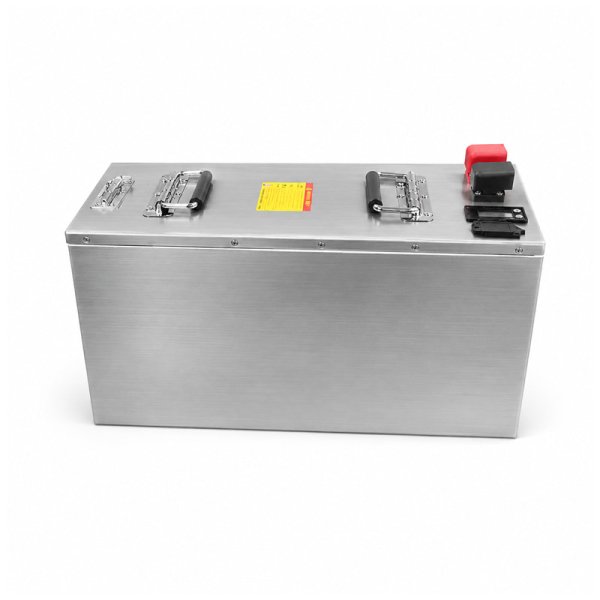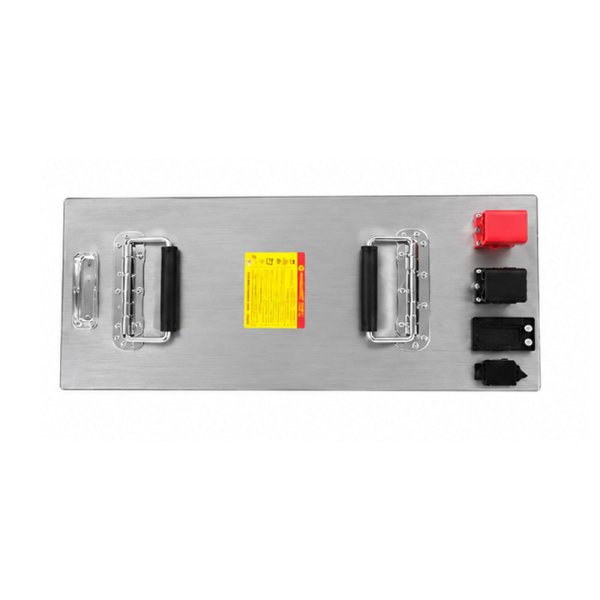
For commercial electric motorcycles and cargo tricycles, choosing between LFP and NMC is not a simple question of which chemistry is “better.” A fleet battery must finish routes, support repeated acceleration, carry the required load, fit the available space, operate within temperature limits, and avoid becoming a recurring service problem. The right lithium battery chemistry should therefore be selected from the duty cycle backward.
For most high-use fleets, LFP is the stronger default because it combines long cycle-life potential, strong intrinsic thermal stability, low maintenance, and predictable replacement planning. NMC remains useful when minimum mass, compact packaging, or maximum cell-level energy density is more valuable than extending service life.
How Do LFP and NMC Differ for Commercial Vehicles?
LFP and NMC are both lithium-ion chemistries, but they optimize different outcomes. LFP generally prioritizes cycle life and thermal stability, while NMC prioritizes energy density. IEA 2026 reports latest-generation LFP cells at up to about 205 Wh/kg and NMC cells at up to about 265 Wh/kg. These are cell-level figures, not guaranteed pack values.
That difference matters most when a commercial motorcycle has very limited battery space. NMC can provide more energy in a lighter or smaller package. Cargo tricycles usually have more installation freedom, so the business value of NMC’s energy-density advantage is often smaller.
| Fleet factor | LFP / LiFePO4 | NMC |
|---|---|---|
| Energy density | Lower than NMC | Higher; useful in tight packaging |
| Cycle-life potential | Usually stronger for high-use fleets | Usually shorter than LFP |
| Thermal margin | Stronger intrinsic stability | Needs tighter protection design |
| Best fleet fit | Delivery, cargo, shared, high-use duty | Compact, light, performance-led platforms |
Why Is LFP Usually Better for High-Use Fleets?
Replacement frequency becomes a business KPI when vehicles work every day. A representative PNNL comparison lists roughly 2,000-3,000 cycles for LFP and 300-1,000 for NMC under its stated assumptions. These are technology references rather than guarantees, but they show why lithium battery chemistry affects fleet economics.
Every replacement also creates labor, downtime, spare inventory, warranty administration, and lost route capacity. For delivery motorcycles, shared fleets, vending tricycles, and cargo vehicles with high annual mileage, LFP’s longer cycle-life potential can reduce how often those costs occur. This is why LFP is usually the better lithium battery chemistry when uptime and lifecycle cost matter more than achieving the smallest pack.
When Does NMC Still Make Sense?
NMC can be the correct choice when a motorcycle needs maximum range from a very limited compartment, minimum vehicle mass, or a compact high-performance design. Buyers should compare complete packs rather than chemistry labels: usable energy, weight, continuous and peak current, temperature derating, BMS strategy, enclosure design, and service requirements. NMC is strongest where compactness creates measurable business value.
How Do Safety and Cold Weather Affect the Choice?
Safety is a pack-level engineering issue, but chemistry changes the starting thermal margin. A 2025 LFP/NMC622 study reported thermal-runaway onset at 196.4°C for LFP and 154.6°C for NMC622 under the test conditions. The study also reported combustible gas from LFP cells, so LFP should not be described as risk-free. BMS protection, fusing, enclosure design, wiring, ventilation, and charger control still matter.
Cold weather creates a different trade-off. Low temperature can reduce available energy and restrict charging in any lithium-ion pack, and LFP often has more challenging low-temperature kinetics than NMC. Severe-winter fleets should validate real charge/discharge limits, insulation or heating strategy, and route requirements before finalizing lithium battery chemistry.

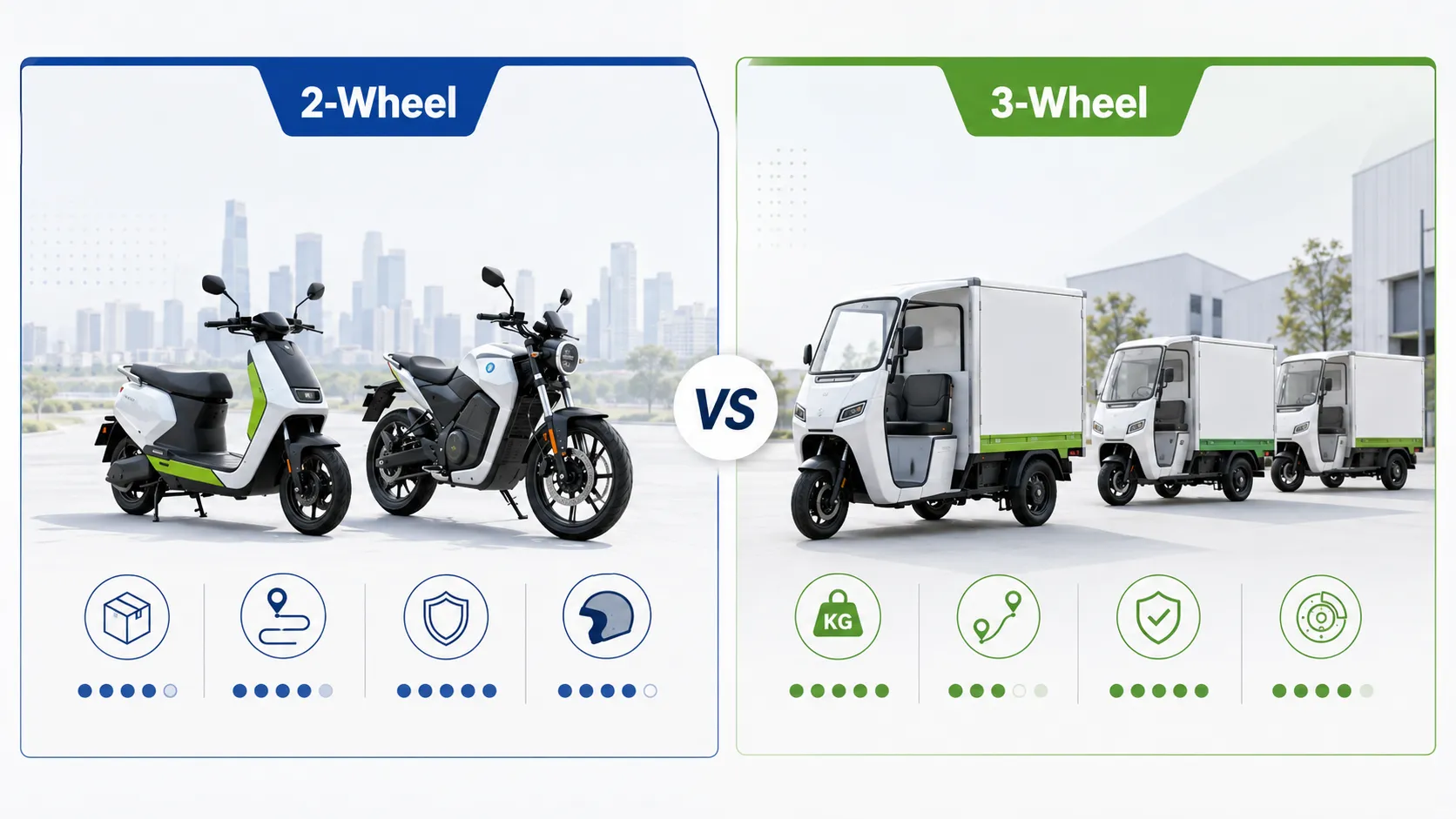
Why Do Motorcycles and Cargo Tricycles Need Different Priorities?
Commercial electric motorcycles
Motorcycles face tight packaging, high acceleration current, and strong pressure to keep mass low. NMC can be attractive where compactness dominates. For high-mileage delivery fleets, however, cycle life, thermal margin, and predictable replacement planning often make LFP the stronger long-term choice.
Cargo and delivery tricycles
Cargo tricycles usually carry heavier loads, operate for longer hours, and have more room for the battery. Their economics therefore reward durability more than extreme energy density. When packaging allows it, LFP is usually the more practical lithium battery chemistry for repeated starts, high daily throughput, and lower replacement pressure.

Why Do the BMS and Charger Matter as Much as Chemistry?
A good chemistry choice can still fail if the pack is poorly engineered. The BMS should protect against overcharge, over-discharge, excessive current, abnormal temperature, and cell imbalance. Cables, connectors, fuses, and busbars must also support continuous and peak current without becoming thermal bottlenecks.
The charger must match the validated charging profile. CAN or RS485 communication can give service teams access to SOC, temperature, current, and fault history, helping them distinguish battery faults from charger, controller, or connector problems.
For application-first engineering, this power battery solution can be used to define route energy, current, dimensions, communication, temperature, and service requirements as one system.
What Should OEMs Verify Before Approving a Pack?
- route or shift energy plus reserve margin;
- continuous and peak current with duration and temperature derating;
- pack dimensions, mass, mounting, vibration, and sealing;
- BMS thresholds, balancing, communication, and diagnostic data;
- charger compatibility and validated temperature limits;
- cycle-life test conditions, traceability, warranty, and service process.
These checks keep lithium battery chemistry from becoming a shortcut for supplier qualification. Two LFP packs can perform very differently if cell consistency, BMS calibration, structural design, or production control differs.
As one configuration reference, 72V 50Ah LiFePO4 battery provides 3.6 kWh nominal energy for compatible two-wheeler projects. It is an example, not a universal recommendation; route energy, current, dimensions, controller limits, and temperature still determine suitability.
Conclusion
LFP and NMC are both useful technologies, but they create value differently. NMC is strongest when compactness, low mass, and maximum energy density define the platform. LFP is usually the stronger commercial default when long cycle life, thermal margin, uptime, and predictable lifecycle cost define success.
For high-use delivery motorcycles and especially cargo tricycles, those B2B priorities usually favor LFP. The final lithium battery chemistry decision should still be made at system level: duty cycle, current, payload, temperature, BMS, charger, pack structure, diagnostics, and supplier validation all matter.
Frequently Asked Questions About Lithium Battery Chemistry
Q: Which battery chemistry is best for delivery motorcycles?
A: LFP is usually the better starting point for high-use delivery fleets because cycle life, thermal margin, and replacement planning often matter more than minimum pack size.
Q: Is LiFePO4 better than NMC for cargo tricycles?
A: Usually for high-use cargo fleets. Tricycles often have enough installation space to benefit more from LFP durability and lower replacement pressure than from NMC’s higher energy density.
Q: Which lasts longer, LFP or NMC?
A: LFP generally offers longer cycle-life potential, but actual life depends on cell design, depth of discharge, current, temperature, charging, and the end-of-life criterion.
Q: Is NMC better than LFP in cold weather?
A: NMC often has a low-temperature advantage, but real performance is pack-specific. BMS limits, heating, insulation, cell formulation, and operating strategy can change the result.
Q: What should a fleet buyer specify before ordering?
A: Define route energy, continuous and peak current, pack dimensions, mass, temperature range, charger, BMS communication, service-life target, and operating conditions.