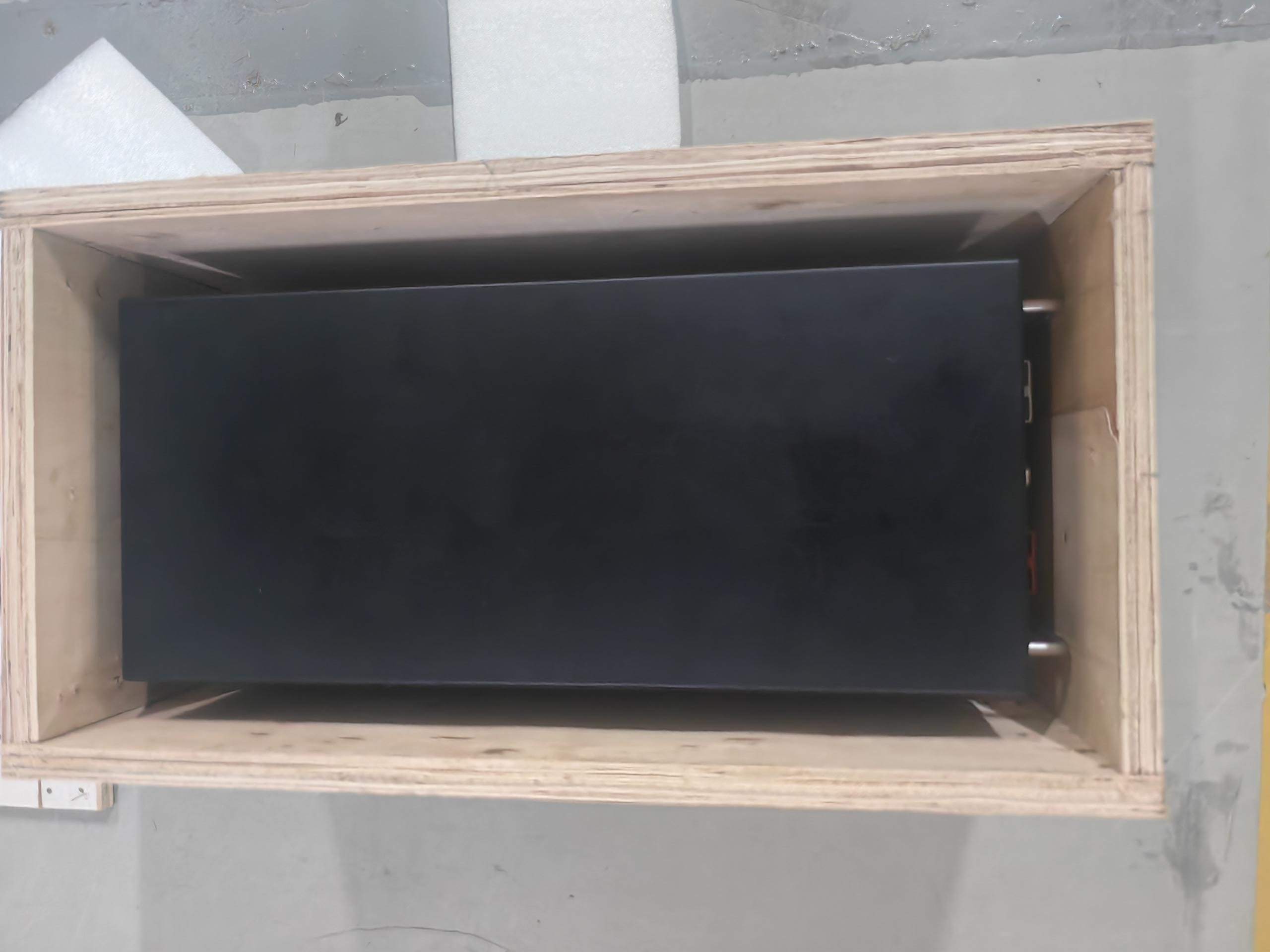
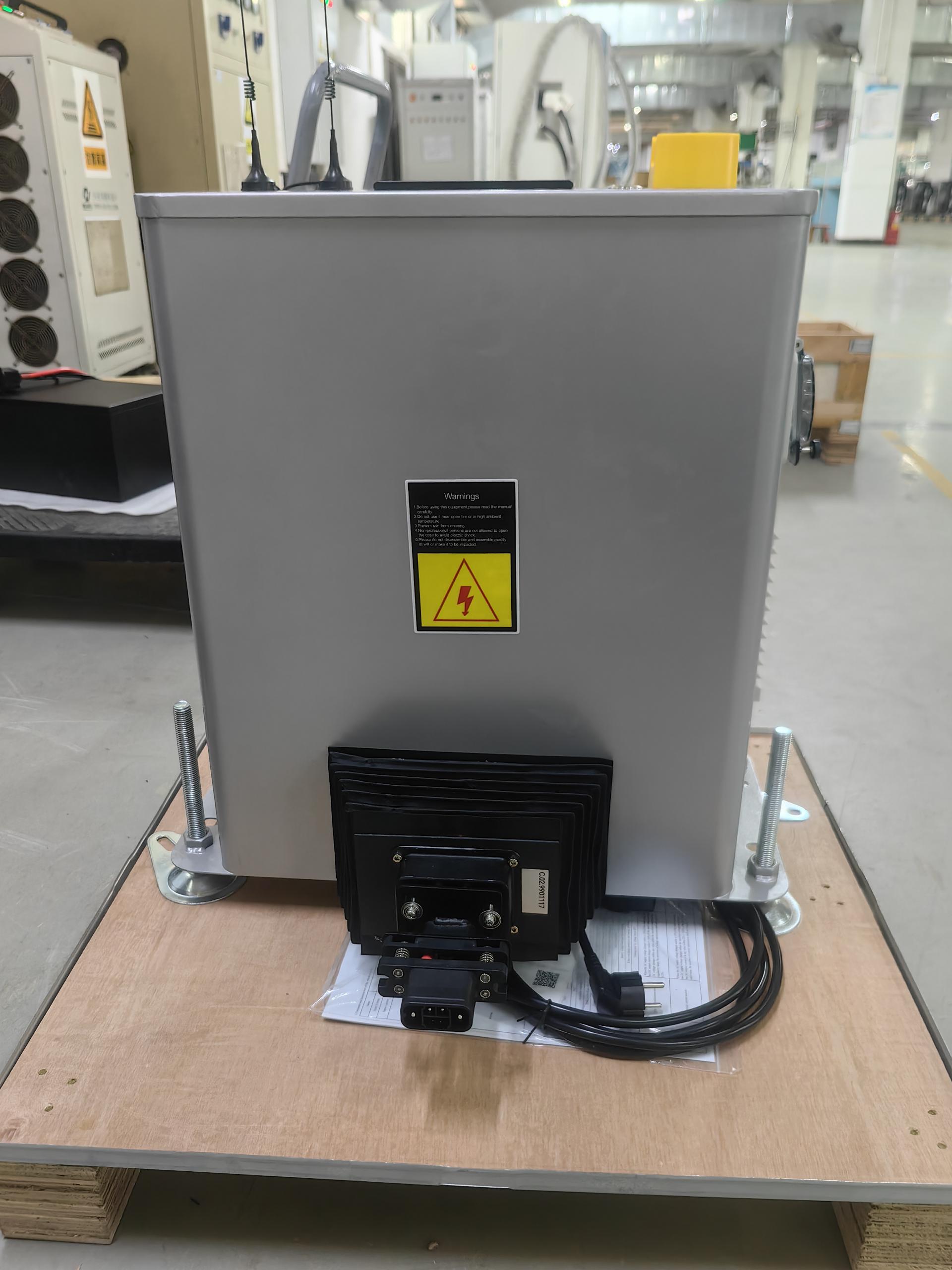
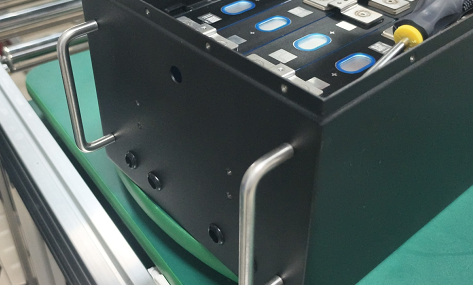
A South Korean robotics technology company was developing a new autonomous mobile robot for standard indoor warehouse use. Because the platform was still under development, the engineering team needed more than a standard battery pack. The AGV lithium battery had to fit a narrow installation space, communicate with the robot control system, work with a dedicated charging station, and support later certification and production requirements.
The project began with sample development and validation. Multiple battery packs and charging stations were prepared for testing. After sample confirmation, the project progressed to the mass-production stage.
For FEBATT, the case shows how an AGV lithium battery project can move from engineering requirements to system validation and production readiness.
The Challenge: Integrating the Battery Into a New AMR Platform
The customer’s target was a 48V-class LiFePO4 battery with a capacity in the 60–70Ah range. The robot would operate indoors at room temperature, so extreme-temperature performance was not the main engineering challenge. The more important issue was integration.
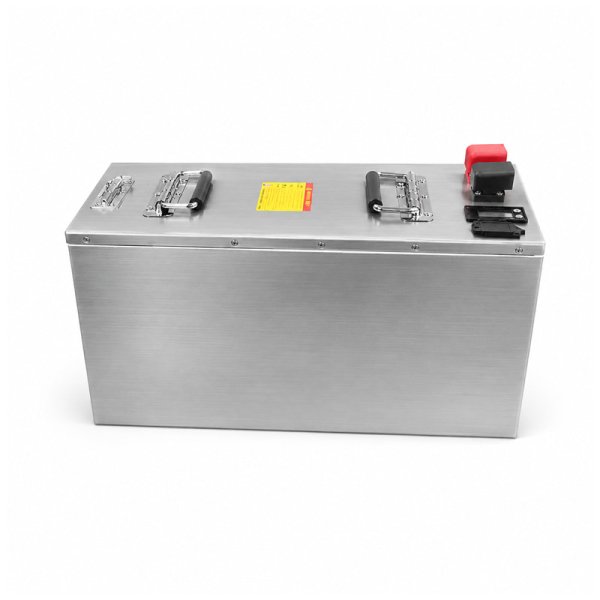
The available battery space was approximately 160 mm wide, 500 mm long, and 220 mm high, excluding external components. If the cell arrangement made the original width impractical, the customer could accept an increase to 180 mm. That small amount of flexibility was useful, but the AGV lithium battery still meant the pack layout had to be considered carefully.
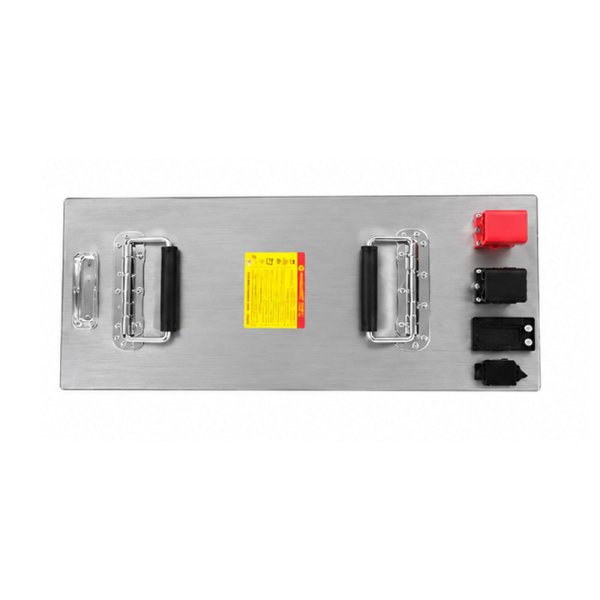
The customer also required RS485 communication, a battery power switch, detachable charging and discharging interfaces, an AMR charging station, and dedicated charging terminals. Selecting an AGV lithium battery by voltage and capacity alone would therefore not have been sufficient.
For new robot platforms, the battery, BMS, connectors, mechanical envelope, and charging method have to work as one system. FEBATT’s custom robot battery solutions for AGV and AMR platforms are developed around this type of integration, where the AGV lithium battery is designed as part of the complete machine rather than as an isolated component.
Why Was LiFePO4 Selected?
The customer specifically requested LiFePO4 chemistry. For an indoor mobile robot project, that choice matched the need for stable discharge behavior, long cycle capability, and a chemistry widely used in industrial motive-power applications.
The required charging rate was 1C, while the target discharge rate was 0.3C. In this application, that balance reflected a system designed around predictable warehouse operation rather than unusually high continuous discharge.
A LiFePO4 AGV lithium battery also gives engineers flexibility when planning repeated daily operation. Chemistry, BMS logic, and charging strategy can be considered together from the beginning.
KC certification was requested for the project, while CE and UL were also discussed, with CE set as the minimum requirement. These needs were treated as part of project planning rather than as an afterthought.
Designing the 48V AGV Battery Around the Available Space
One of the clearest engineering constraints was the installation envelope.
A nominal 48V, 60–70Ah battery may sound straightforward on paper, but the available internal space determines how the cells, BMS, wiring, connectors, protective structure, and service access can actually be arranged.
For this project, the target width of 160 mm created the main packaging limitation. The option to extend the width to 180 mm provided additional room if required by the cell arrangement, but the pack still needed to remain compact enough for the new AMR chassis.
This is where a custom AGV lithium battery pack differs from an off-the-shelf industrial battery. The engineering process starts with the robot. Mechanical dimensions, connector positions, mounting space, and service access all influence the final design.
Detachable charging and discharging interfaces also supported assembly, testing, and future maintenance.
RS485 BMS Communication as Part of the Robot System
The customer required RS485 communication between the battery management system and the AMR.
In a mobile robot, communication is important because the AGV lithium battery is not only an energy source. The robot controller may need access to battery information so that charging behavior, operating limits, alarms, or other control decisions can be coordinated at the system level.
For this project, the AGV lithium battery therefore had to be considered as part of the AMR control architecture. Communication compatibility was evaluated together with the electrical interface instead of being added after the mechanical design had already been fixed.
Confirming the BMS protocol, connector definition, and charging logic early helps reduce integration problems later in development.
Battery and AMR Charging Station Developed Together
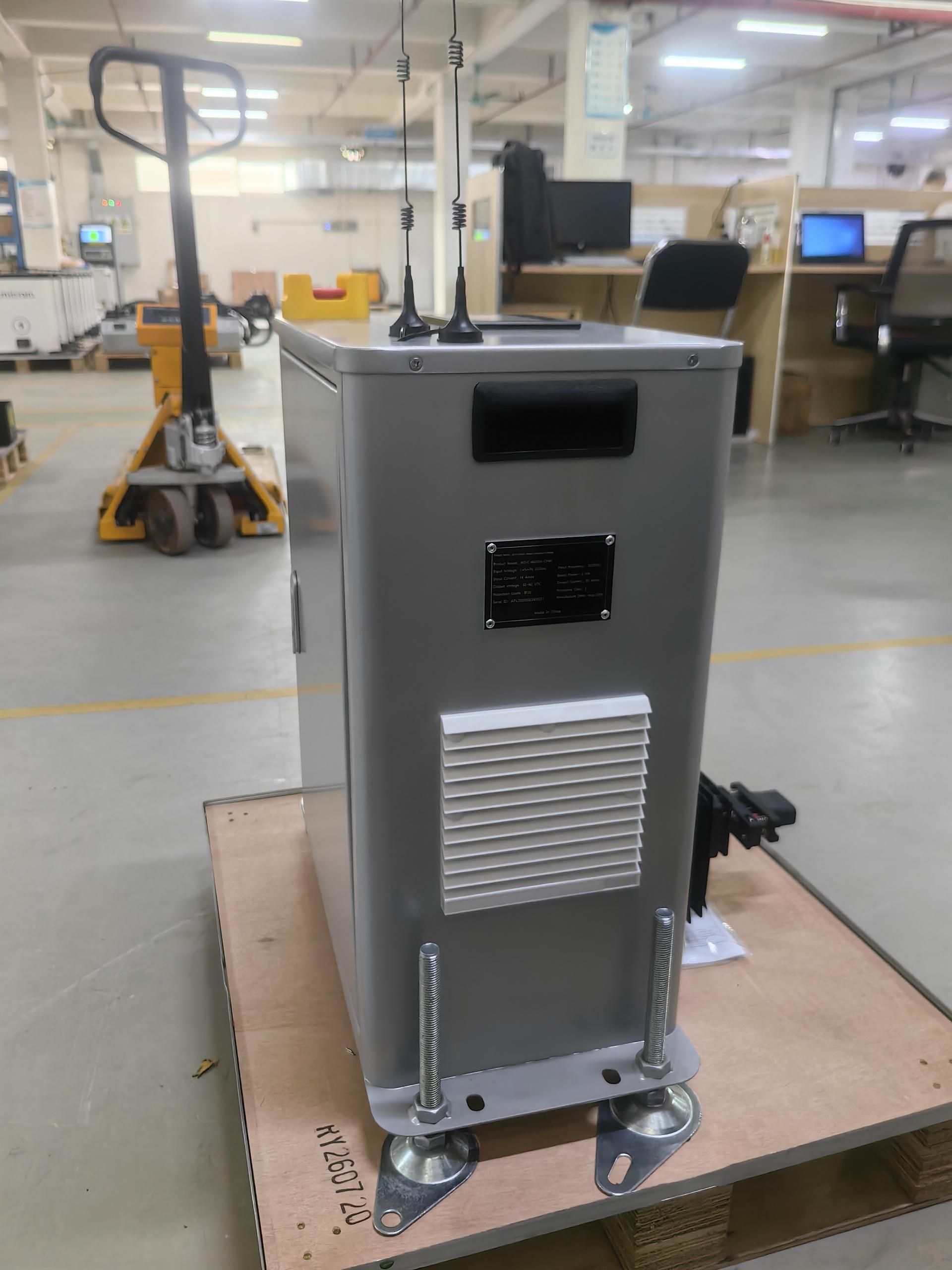
The customer did not need only a battery. The project also included multiple AMR charging stations and charging terminals for validation.
That changed the scope of the work. The charger could not be treated as an unrelated accessory because the charging current, interface, BMS behavior, connector arrangement, and physical charging method all had to match the robot platform.
During the test phase, multiple battery packs and charging stations were prepared so the customer’s engineering team could validate the system in a more representative development environment.
For an AGV lithium battery project, this type of combined battery-and-charging approach can be more practical than specifying the two systems separately. It gives both sides a clearer basis for checking charging compatibility before the project reaches volume production.
From Sample Validation to Mass Production
The most important point in this case is that the project did not stop at the quotation or prototype-design stage.
The customer first used the battery and charging equipment for development and system testing. Multiple packs and charging stations were involved in the validation process, rather than relying on a single demonstration sample.
Following sample confirmation, the project moved into the mass-production stage.
This progression matters because the final decision was based on actual system integration. Mechanical fit, communication requirements, charging compatibility, and the customer’s development needs had to be addressed before production could move forward.
For B2B robot manufacturers, the supplier must support engineering communication, adapt the pack to the available space, match the control interface, coordinate charging requirements, and support the transition from prototype to production.
Project Highlights
- Custom 48V-class LiFePO4 battery developed for a new warehouse AMR
- 60–70Ah target capacity with 1C charging and 0.3C discharge requirements
- Compact battery design based on a 160 × 500 × 220 mm installation envelope
- Width flexibility up to 180 mm when required by cell arrangement
- RS485 BMS communication for robot-system integration
- Detachable charging and discharging interfaces
- Dedicated AMR charging station and charging terminal requirements
- Multiple battery packs and charging stations used during validation
- Sample confirmation completed before the project advanced to mass production
- KC, CE, and UL requirements considered, with CE as the minimum requirement
What Dose This Case Means for Other AGV and AMR Developers?
A custom AGV lithium battery is rarely defined by voltage and amp-hour capacity alone.
For a new AGV or AMR platform, mechanical space, operating current, communication protocol, charging strategy, connector design, certification requirements, and production schedule can all affect whether a battery is suitable.
This case also shows the value of involving the battery supplier early. A small change in available width can influence cell layout, while RS485 affects BMS and vehicle integration. A 1C charging target also influences charger and electrical design. The AGV lithium battery has to connect these requirements into one workable solution.
Addressing these points before mass production gives the robot manufacturer a more controlled path from prototype testing to repeatable production.
For FEBATT, the result was not simply a 48V battery pack. It was an AGV lithium battery and charging system developed around the customer’s new AMR platform, validated through multiple test units, and confirmed for the next stage of production.
Relevant Technical FAQ
1.What information is needed to develop a custom AGV lithium battery?
Start with voltage, capacity, continuous and peak current, installation space, connector type, communication protocol, charging method, operating environment, certification target, and expected production volume.
2.Can an AGV lithium battery use RS485 communication?
Yes. RS485 can be used when the BMS and robot controller are configured for compatible communication. The protocol should be confirmed early so battery status and system control functions can be integrated correctly.
3.Why should the battery and AMR charging station be developed together?
Developing them together helps align charging current, BMS logic, connectors, terminal layout, and charging behavior. It also reduces the risk of compatibility problems during robot integration and validation.