Cold storage logistics places unusual demands on material-handling equipment. Forklifts may move repeatedly between freezer rooms, chilled staging areas, and warmer loading docks while lifting heavy pallets through long shifts. These conditions make battery temperature, charging limits, moisture exposure, and current demand operational issues.
A properly engineered lithium battery for freezer forklift applications can address these demands through low-temperature charging protection, heating where required, BMS supervision, application-matched current capability, and environmental protection suited to the installation. LiFePO4 is often attractive for commercial material handling because it offers strong cycling potential and lower routine maintenance than flooded lead acid, but freezer performance depends on the complete battery system rather than chemistry alone.
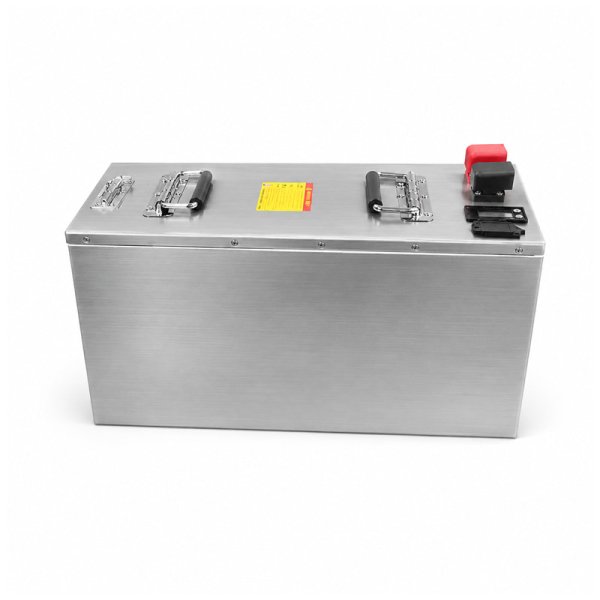
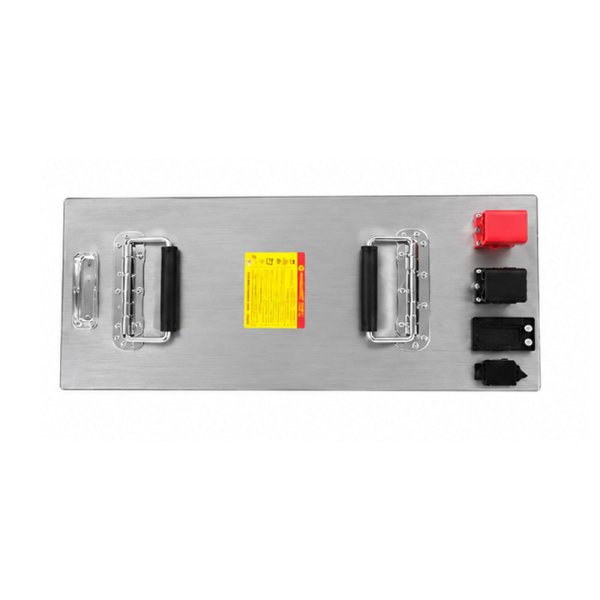
For B2B buyers, the battery should be specified from the duty cycle backward. A lithium battery for freezer forklift should be evaluated against forklift voltage, controller limits, peak and continuous current, freezer temperature, shift length, lifting pattern, charging schedule, compartment dimensions, and cold-to-warm transition frequency. FEBATT’s electric forklift battery buying guide can help procurement teams frame these baseline selection questions before freezer-specific requirements are added. For preliminary voltage-platform comparison, the 48V 60Ah forklift battery, 64V 105Ah forklift battery, and 72V 105Ah forklift battery pages can serve as reference configurations; freezer suitability still requires project-level confirmation.
The same application-first approach applies to a freezer forklift battery, a cold storage forklift battery, or a battery lithium forklift cold storage project. The objective is not to buy the largest pack, but to build a traction system that remains within validated electrical, thermal, and environmental limits throughout the workflow.
What Challenges Do Sub-Zero Temperatures Create for Freezer Forklifts?
Low temperature changes battery behavior. Electrochemical reaction rates slow, internal resistance can increase, available power can fall, and voltage sag may become more noticeable under acceleration or lifting. The effect depends on chemistry, cell design, state of charge, battery temperature, current demand, and thermal design.
Charging requires particular attention. Lithium cells should be charged only within the temperature range approved by the cell and battery manufacturer. Charging below the permitted minimum can increase the risk of lithium plating and accelerated degradation. A lithium battery for freezer forklift therefore needs BMS logic that blocks, limits, or delays charging when cell temperature is outside the approved range.
Freezer fleets also experience repeated thermal transitions. A forklift may leave a cold room and enter warmer, more humid air several times during a shift. Surface condensation can form on cold equipment, so sealing, drainage, cable routing, and connector protection matter.
These issues are interconnected. A battery may discharge acceptably but still be unsuitable if it cannot be charged safely at the available location. A lithium battery for freezer forklift should therefore be reviewed as an integrated cold-chain system rather than as a room-temperature battery placed into a freezer.
How Does Self-Heating Support a Lithium Battery for Freezer Forklift?
Self-heating can be valuable when a battery must be charged while its cells are colder than the approved charging range. In a freezer-spec system equipped with heating, temperature sensors report cell conditions to the BMS. The BMS can keep charging disabled or limited while the heater raises cell temperature toward the permitted range.

A typical sequence may be: charger connection, temperature verification, heater activation when required, continued temperature monitoring, and normal charging only after the approved threshold is reached. The precise limits and heater power should come from the production battery specification rather than a universal rule.
For a lithium battery for freezer forklift, this automation can reduce dependence on manual warm-up decisions and may allow charging near the work area, provided the charging location, battery specification, and facility procedures support that approach.
Heating must still be engineered carefully. Buyers should confirm heater control, sensor placement, fault response, and the source of heater energy.
In a battery lithium forklift cold storage application, a lithium battery for freezer forklift should use heating only as part of a validated low-temperature charging strategy, not as a substitute for correct cell limits and BMS protection.
Why Can Lead Acid Lose More Usable Performance in Freezing Conditions?
Lead-acid batteries can remain useful in industrial applications, but low temperature can reduce available capacity and increase voltage drop under load. The magnitude varies with battery construction, age, state of charge, discharge rate, electrolyte condition, and actual temperature, so a single percentage should not be treated as universal.
For a forklift, reduced usable energy can appear as shorter operating windows, weaker performance under heavy demand, or earlier low-voltage cutoff. These effects can be amplified by repeated starts, lifting cycles, and long periods at low temperature.

A properly specified lithium battery for freezer forklift can provide a more predictable operating profile when its cells, BMS, current path, and thermal controls are selected for the duty. LiFePO4 is not immune to cold, but a freezer-ready system can supervise charging and discharge conditions automatically.
Flooded lead-acid systems may also require watering, terminal cleaning, equalization procedures, and ventilation management. A sealed lithium cold storage forklift battery eliminates routine watering and sulfuric-acid handling, although connectors, mounting, cables, enclosure condition, and charger operation still require inspection.
The useful B2B comparison is productive work at the actual freezer temperature, not nameplate amp-hours alone. A lithium battery for freezer forklift should be evaluated by route completion, lift cycles, voltage stability, charging availability, and maintenance burden.
How Can Environmental Sealing Manage Moisture During Cold-to-Warm Transitions?
An IP rating describes protection against dust and water ingress under defined test conditions. It does not by itself guarantee immunity to condensation during repeated cold-to-warm transitions. For freezer fleets, enclosure design should consider sealing, thermal cycling, connector interfaces, pressure changes, drainage, and service access together.

A freezer-ready lithium battery for freezer forklift may use protected enclosure joints, temperature-resistant gaskets, sealed cable glands, suitable mating connectors, corrosion-resistant hardware, and protected electronic assemblies. Depending on the design, pressure-management components can help the enclosure accommodate environmental changes without compromising sealing.
Selected electronics may also use added moisture protection where the design requires it.
Fleet technicians should also inspect what surrounds the battery. A cold storage forklift battery can be compromised by damaged connectors, poorly routed cables, standing water, collision damage, or incorrectly reassembled covers even when the enclosure was originally qualified to an ingress rating.
B2B buyers should verify the production configuration, applicable ingress test documentation, connector protection, and installation method. A lithium battery for freezer forklift should be treated as an environmental system whose reliability depends on both pack design and vehicle integration.
Which 48V, 64V, and 72V Battery Configurations Fit Cold Storage Fleets?
There is no single best voltage or capacity for freezer forklifts. The correct configuration must match the forklift’s electrical architecture. A higher nominal voltage is not automatically better if the controller, motor, charger, DC-DC equipment, or other vehicle electronics are designed for another platform.

A 48V configuration can suit compatible forklifts with moderate energy requirements. FEBATT’s 48V 60Ah forklift battery can serve as a reference, while freezer-specific heating, temperature, sealing, and current requirements should be confirmed for the project.
For a 64V platform, FEBATT’s 64V 105Ah forklift battery provides a reference point for compatible equipment. The production lithium battery for freezer forklift may still require additional low-temperature customization depending on the operating environment.
The same principle applies to 72V equipment. FEBATT’s 72V 105Ah forklift battery can be reviewed as a reference for compatible 72V platforms, but a 72V pack should not be selected simply because it stores more nominal energy than a 64V pack of the same amp-hour rating.
The lithium battery for freezer forklift should be selected using operating voltage, usable energy, continuous and peak current, shift duration, lifting frequency, freezer temperature, installation space, charging windows, and mass requirements. This is more reliable than assuming the largest voltage or capacity provides the best performance.
How Should Opportunity Charging Be Planned in Cold Storage?
Opportunity charging adds energy during planned idle periods such as shift changes, loading pauses, meal breaks, or staging time. Lithium systems can support partial charging strategies well, but a freezer fleet must coordinate charging with cell temperature and heater control.
A lithium battery for freezer forklift may be charged in or near a cold area only when the production battery, BMS logic, heater where fitted, charger, and facility procedures support that environment. If cells are below their approved charging temperature, the system should prevent normal charging until safe conditions are restored.
Charging outside the freezer can simplify thermal conditions, while charging inside may reduce transition frequency but require self-heating and suitable charger provisions. The best strategy depends on facility layout and workflow.
Warehouse managers should model charger output, available electrical capacity, average energy used between breaks, starting SOC, heater energy, freezer temperature, and charging-window duration. A freezer forklift battery should restore enough usable energy for the next operating block without exceeding validated limits.
Opportunity charging can reduce long idle periods and, in some fleets, reduce dependence on battery swapping. A lithium battery for freezer forklift can therefore improve availability when charging is treated as part of the operating plan rather than an after-shift activity.
Why Is Lower-Routine-Maintenance Lithium Valuable in Cold Storage?
Cold rooms are poor environments for unnecessary manual battery work. Reducing recurring service can therefore provide value beyond labor savings.
A lithium battery for freezer forklift does not require routine electrolyte watering and avoids the sulfuric-acid spill concerns associated with flooded lead-acid batteries. The BMS can monitor key electrical and temperature conditions, allowing technicians to focus on system-level inspection and fault response.
Lower routine maintenance does not mean inspection-free operation. Fleet procedures should still cover connector condition, cables, enclosure damage, mounting security, charger condition, abnormal BMS events, and evidence of moisture after unusual exposure.
For a battery lithium forklift cold storage fleet, fewer routine interventions can improve consistency across shifts. A lithium battery for freezer forklift is most valuable when it combines lower service burden with documented diagnostics and a clear escalation procedure for faults.
How Does a Smart BMS Manage Heating and Low-Temperature Charging?
The BMS coordinates protection decisions using measurements from the battery system. In cold-storage service, temperature sensing is especially important because charging limits may change as cells cool.
Before charging, a smart BMS can compare measured cell temperatures with the approved charging range. In a lithium battery for freezer forklift equipped with heating, the BMS can keep charge current blocked or limited, activate the heater when required, monitor the warming process, and permit normal charging once conditions are acceptable.
A robust design should include heater protection, fault logging, and safe responses to sensor or communication failures.
BMS data can support maintenance as well. Repeated low-temperature charge blocks, unusually long heating periods, recurrent overcurrent events, or temperature differences may indicate a charging-location problem, insulation issue, abnormal duty cycle, or developing hardware fault.
For B2B buyers, the BMS specification should be reviewed alongside the cells and enclosure. A lithium battery for freezer forklift is only as effective as the sensing, protection, heating-control, and communication architecture that manages it.
How Should Cold-Chain Managers Evaluate Lifecycle ROI?
Lithium typically requires a higher initial investment than lead acid, so the business case should be built from total operating value rather than purchase price alone. A credible ROI model should use the warehouse’s actual numbers instead of a universal payback percentage.
For a lithium battery for freezer forklift, the model can include battery and charger cost, integration, maintenance labor, battery-changing labor, electricity use, charging-related downtime, spare battery requirements, productive vehicle hours, replacement criteria, and end-of-life logistics.
Cold-weather performance also has operational value and can be translated into cost per productive forklift-hour or handled pallet.
A cold storage forklift battery should also be evaluated against utilization. A single-shift warehouse may not monetize charging flexibility as strongly as a multi-shift distribution center. High-utilization fleets generally have more opportunities for lower maintenance and higher availability to offset the initial lithium premium.
The commercial case for a lithium battery for freezer forklift is strongest when the battery is engineered around the actual duty cycle and the financial model includes both direct battery costs and downtime consequences.
How Can Warehouse Managers Specify a Freezer-Ready Battery Pack?
Customization should start with operating data, not only voltage and amp-hours. Electrical, thermal, environmental, and mechanical requirements must be defined together.
For a lithium battery for freezer forklift project, B2B buyers should provide:
- Forklift make, model, and electrical platform.
- Nominal and operating voltage range.
- Motor and controller continuous and peak current.
- Battery dimensions, mounting points, and installed mass requirements.
- Typical and minimum freezer temperatures.
- Shift length, travel pattern, lifting frequency, and payload profile.
- Charging locations, break windows, charger constraints, and available site power.
- Frequency of cold-to-warm transitions.
- Connector, cable, display, CAN, RS485, or other communication requirements.
- Required ingress, vibration, diagnostic, and service expectations.
FEBATT’s electric forklift battery buying guide can support this early specification process. Buyers can also use the 48V 60Ah, 64V 105Ah, and 72V 105Ah forklift battery pages as reference configurations for compatible platforms while confirming freezer-specific heating, temperature, sealing, current, and integration requirements for the production pack.
A freezer forklift battery should then be validated against the real application. The final lithium battery for freezer forklift should not rely on generic claims such as “works at -20°C,” “IP67,” or “self-heating” without defined test conditions and product-level documentation.
This application-first process is the best way to turn a battery lithium forklift cold storage requirement into a repeatable B2B specification rather than a one-off replacement.
Relevant Technical FAQ
1.Can a lithium battery for freezer forklift be charged inside a sub-zero cold room?
It can be charged there only when the production battery, charger, BMS logic, heating system where fitted, and facility procedures are designed for that environment. If cell temperature is below the approved charging range, normal charging should remain blocked or limited until the cells reach an acceptable temperature.
2.How much capacity does a lithium battery lose at -20°C?
There is no universal percentage. Usable capacity and power depend on cell chemistry, battery temperature, discharge current, state of charge, BMS limits, and thermal design. For a lithium battery for freezer forklift, buyers should request performance data at the temperatures and loads relevant to their own operation rather than applying a generic loss figure.
3.How should a freezer forklift battery handle condensation after leaving a cold room?
Cold equipment entering warmer humid air can develop surface condensation. The battery system should use appropriate enclosure sealing, protected connectors, suitable cable entries, pressure-management design where required, corrosion-resistant materials, and inspection procedures. An IP rating alone does not guarantee immunity to condensation during repeated thermal transitions.
4.Is 72V 105Ah better than 64V 105Ah for a cold storage forklift battery?
Not universally. The correct voltage must match the forklift’s controller, motor system, charger, DC-DC equipment, and other electronics. A 72V 105Ah pack stores more nominal energy than a 64V 105Ah pack, but it is appropriate only for a compatible 72V vehicle platform.
5.Does a lithium battery for freezer forklift need continuous heating while parked overnight?
Not necessarily. Heating strategy depends on cell limits, freezer temperature, insulation, next-shift charging plans, and control logic. Some systems heat only before charging or when temperature falls below a defined threshold. Continuous heating should not be assumed unless the production design requires it.
6.What should B2B buyers verify before ordering a cold storage forklift battery?
Verify the production battery’s voltage window, current ratings, temperature limits, low-temperature charging logic, heating behavior where fitted, ingress protection, connector and communication interfaces, dimensions, mounting, charger compatibility, and application-specific validation. A lithium battery for freezer forklift should be approved against the actual forklift and freezer duty cycle rather than selected from nominal voltage and capacity alone.
Conclusion
Cold-chain logistics exposes forklift batteries to low temperature, high current demand, charging restrictions, condensation risk, and repeated thermal transitions. These factors make freezer service a system-engineering problem rather than a simple capacity selection exercise.
A properly engineered lithium battery for freezer forklift can provide a strong solution through application-matched LiFePO4 cells, BMS-controlled low-temperature protection, heating where required, appropriate environmental sealing, and a charging strategy designed around warehouse workflow. Compared with flooded lead acid, lithium also removes routine watering and can reduce recurring battery-maintenance work.
The best battery is not automatically the largest voltage or capacity. It is the lithium battery for freezer forklift whose electrical, thermal, mechanical, environmental, and charging characteristics are validated for the forklift platform and the real freezer duty cycle.
For cold-chain operators, that application-specific approach can improve predictability, reduce avoidable downtime, and support a more disciplined long-term energy strategy. A well-specified freezer forklift battery becomes part of the warehouse productivity system rather than a consumable selected only by amp-hours.