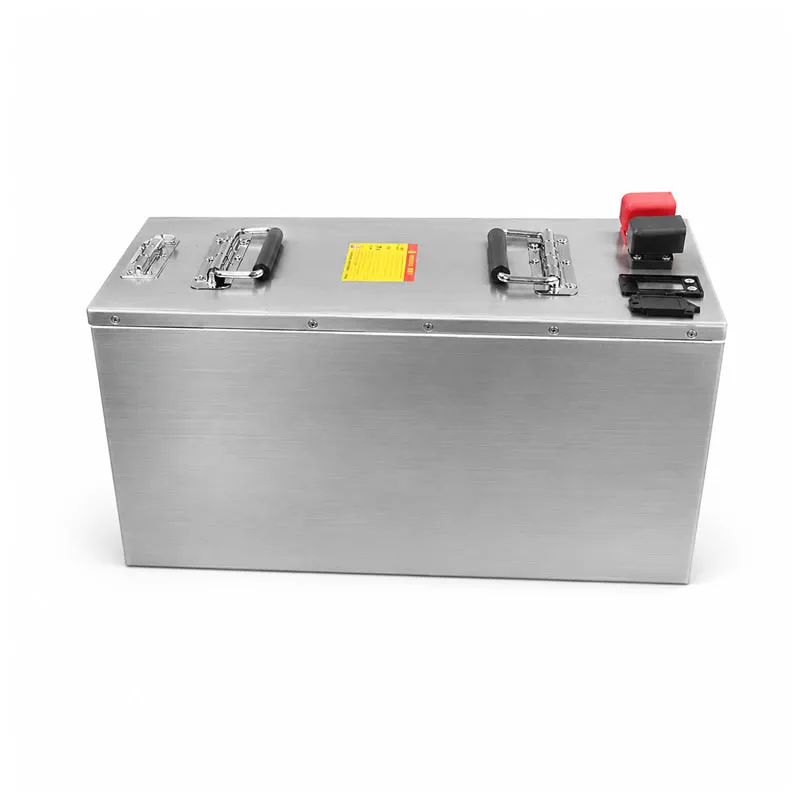
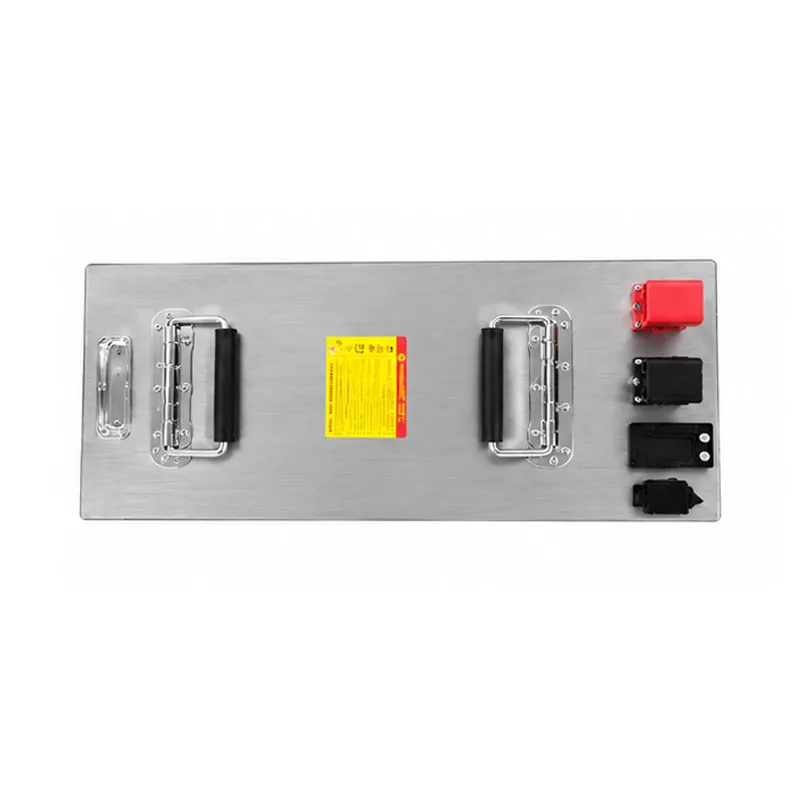
Industrial electric vehicles depend on battery packs that must deliver predictable power, withstand vibration, communicate with the vehicle, and remain stable through repeated charging. For a forklift, cargo tricycle, golf cart, electric motorcycle, or RV platform, lithium battery testing is therefore not a final cosmetic inspection. It is a controlled process used to verify cell quality, assembly workmanship, electrical protection, thermal behavior, software functions, and vehicle compatibility before a design reaches mass production.
A credible program separates routine production inspection from qualification testing. Every production pack may receive identity checks, electrical measurements, BMS verification, insulation checks, and a defined charge-discharge procedure. Longer environmental, abuse, and Battery cycle testing programs are normally performed on representative qualification samples because they can take weeks or months and consume part of the sample’s service life. This keeps lithium battery testing proportionate while preserving samples for long-term validation.
This guide explains the stages of lithium battery testing, the role of Battery pack testing equipment, the difference between aging and lifecycle validation, and the records B2B buyers should request. It also explains how IEC, ISO, and UN requirements support a validation plan without creating one universal matrix.
What Does Lithium Battery Testing Actually Cover?
The term covers several activities performed at different points in development and production. Incoming inspection checks cells, electronic components, enclosures, cables, and connectors before assembly. In-process controls verify welding, torque, insulation, polarity, and routing. End-of-line lithium battery testing confirms that the finished pack matches its approved specification. Design validation then challenges representative samples under electrical, mechanical, environmental, and vehicle-level conditions.
These layers should not be confused with cell formation. Formation and the initial development of the solid electrolyte interphase occur during cell manufacturing. Pack-level resting or aging can reveal abnormal self-discharge, voltage drift, weak connections, sealing problems, or BMS integration faults, but it does not replace the cell maker’s formation process.
The correct scope depends on chemistry, series-parallel configuration, operating voltage, power demand, mounting method, temperature range, ingress exposure, charger, communication protocol, and target market. A 48V RV pack and a high-power forklift pack may use similar quality tools, but their duty cycles and acceptance limits should not be identical.
Why Is Lithium Battery Testing Important for B2B Fleets?
For fleet operators, a battery failure can stop a vehicle, delay deliveries, interrupt warehouse throughput, and create warranty or safety investigations. Structured lithium battery testing reduces these risks by finding nonconforming parts and integration errors before shipment. It also creates traceable evidence showing which components were used, which limits were applied, and whether the unit passed the agreed checks.
The greatest value is consistent decision-making. A written specification defines the measurements, methods, Battery testing equipment, and rules for passing, rework, quarantine, or rejection.
Testing also supports change control. If a cell, BMS, connector, thermal material, firmware version, or enclosure changes, the engineering team can identify which tests must be repeated. This is especially important for OEM programs where the battery communicates with the controller, charger, display, or telematics system.
What Are the Four Main Stages of Battery Pack Testing?

1. Incoming Cell and Component Inspection
Before assembly, cells should be checked against the approved manufacturer, model, batch, and specification. Typical controls include visual inspection, open-circuit voltage, internal resistance or impedance, capacity sampling, weight, dimensions, date code, and traceability. The exact sampling plan should be based on supplier history, risk, and the quality agreement. In lithium battery testing, the sampling level should be documented rather than chosen informally after a problem appears.
This stage of lithium battery testing is designed to prevent mixed cell lots, damaged terminals, incorrect components, or out-of-tolerance parts from entering production. Measuring only voltage is insufficient because cells with similar voltage can still differ in capacity, resistance, self-discharge, or age.
2. In-Process and End-of-Line Checks
During assembly, manufacturers should control weld quality, busbar placement, insulation, fastener torque, cable routing, polarity, fuse installation, sensor position, and enclosure sealing. Automated data capture is valuable, but the process must still define calibration, maintenance, and operator responsibilities for the Battery pack testing equipment.
At end of line, lithium battery testing may include pack voltage, cell-group voltage, communication, BMS protections, current and temperature sensing, contactor or MOSFET behavior, precharge, insulation resistance, dielectric strength where applicable, charging, discharging, and fault-code review. Not every test is suitable for every architecture, so the approved control plan must identify the required sequence. Results from lithium battery testing should be stored against the pack serial number so later audits can trace each measured value.
3. Resting, Burn-In, and Short Aging
A controlled rest period can reveal abnormal voltage drift or self-discharge after assembly. Some projects also use limited charge-discharge aging or controlled-temperature conditioning to expose early connection, sealing, sensing, or firmware issues. Temperature, state of charge, exposure time, and monitoring limits must remain within the approved cell and pack specifications.
High temperature should not be described as harmless or universally required. Elevated temperature and high state of charge can accelerate calendar aging. Where thermal conditioning is used, the engineering plan should explain its purpose, duration, sample quantity, safety controls, and acceptance criteria. This part of lithium battery testing is a screening tool, not a substitute for full environmental qualification.
4. Qualification, Battery Cycle Testing, and Vehicle Validation
Representative samples are used for longer programs that evaluate performance, reliability, abuse response, and service-life assumptions. Battery cycle testing records capacity retention, energy efficiency, temperature, resistance growth, cell divergence, and protection events under defined charge rate, discharge rate, depth of discharge, ambient temperature, rest periods, and end-of-life criterion. In lithium battery testing, cycle data must always be reported together with these conditions.
Dynamic load profiles should reflect the vehicle. A forklift test may include repeated lifting peaks, travel current, opportunity charging, and multi-shift operation. An electric tricycle test may combine payload changes, frequent starts, gradients, rough roads, and outdoor temperature. An RV profile may emphasize deep discharge, low-rate auxiliary loads, long storage periods, and charging from multiple sources.

Vehicle-level lithium battery testing should verify voltage sag, current limits, temperature rise, mounting strength, cable clearance, charger compatibility, communication, fault handling, and driver-visible state-of-charge behavior. Bench results alone cannot confirm that a battery will perform correctly after installation.
How Should Acceptance Criteria Be Defined?
Acceptance limits should come from the approved product specification, cell data, risk analysis, application requirements, and applicable standards. There is no universal rule stating that every pack must have the same cell-voltage spread, internal-resistance change, or temperature rise. A limit that is appropriate for a low-voltage LFP pack may be unsuitable for a high-voltage NMC system. A defensible lithium battery testing plan explains why each limit is appropriate instead of copying a generic tolerance table.
Good lithium battery testing records include the measurement method, instrument identification, calibration status, test temperature, state of charge, current profile, software version, operator or station ID, time stamp, and result. This context prevents numbers from being separated from the conditions that produced them.

Voltage and Cell Balance
Cell-group voltage spread should be evaluated after a defined rest period and at relevant states of charge. The limit must reflect chemistry, series count, BMS balancing strategy, measurement accuracy, and product specification. Sudden drift, repeated imbalance, reversed polarity, or a cell group approaching protection thresholds requires investigation.
Capacity, Energy, and Internal Resistance
Capacity should be measured using a specified charge method, discharge current, temperature, cutoff voltage, and rest time. Energy in watt-hours is often more useful than amp-hours when comparing different voltage platforms. Internal resistance or impedance should be measured with a consistent method because different instruments and frequencies can produce different results.
A failed capacity or resistance result should trigger quarantine and root-cause analysis. The cause may be a cell, weld, connector, busbar, sensing circuit, firmware setting, or test connection. Replacing a cell is not automatically acceptable; any repair must follow an approved rework procedure and the affected tests must be repeated.
Temperature and Thermal Uniformity
Temperature sensors should cover representative hot spots rather than only the easiest location to access. During lithium battery testing, engineers should compare cell, busbar, connector, switching-device, and enclosure temperatures under the intended current profile. Protective derating and shutdown behavior must be coordinated with the vehicle controller and charger.
BMS, Communication, and Protection
BMS validation should confirm measurement accuracy, overvoltage and undervoltage response, overcurrent and short-circuit strategy, temperature limits, balancing, state estimation, wake and sleep behavior, fault logging, and charger or vehicle communication. Protection thresholds must match the cells, fuse, contactors or MOSFETs, wiring, connectors, and thermal design.
Mechanical and Environmental Integrity
Battery pack testing may also include vibration, mechanical shock, thermal cycling, humidity, ingress, salt mist, drop or impact, depending on the application and specification. A claimed IP rating requires testing to the relevant enclosure standard and does not by itself prove vibration resistance, electrical safety, or vehicle compatibility.
Which Standards and Documents Matter?
IEC 62619:2022 specifies safety requirements and tests for secondary lithium cells and batteries used in industrial applications. IEC 62620 addresses marking, performance tests, and requirements for industrial secondary lithium cells and batteries. When a special application has a more specific standard, that application standard may take precedence.
ISO 12405-4 provides procedures for evaluating performance, reliability, and electrical functionality of lithium-ion battery packs and systems for electrically propelled road vehicles. Its applicability must be checked against the vehicle category and project scope. Two-wheelers, three-wheelers, industrial trucks, and non-road vehicles may require different or additional standards.
UN Manual of Tests and Criteria subsection 38.3 covers transport classification testing for lithium cells and batteries. Passing UN 38.3 supports lawful transport when all packaging, documentation, and dangerous-goods requirements are also met; it is not a complete vehicle approval or proof of long-term field reliability.
Trustworthy technical content should identify these distinctions instead of listing certificates without context. For purchasing decisions, buyers should request the exact report number, model covered, laboratory, issue date, test summary, and any design differences between the tested unit and the offered product. Standards support lithium battery testing by defining methods and requirements, but the engineering team must still determine applicability.
What Battery Testing Equipment Is Commonly Used?
A professional laboratory may use cell graders, battery cyclers, programmable DC loads, power supplies, insulation testers, dielectric testers, milliohm meters, CAN analyzers, data loggers, thermal chambers, vibration systems, ingress equipment, and infrared cameras. The presence of Battery testing equipment does not prove quality by itself. The equipment must have suitable range and accuracy, be calibrated, and be linked to controlled work instructions. Selecting Battery testing equipment is therefore part of lithium battery testing governance, not merely a purchasing decision.
Software matters as much as hardware. Automated lithium battery testing should preserve raw data, alarms, test interruptions, operator actions, firmware versions, and retest history. Editing or overwriting failed results destroys traceability and makes supplier audits unreliable.
Production fixtures should prevent wrong polarity, unstable contacts, and unsafe access. Interlocks, emergency stops, ventilation, isolation, and response procedures must match the battery hazard level.
What Are the Most Common Testing Mistakes?
The first mistake is treating one short capacity test as complete lithium battery testing. Capacity alone does not confirm protection, communication, thermal behavior, vibration resistance, or long-term consistency. The second is applying one generic acceptance table to every chemistry and vehicle.
Other problems include checking only total voltage, using uncalibrated instruments, ignoring lead resistance, mixing cell batches, changing firmware without revalidation, and omitting post-test inspection or environmental records. Prototype qualification also cannot replace routine production controls.
The strongest quality system connects design requirements, process controls, Battery pack testing, nonconformance handling, rework approval, and field feedback. When a warranty issue occurs, traceability should allow the team to identify the cell lot, assembly station, BMS version, test record, and related units.
How Can B2B Buyers Evaluate a Battery Supplier?
Buyers should ask for a test matrix that clearly separates incoming inspection, in-process checks, end-of-line controls, aging, qualification, and vehicle validation. The document should identify which tests apply to every unit and which apply only to samples. It should also define sample quantity, conditions, limits, retest rules, and responsibility for certification.
Request anonymized examples of completed records, including cell traceability, weld or torque data, BMS files, capacity curves, temperature logs, nonconformance reports, calibration certificates, and final inspection results.
FEBATT presents power solutions for electric mobility and industrial applications. Buyers evaluating a project can review the company’s lithium battery products and then provide voltage, energy, current, dimensions, duty cycle, temperature, communication, quantity, and target-market requirements for a project-specific test proposal.
A transparent supplier will explain limitations. It will not claim that one laboratory cycle, one certification, or one BMS function guarantees complete safety. Reliable lithium battery testing combines controlled design, qualified components, repeatable manufacturing, measurable acceptance criteria, and application validation.
Relevant Technical FAQ
1.How long does a complete testing program take?
Routine production inspection and short aging may take several hours to several days, depending on pack size and the control plan. A full qualification program involving environmental exposure, Battery cycle testing, abuse tests, and vehicle validation may take weeks or months. Suppliers should separate these timelines rather than promising one universal duration.
2.Is every production pack cycle-tested for hundreds of cycles?
Normally, no. Every pack may receive a defined functional charge-discharge check, but long Battery cycle testing is usually performed on representative qualification or reliability-monitoring samples. Cycling every saleable pack for hundreds of cycles would consume time and part of its useful life.
3.Can a pack pass if one cell group is outside specification?
The pack should be quarantined, the measurement confirmed, and the cause investigated. The issue may involve a cell, weld, busbar, sensing lead, connector, or BMS. Rework is acceptable only when an approved procedure exists and all affected lithium battery testing steps are repeated successfully.
4.Why is internal resistance measured?
Resistance affects voltage sag, heat generation, efficiency, and current sharing. A rising or abnormal value may indicate cell aging, a poor weld, loose connection, damaged conductor, or measurement problem. Results are meaningful only when the same method, temperature, state of charge, and Battery testing equipment are used.
5.How is forklift testing different from RV testing?
Forklift validation emphasizes lifting peaks, continuous industrial loads, opportunity charging, vibration, and multi-shift operation. RV validation emphasizes deep discharge, long-duration auxiliary loads, storage, low-temperature charging controls, and compatibility with alternators, solar chargers, or inverters. Both require application-specific lithium battery testing.
6.Does factory testing reduce battery life?
All lithium batteries age with time, temperature, state of charge, and cycling. Controlled production checks use a limited portion of expected life, while long lifecycle tests are performed on dedicated samples. Test severity should be justified and should not expose saleable packs to unnecessary heat or cycling.
7.What reports should a buyer request?
Request the approved specification, test plan, final inspection report, cell and pack traceability, BMS version, capacity or energy results, protection results, calibration status, nonconformance history, and applicable UN 38.3 test summary or product-safety reports. Confirm that every document covers the exact model being purchased.
8.Can UN 38.3 replace product safety testing?
No. UN 38.3 addresses transport classification tests. Product and vehicle safety require additional evaluation based on the battery’s industrial or vehicle application, target market, voltage, chemistry, installation, and applicable standards. A responsible lithium battery testing plan treats transport compliance as one part of a broader validation process.
Conclusion
Effective lithium battery testing is a layered engineering and quality process, not a single aging step. Incoming inspection prevents unsuitable parts from entering production. In-process and end-of-line controls verify workmanship and functionality. Controlled aging can expose early defects. Qualification and vehicle testing demonstrate whether the design meets its defined operating conditions.
For B2B buyers, the most valuable evidence is a traceable test plan with clear conditions, calibrated equipment, measurable limits, and model-specific records. Claims such as “fully tested,” “long life,” or “completely safe” are not meaningful without this supporting information.
When Battery pack testing, Battery cycle testing, manufacturing controls, and field requirements are connected, suppliers can identify many defects before shipment and respond more effectively when problems occur. That disciplined approach protects fleet uptime, supports regulatory documentation, and builds the trust expected from technically credible battery programs.