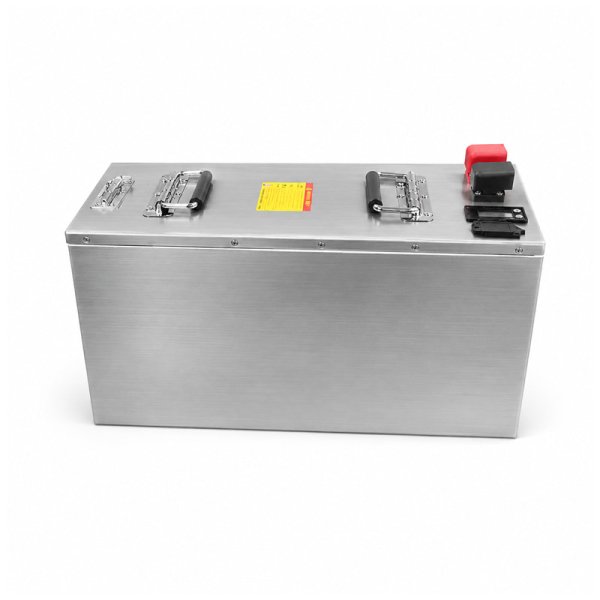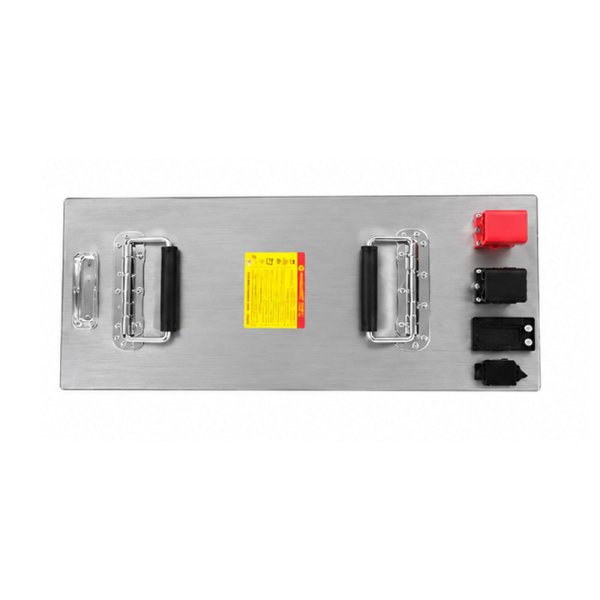
Electric motorcycles, delivery tricycles, and other light electric vehicles place very different demands on a battery than consumer electronics. The pack must deliver repeatable acceleration, tolerate vibration, communicate with the controller, fit limited space, and remain dependable through frequent cycling. For an OEM, therefore, an automotive li ion battery is not a standalone component. It is part of the vehicle’s complete power and control system.
A well-matched automotive li ion battery can improve usable range, power stability, handling, charging efficiency, and fleet uptime. A poorly matched pack can cause voltage sag, overheating, early degradation, or system incompatibility. The right design begins with the vehicle’s duty cycle rather than a voltage or amp-hour target.
This guide explains how manufacturers should evaluate chemistry, energy, discharge current, weight, battery management, mechanical design, testing, and lithium battery price. It also shows how FEBATT supports OEM and ODM projects through its electric motorcycle battery solutions and broader custom power battery solution. FEBATT currently presents multiple power-battery configurations for electric two-wheelers, including 48V, 60.8V, 64V, 72V, and 73.6V products. For each platform, an automotive li ion battery should be engineered around verified vehicle data and production requirements.
What Determines Automotive Li Ion Battery Performance?
Battery performance combines voltage, energy, current capability, internal resistance, thermal behavior, mechanical integration, and control strategy. Amp-hours alone cannot describe a pack. Energy is more useful for comparing voltage platforms:
Nominal energy (Wh) = nominal voltage (V) × rated capacity (Ah)
A nominal 72V 50Ah pack stores about 3,600Wh, while a 48V 50Ah pack stores about 2,400Wh. Usable energy is lower because the system maintains protective operating limits.
Power demand must also be checked. The automotive li ion battery must support the motor’s continuous current during normal riding and its higher peak current during acceleration, climbing, or heavy-load operation. Current limits should reflect motor power, controller settings, gradients, payload, temperature, and acceleration targets. Voltage and Ah alone can still produce an underpowered pack.
For example, two packs with the same 72V 50Ah label may perform differently when one uses cells with lower internal resistance, stronger busbars, higher-current connectors, and more suitable BMS settings. OEM buyers should therefore request continuous current, peak current, peak-duration conditions, voltage-sag data, and temperature-rise results.
Why Is a Lightweight Automotive Battery Important?
A lightweight automotive battery reduces the total mass that the motor must move. This can improve initial acceleration, low-speed maneuverability, braking response, and energy consumption, especially in urban stop-and-go operation. The weight target for an automotive li ion battery should be defined together with range, structural strength, and handling limits.

However, “lighter” should not mean reducing enclosure strength, electrical protection, cooling space, or cell support. The correct objective is to improve pack-level energy density while preserving structural durability and serviceability. A lightweight automotive battery may use an efficient cell layout, optimized conductors, and an application-specific enclosure.
Weight should always be considered together with capacity. Increasing range usually requires more stored energy, and more energy commonly adds cells and mass. The best automotive li ion battery is therefore not automatically the lightest or the largest. It is the pack that meets range and power requirements with an acceptable weight for the frame, suspension, tires, and payload rating.
For removable packs, engineers must also consider lifting, locking, connector alignment, and repeated insertion. A pack that is technically removable but too heavy for safe daily handling may not be practical for battery-swapping operations.
Lithium Iron Phosphate Battery vs Lithium Ion: What Is the Correct Comparison?
The phrase “lithium iron phosphate battery vs lithium ion” is technically imprecise because lithium iron phosphate, or LFP, is itself a lithium-ion chemistry. For vehicle projects, the practical comparison is usually LFP versus nickel manganese cobalt, or NMC, although other lithium-ion chemistries also exist.
The U.S. Department of Energy identifies LFP and NMC as two major lithium-ion chemistries, noting that NMC is generally associated with higher energy density while LFP is valued for its safety characteristics.
LFP is often selected when thermal stability, durability, cost control, and frequent cycling are priorities. Its cathode contains neither nickel nor cobalt, making it attractive for delivery motorcycles, tricycles, and utility fleets.
NMC generally provides higher cell-level energy density. It may be preferred when the vehicle has very limited installation space or when lower weight and longer range must be achieved within a compact package.
No chemistry has one universal cycle-life number. Service life depends on cell design, depth of discharge, temperature, charge rate, discharge rate, storage state of charge, and the capacity-retention threshold used to define end of life. OEMs should therefore request cycle-test conditions rather than accepting an unsupported claim such as “5,000 cycles.”
When evaluating lithium iron phosphate battery vs lithium ion alternatives, compare the same usable energy, current, weight, temperature, cycle profile, and warranty assumptions. Chemistry should follow the application, not a marketing label. The chemistry selected for an automotive li ion battery should be justified by measured performance under the intended duty cycle.
How Does a High Capacity Lithium Battery Meet OEM Requirements?
A high capacity lithium battery can extend driving range or reduce charging frequency, but capacity alone does not establish OEM suitability. The design must also meet electrical, mechanical, environmental, communication, and manufacturing requirements. An automotive li ion battery with higher capacity still requires validated current paths, thermal control, and repeatable manufacturing.
First, translate daily distance, energy consumption, payload, terrain, speed, auxiliary loads, temperature, and aging into a usable-energy target with a practical reserve.
The high capacity lithium battery must then support the required continuous and peak discharge currents without excessive voltage sag or temperature rise. Cell configuration, busbars, connectors, fusing, and enclosure heat transfer all influence performance. Charger power must also match the required charging time.
For example, increasing a battery from 40Ah to 60Ah increases the energy that must be replenished. When charger power remains unchanged, charging time will normally increase. The correct solution may involve a larger charger, overnight charging, opportunity charging, battery swapping, or a combination of these methods.
OEM acceptance additionally depends on repeatability. Cell matching, insulation, weld quality, firmware control, traceability, and end-of-line testing affect reliability. A credible automotive li ion battery program therefore includes defined specifications and validation criteria, not just a capacity label.

How Should Automotive Li Ion Battery Safety Be Evaluated?
Battery safety comes from several coordinated layers: appropriate cells, electrical protection, mechanical restraint, insulation, thermal design, controlled manufacturing, and vehicle-level integration. Chemistry is only one layer. The safety case for an automotive li ion battery must combine cell, pack, charger, controller, and vehicle-level controls.
A BMS should monitor cell voltage, current, and temperature. Depending on the architecture, it can command MOSFETs or contactors to interrupt operation when limits are exceeded. Suitable fusing, connectors, current paths, and insulation remain essential.
Mechanical safety matters because electric motorcycles experience road shock, vibration, water, dust, repeated connector use, and poor road surfaces. Cells and components must be restrained against rubbing, loosening, and terminal stress. Enclosure strength and mounting should be evaluated on the vehicle.
UN 38.3 addresses transport testing for lithium cells and batteries; it is not a complete vehicle safety approval. The UN Manual of Tests and Criteria includes transportation-related tests for lithium cells and batteries, while other requirements depend on the country, vehicle category, battery application, and customer specification.
Before production, the OEM and supplier should agree on tests, documentation, acceptance limits, and certification responsibilities. Depending on the application, these may include:
- Vibration and mechanical shock testing
- Thermal cycling
- External short-circuit testing
- Overcharge and over-discharge protection verification
- Water and dust ingress testing
- Insulation and dielectric-strength checks
- Connector temperature-rise testing
- Vehicle-level road testing
- Transportation documentation
A certificate should never replace proper vehicle-level engineering.
How Can a High Capacity Lithium Battery Improve Delivery Trikes?
Delivery tricycles often operate under heavier and less predictable conditions than private commuter motorcycles. Payload changes throughout the day, routes may include slopes and rough roads, and repeated stops increase acceleration demand. A correctly sized high capacity lithium battery can reduce charging interruptions and provide more operating reserve when routes change. For delivery fleets, an automotive li ion battery should be sized against payload, route variation, charging windows, and reserve energy.
The benefit should be measured in productive work, not maximum advertised range. Test energy use under representative payload, speed, road, and temperature conditions, including auxiliary loads.
A high capacity lithium battery may support a full shift or planned opportunity charging. Fast charging is useful only when cells, BMS, connectors, thermal design, charger, and service-life targets permit it.
Fleet operators should also consider reserve energy. Designing the pack so that the vehicle regularly arrives with a reasonable remaining state of charge can reduce operational risk caused by traffic, route changes, hills, cold weather, or battery aging.
Communication can provide state of charge, temperature events, and fault history for better charging and maintenance decisions. Remote functions should be specified rather than promised as generic “smart” features.
What Determines Lithium Battery Price for OEM Buyers?
Lithium battery price is influenced by more than the cost of cells. Chemistry, energy, power capability, BMS complexity, enclosure construction, connectors, communication, thermal design, certification, order volume, validation work, warranty terms, freight, and after-sales requirements can all affect the quotation.

The quoted cost of an automotive li ion battery should be compared against the same technical scope, test plan, and annual volume.
BloombergNEF reported that the volume-weighted global average battery-pack price across sectors reached $108/kWh in 2025, down 8% from 2024. It also reported different averages by chemistry and application, including $81/kWh for LFP packs across surveyed segments and $128/kWh for NMC packs.
That benchmark should not be used as a direct price expectation for a customized electric-motorcycle pack. The survey combines large-volume applications, while a lower-volume OEM pack may require custom mechanics, electronics, tooling, testing, and market-specific documentation.
A realistic lithium battery price comparison should use the same technical scope. Buyers should confirm whether quotations include chargers, communication, hardware, connectors, samples, tests, packaging, transport documents, tooling, warranty, and software.
The lowest initial lithium battery price may create higher costs if the pack delivers less usable energy, degrades quickly, causes vehicle downtime, or requires redesign. OEMs should compare:
- Delivered battery cost
- Usable rather than nominal energy
- Expected replacement frequency
- Warranty coverage
- Charging infrastructure cost
- Vehicle downtime
- Spare-pack requirements
- Engineering and tooling fees
- Freight and transportation documentation
- Supplier response time
The correct purchasing question is not simply, “What is the lowest lithium battery price?” It is, “Which pack delivers the required vehicle performance at the lowest reliable lifecycle cost?”
How Does the Discharge Curve Affect Acceleration?
A lithium-ion cell’s discharge curve shows how its voltage changes as stored energy is used. In a vehicle, the effective pack voltage also changes with current, temperature, internal resistance, state of charge, and cell condition.
During hard acceleration or hill climbing, current rises. Internal resistance creates a temporary voltage drop, commonly called voltage sag. When pack voltage falls close to the controller’s low-voltage limit, power may be reduced even though energy remains in the battery. This can make acceleration feel weaker at a low state of charge.
An automotive li ion battery intended for high-power motorcycles should therefore be evaluated with dynamic load tests, not only a low-current capacity test. Engineers should review voltage sag, temperature rise, current sharing, connector losses, and BMS limits at representative states of charge.
Cell selection, parallel configuration, conductor resistance, temperature control, and BMS calibration all affect the result. High capacity cannot compensate for excessive resistance or incorrect current limits.
Can FEBATT Customize a Battery for Narrow Frames?
Electric motorcycle frames often provide irregular spaces around the controller, suspension, seat structure, or storage compartment. FEBATT can develop an automotive li ion battery around defined installation dimensions, electrical requirements, and vehicle interfaces rather than asking the vehicle designer to accept a generic box.
Customization may include enclosure dimensions, cell arrangement, mounting points, handles, connectors, cable direction, voltage, capacity, current, BMS logic, and communication. Standard cells are arranged inside an application-specific enclosure; they are not normally “curved.”
Development begins with accurate space, weight, mounting, voltage, motor, controller, charger, current, range, temperature, ingress, communication, connector, and volume requirements.
FEBATT’s published electric-motorcycle battery range currently includes multiple 48V, 60.8V, 64V, 72V, and 73.6V configurations, while its voltage guide states that voltage, capacity, BMS, casing, connectors, charger, and communication functions can be customized for OEM and ODM projects.
The proposed automotive li ion battery should pass a design review before tooling or pilot production. Review service access, cable routing, connector clearance, mounting tolerances, heat transfer, cell restraint, and assembly sequence before the vehicle design is frozen.
How Should 48V, 60V, and 72V Packs Be Selected?
Voltage should match the motor, controller, charger, wiring, display, and protection architecture. A higher voltage is not automatically better.
A 48V automotive li ion battery is often suitable for lighter vehicles, moderate speed, short-distance use, and cost-sensitive platforms. A 60V system can provide a practical balance for urban delivery and medium-performance motorcycles. A 72V system may support higher power, stronger acceleration, heavier payloads, or higher-performance models when all components are designed for that voltage.
Higher voltage can reduce current for the same power, potentially lowering conductor losses. It may also require more costly components and stricter insulation, connector, charger, and BMS specifications.
Range depends mainly on usable watt-hours and vehicle consumption, not voltage alone. A 48V pack with higher Ah may store more energy than a smaller 72V pack.
For example:
- 48V × 60Ah = 2,880Wh
- 60V × 50Ah = 3,000Wh
- 72V × 40Ah = 2,880Wh
The 72V pack does not automatically provide more range than the 48V pack because both have the same nominal energy. Real range will also depend on motor efficiency, vehicle mass, aerodynamics, riding speed, payload, route, temperature, and usable state-of-charge window.
The correct automotive li ion battery voltage must therefore be chosen together with capacity, current, weight, installation space, performance targets, and local vehicle requirements.
What Role Does a Smart BMS Play?
The BMS is the control and protection layer inside the battery system. It measures operating conditions and applies defined limits so the cells remain within their approved voltage, current, and temperature windows.
Core functions may include:
- Cell-voltage monitoring
- Pack-current monitoring
- Temperature monitoring
- Overcharge protection
- Over-discharge protection
- Overcurrent response
- Short-circuit response
- Cell balancing
- State-of-charge estimation
- Fault recording
- Vehicle and charger communication
A smart BMS cannot make an unsuitable cell or weak enclosure safe. Its limits must match the cells, fuse, switching devices, charger, controller, and thermal design.
For OEM integration, the automotive li ion battery supplier and vehicle team should agree on CAN or other communication definitions, message frequency, fault codes, wake and sleep behavior, charger interlocks, current limits, dashboard information, and diagnostic access. Clear interface documentation prevents delays during prototype testing.
What Should OEMs Validate Before Mass Production?
A structured development process reduces technical and commercial risk. Before mass production, the OEM should confirm the specification, prototype design, test plan, pilot build, vehicle integration, and acceptance criteria.
Important checks include:
- Nominal and usable energy
- Continuous and peak current
- Charge method and charging time
- Voltage sag and temperature rise
- Cell and pack consistency
- BMS protections and communication
- Connector and cable ratings
- Enclosure fit and mounting strength
- Water, dust, vibration, and temperature requirements
- Transport documentation
- Traceability and end-of-line tests
- Service procedure and warranty boundaries
The final automotive li ion battery specification should define test conditions. “Long range,” “fast charging,” and “long cycle life” are meaningless without measurable criteria.
For example, a range claim should identify vehicle mass, payload, average speed, road conditions, ambient temperature, tire pressure, route profile, and usable battery energy. A cycle-life claim should identify depth of discharge, charge rate, discharge rate, test temperature, rest periods, and end-of-life capacity.
FAQ About Automotive Li Ion Battery Packs
1. What is the difference between an automotive li ion battery and a consumer battery?
An automotive li ion battery is a complete pack engineered for vehicle energy and power demands. It includes cells, current paths, insulation, enclosure, BMS, protection devices, connectors, mounting features, and communication as required by the vehicle.
Consumer cells are individual components and should not be treated as ready-to-install traction batteries. Vehicle packs must tolerate current, vibration, temperature changes, and repeated use while interfacing correctly with the controller and charger.
The exact requirements depend on the vehicle type, power level, installation method, target country, and applicable regulations.
2. Is LiFePO4 safer than NMC for delivery motorcycles and tricycles?
LFP is generally valued for thermal stability and durability, while NMC is generally valued for higher energy density. The Department of Energy similarly distinguishes LFP’s safety advantages from NMC’s energy-density advantages.
That does not mean every LFP pack is safe or every NMC pack is unsafe. Pack safety depends on cell quality, current limits, BMS protection, enclosure design, thermal management, manufacturing consistency, installation, and charging control.
LFP often suits frequent-cycling delivery vehicles; NMC may suit compact, weight-sensitive motorcycles. The decision requires vehicle-level validation.
3. Can FEBATT design an irregular battery shape for a narrow motorcycle frame?
Yes. FEBATT can customize pack dimensions, enclosure geometry, cell arrangement, mounting locations, connectors, cable direction, BMS settings, voltage, capacity, and communication according to the available installation space and electrical requirements.
The OEM should provide drawings or 3D data, mounting and weight limits, controller, motor, charger, current, environmental, and volume requirements for feasibility review.
Irregular battery packs normally use standard cylindrical, prismatic, or pouch cells arranged within a customized enclosure. Describing them as “curved cells” would usually be inaccurate.
4. How does the BMS protect a high capacity lithium battery?
The BMS monitors cell voltage, current, and temperature, then applies programmed limits. Depending on the architecture, it can control MOSFETs or contactors to stop charging or discharging when an unsafe condition is detected.
It can also balance cells, estimate charge, store faults, and communicate with the vehicle or charger.
Vibration protection is mainly mechanical, not a BMS function. Cell restraint, busbars, fasteners, cushioning, enclosure structure, and vehicle mounting must withstand the expected environment.
The BMS is one safety layer. It should operate together with correctly selected cells, fuses, connectors, wiring, insulation, enclosure, charger, and controller.
5. What factors affect wholesale lithium battery price?
Wholesale lithium battery price depends on cell chemistry and grade, total energy, current rating, BMS hardware and software, enclosure materials, ingress and vibration requirements, connectors, communication, charger compatibility, certification, tooling, validation, production volume, warranty, packaging, freight, and support.
A global $/kWh average is market context, not a quotation for a customized two-wheeler pack. Compare quotations against one specification with clear tests, warranties, and production assumptions.
Buyers should also check whether pricing is based on prototype quantities, pilot production, annual volume, or a firm mass-production forecast. These stages can have very different unit costs.
6. How many cycles should an automotive li ion battery last?
There is no credible universal cycle number. Cycle life varies with chemistry, cell design, depth of discharge, charge and discharge rate, temperature, storage conditions, balancing, and the remaining-capacity threshold used to define end of life.
Ask for the tested cycle conditions and capacity-retention criterion. Partial cycling at controlled temperature cannot be compared directly with full cycling, high current, or elevated temperature. Calendar aging also matters.
A responsible supplier should state the conditions behind the cycle-life figure rather than presenting a large unsupported number.
7. Does a high capacity lithium battery always provide longer range?
A high capacity lithium battery usually stores more energy when voltage and usable state-of-charge limits remain comparable. However, real-world range also depends on vehicle weight, payload, speed, road gradient, motor efficiency, controller calibration, tires, wind resistance, temperature, and riding behavior.
A larger pack may also increase vehicle mass. The increased energy normally outweighs this added mass, but the result should still be validated through road testing.
8. Can an OEM replace a 48V pack with a 60V or 72V pack?
Not without confirming the complete electrical system. The motor, controller, charger, display, wiring, connectors, fuse, DC-DC converter, BMS, and insulation must all support the new voltage.
Installing a higher-voltage automotive li ion battery into an incompatible vehicle may damage components or create a safety risk. A voltage upgrade should be treated as a vehicle-system redesign, not a simple battery replacement.
Conclusion
A competitive electric motorcycle or delivery tricycle needs more than a battery with the correct voltage label. The automotive li ion battery must fit the frame, support the motor’s power demand, store enough usable energy, manage heat, tolerate the operating environment, communicate with the vehicle, and remain consistent through production.
A lightweight automotive battery can improve handling, while a high capacity lithium battery can reduce charging interruptions. The lithium iron phosphate battery vs lithium ion question should compare specific chemistries, commonly LFP and NMC, under equal conditions. Lithium battery price should be judged against lifecycle value and downtime risk.
For an OEM or fleet project, the strongest result comes from sharing real vehicle parameters early and validating the pack before mass production. FEBATT can evaluate voltage, capacity, current, enclosure, BMS, connector, communication, and mechanical integration to develop an automotive li ion battery around the vehicle rather than forcing the vehicle around a generic battery.