Choosing a battery for a commercial vehicle is not a simple voltage-and-price decision. The pack must match the controller, motor, charger, route, payload, installation space, environment, and expected service life. For OEM manufacturers and fleet operators, a disciplined 60V lithium battery selection process reduces integration risk, improves vehicle availability, and prevents expensive redesigns after production begins.
The term “60V” is also a market-class label rather than one universal electrochemical configuration. Two packs sold for a 60V platform may use different chemistries, cell counts, maximum charging voltages, and cutoff settings. Professional 60V lithium battery selection therefore begins with the complete operating-voltage window and current demand, not the nominal label alone.
This guide explains how to calculate capacity, compare chemistry, evaluate BMS functions, verify safety, estimate total ownership value, and assess an OEM supplier. It also uses published data from FEBATT’s 60V 80Ah product as a practical reference while identifying which details must be confirmed for every vehicle project.
Why Does 60V Lithium Battery Selection Start with Voltage Architecture?
A 60V lithium battery is a rechargeable pack intended for a vehicle or equipment platform commonly described as a 60V system. It normally contains cells connected in series and parallel, a battery management system, power connectors, communication wiring where required, an enclosure, protection devices, and a matched charger.
Nominal voltage, maximum charging voltage, and minimum discharge voltage depend on chemistry and cell count. LiFePO4 cells are commonly designed around approximately 3.2V nominal voltage per cell and a charging limit up to about 3.65V per cell. Other lithium-ion chemistries use different limits. A controller labeled “60V” should never be matched to a battery solely by name.
During 60V lithium battery selection, request:
- Nominal pack voltage
- Maximum charging voltage
- Recommended working-voltage range
- BMS overcharge and over-discharge thresholds
- Controller maximum input voltage
- Regenerative-braking voltage limit
- Charger voltage and charging profile
A pack may appear suitable by nominal voltage but exceed the controller limit when fully charged. An unsuitable low-voltage cutoff can also reduce usable range or cause unexpected shutdowns. The complete voltage range must be approved before sample production.

How Does a 60V Lithium Battery Work in a Commercial Vehicle?
During discharge, lithium ions move through the cell electrolyte while electrons travel through the external circuit to power the motor controller. During charging, the process reverses. The BMS monitors the pack and can limit or stop operation when voltage, current, or temperature moves outside programmed limits.
Compared with a lead-acid bank, a correctly engineered lithium pack usually maintains a more stable voltage through much of its discharge cycle. This can support more consistent acceleration and load performance. Lithium packs also provide higher usable energy for their installed mass and require less routine electrochemical maintenance, although connectors, mounting hardware, enclosure condition, and charger behavior still require inspection.
The battery is one component of a complete propulsion system. Successful 60V lithium battery selection requires the battery, controller, motor, charger, wiring, display, and communication network to operate as one coordinated platform.
What Applications Require Careful 60V Lithium Battery Selection?
A 60V-class battery can suit electric motorcycles, delivery tricycles, cargo vehicles, small utility vehicles, mobility platforms, and selected industrial equipment. Application suitability depends on verified voltage compatibility, current demand, mounting, and environmental protection.
Electric Delivery Tricycles and Cargo Vehicles
Delivery fleets need predictable range, high cycle frequency, and reliable output under changing payloads. Stop-and-go routes create acceleration peaks, while hills and heavy cargo increase current demand. For these vehicles, 60V lithium battery selection should prioritize continuous current, peak-current duration, route energy use, charging windows, and vibration-resistant construction.
A larger amp-hour rating does not solve every problem. If the BMS current limit is too low, the vehicle may cut power during acceleration even when enough energy remains. Loaded route testing is essential before a bulk purchase.
Electric Motorcycles and Two-Wheelers
Electric motorcycles often use 60V-class platforms because they balance packaging, power, and range. These applications may require compact dimensions, high peak current, secure connectors, water resistance, and reliable thermal monitoring.
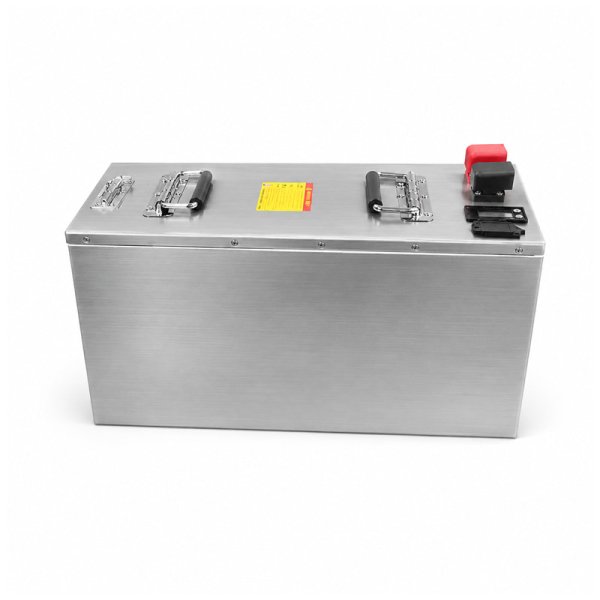
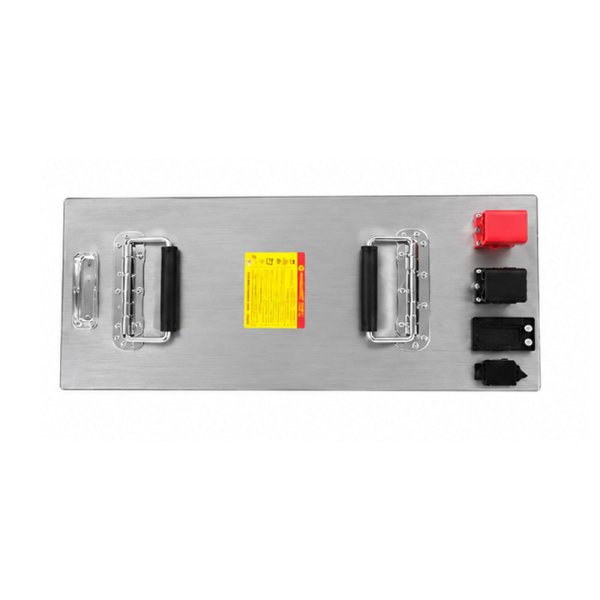
The linked FEBATT 60V 80Ah power lithium battery is positioned for high-power electric two-wheelers, small utility vehicles, and heavy-load portable equipment. Its published page lists 80Ah capacity, 4.8kWh energy, up to 40A charging current, up to 100A continuous discharge, 2000W rated output, at least 3,000 cell cycles at 100% depth of discharge, 40±1kg weight, and 450×290×225mm dimensions. These figures support preliminary comparison, but the final series configuration, full-charge voltage, controller compatibility, and pack-level test conditions must be confirmed on the project datasheet.
Small Utility Vehicles
Campus vehicles, factory transporters, maintenance carts, and light cargo platforms may use a 60V-class system when the controller and motor are designed for it. Their priorities often include long daily runtime, easy charging, low maintenance, and stable low-speed torque.
Forklifts and Heavy Equipment
Some material-handling equipment can use a 60V-class platform, but a pack developed for a two-wheeler should not automatically be promoted for a forklift. Forklifts may require much higher current, industrial connectors, reinforced enclosures, ballast review, vehicle communication, and application-specific certification. Suitability must be verified at pack and vehicle level.

How Does 60V Lithium Battery Selection Determine Capacity?
Capacity selection begins with real energy demand. The basic relationship is:
Nominal energy (Wh) = nominal voltage (V) × capacity (Ah)
If a pack is verified at exactly 60V nominal and 80Ah, its nominal energy is 4,800Wh, or 4.8kWh. This is not guaranteed usable energy. The amount available to the vehicle depends on BMS limits, depth-of-discharge policy, current, temperature, cell age, and controller cutoff.
Use this route-based method:
- Measure or estimate vehicle consumption in Wh per kilometer or Wh per mile.
- Multiply consumption by required route distance.
- Add energy for payload, gradients, temperature, accessories, and route variation.
- Add an operating reserve so the fleet does not depend on full discharge.
- Divide the target watt-hours by verified nominal voltage to estimate amp-hours.
For example, a delivery tricycle using 55Wh/km over 60km requires about 3,300Wh before reserve. Adding 20% produces a target of approximately 3,960Wh. At a verified 60V nominal voltage, that equals about 66Ah. An 80Ah pack may provide useful margin, but loaded road testing is still required.

Credible 60V lithium battery selection uses measured vehicle consumption whenever possible. Generic range claims are unreliable because speed, payload, wind, terrain, tire pressure, motor efficiency, and driving behavior can change consumption substantially.
Should You Choose 50Ah, 80Ah, 100Ah, or More?
Choose the smallest capacity that meets verified route, reserve, current, weight, and service-life requirements without regularly forcing the battery into stressful operation.
A 50Ah pack may suit lighter vehicles and short routes. An 80Ah pack can provide more runtime for delivery or utility work, while 100Ah or higher may be justified for long routes, heavy payloads, limited charging windows, or future expansion.
Oversizing also has costs. A larger battery weighs more, occupies more space, raises the initial price, and may change vehicle handling. The best 60V lithium battery selection balances usable energy with packaging, payload, budget, charging time, and chassis limits.
What Technical Data Supports 60V Lithium Battery Selection?
Voltage and capacity are only the starting point. A procurement specification should cover the complete operating profile.
Continuous and Peak Current
Continuous current must support sustained workload. Peak current must support acceleration, hill climbing, startup, lifting, or other short high-load events. Ask how long the peak rating can be maintained and at what temperature. A vague “maximum current” figure without duration is inadequate.
Charging Current and Time
Charging time depends on capacity, charger current, starting state of charge, temperature, balancing behavior, and current taper near full charge. Dividing amp-hours by charger amperage gives only a rough estimate.
The referenced FEBATT product lists up to 40A charging current. An 80Ah pack would theoretically receive 80Ah in about two hours at 40A, but real charging normally takes longer because current is not constant through every stage and the BMS may limit charging.
Battery Chemistry
LiFePO4 is often preferred for commercial fleets because of its thermal stability, cycle-life potential, and consistent operation. NMC and other chemistries may offer higher energy density where weight and space are more important.
Chemistry choice should follow the duty cycle. Effective 60V lithium battery selection compares safety, energy density, power capability, low-temperature behavior, cycle-test conditions, cost, and supplier experience with the target vehicle.
Cycle Life
Cycle life must be read together with depth of discharge, charge and discharge rate, temperature, and retained-capacity endpoint. “3,000 cycles” is not meaningful unless the conditions are stated.
The FEBATT page publishes at least 3,000 cell cycles at 100% depth of discharge. Buyers should request the cell model, current rate, temperature, remaining-capacity threshold, test method, and whether warranty coverage applies to complete-pack performance.
Temperature and Environmental Protection
Verify charging and discharging temperature ranges separately. Many lithium systems restrict charging at low temperature even when discharge is allowed. Also confirm ingress protection, condensation control, enclosure strength, vibration resistance, corrosion protection, and connector sealing.
Dimensions, Weight, and Communication
The pack must fit without interfering with suspension, service access, or wiring. Mounting must restrain it under vibration, braking, and impact, while weight changes should be reviewed for axle loading and handling.
CAN, RS485, UART, or another interface may be required by the display, controller, charger, or telematics system. Confirm protocol, baud rate, pinout, diagnostic access, fault codes, and software ownership before production.
How Does the BMS Affect 60V Lithium Battery Selection?
The BMS is the battery’s control and protection layer. It monitors cell voltage, pack current, temperature, state of charge, and faults. Depending on design, it can control contactors, log events, balance cells, and communicate with the vehicle.
Review:
- Overcharge and over-discharge protection
- Continuous and peak overcurrent settings
- Short-circuit response
- Charge and discharge temperature limits
- Cell balancing
- State-of-charge calculation
- Event and fault logging
- CAN or RS485 communication
- Sleep, wake, and key-switch behavior
- Regenerative-braking compatibility
A generic BMS may protect the cells but still fail to communicate correctly with the vehicle. OEM projects often need customized thresholds, firmware, messages, connectors, and wake-up logic. This makes BMS review a central part of 60V lithium battery selection.
How Should Safety Influence 60V Lithium Battery Selection?
A commercial battery should use layered protection rather than relying on one component. Review cell quality, BMS design, fusing, conductor sizing, insulation, enclosure strength, connector protection, thermal sensing, production testing, and transport documents.
Ask which certifications and reports apply to the exact pack. A certificate for a different model, cell, or voltage does not automatically cover the requested product. For international shipment, confirm current UN38.3 documentation and the required safety data. Additional standards may apply by market and application.
Sample validation should include capacity, current, charging, temperature, vibration, water exposure where relevant, communication, fault response, and loaded-vehicle testing. Safety cannot be confirmed from a brochure alone.
How Should OEMs Manage 60V Lithium Battery Selection?
Supplier capability affects consistency as much as cell chemistry. A strong evaluation covers engineering, manufacturing, documentation, and after-sales support.
Engineering Review
The supplier should request controller voltage, motor rating, current demand, route, payload, charger, connector, dimensions, mounting, temperature, communication, and certification needs. A quote based only on voltage and amp-hours is not an adequate application review.
Manufacturing and Quality Control
Ask about incoming cell inspection, cell matching, welding control, insulation, BMS programming, aging tests, final capacity testing, traceability, and change management. Define approved cells and critical components so materials cannot be changed without written approval.
Customization and Project Support
OEM projects may require custom dimensions, brackets, cable lengths, connectors, communication, labels, packaging, heating, cooling, or current ratings. These changes should be controlled through approved drawings, electrical specifications, software versions, and sample approval.
Also confirm how the supplier handles prototypes, design changes, fault analysis, spare parts, warranty claims, and production scaling. Reliable support reduces development time and field risk.
How Should Fleet Operators Compare Total Ownership Value?
Purchase price is only one cost. Total cost of ownership includes the battery, charger, installation, energy losses, maintenance, replacement frequency, downtime, spare inventory, logistics, warranty administration, and recycling.
A low-priced pack may become expensive if it causes route interruptions or early replacement. A higher-quality pack may justify its cost through longer service, stable range, faster charging, and better diagnostics. Use actual operating hours, labor rates, electricity costs, replacement history, and expected ownership period.
For 60V lithium battery selection, compare cost per delivered kilowatt-hour or cost per vehicle operating hour rather than purchase price alone.
What Mistakes Undermine 60V Lithium Battery Selection?
Choosing by Nominal Voltage Alone
“60V” does not define the full voltage window. Compare maximum voltage, cutoff voltage, controller limits, and charger output.
Choosing by Amp-Hours Alone
Capacity does not confirm current capability. A high-capacity pack with an undersized BMS may shut down during acceleration.
Using Generic Range Claims
Published range may use different vehicle weight, speed, terrain, and payload. Use measured Wh/km or Wh/mile data.
Assuming Direct Lead-Acid Replacement
A conversion may require a new charger, wiring, mounting, state-of-charge display, fuse, and controller verification.
Ignoring Communication
A mechanically compatible pack can still fail if the vehicle expects specific CAN messages or wake signals.
Skipping Sample Testing
Large orders should follow drawing approval, sample validation, loaded testing, and documented acceptance criteria.
How Can Service Life Be Extended?
Use the charger approved for the exact pack. Avoid operating outside specified temperature and current limits. Do not store the battery for long periods at an extreme state of charge. Keep connectors clean and secure, inspect mounting hardware, and review BMS fault records.
Opportunity charging can support fleet uptime when charge current, temperature, and SOC remain within supplier limits. Storage procedures should define state of charge, inspection intervals, temperature, moisture protection, and charger disconnection.
Good operation cannot correct an incorrectly specified battery, but it can help a correctly selected pack deliver its intended life.
FAQ About 60V Lithium Battery Selection
1.What is the best 60V lithium battery for an electric tricycle or delivery fleet?
There is no universal best model. LiFePO4 is often attractive for commercial delivery applications because of its thermal stability and cycle-life potential. The pack must also match the controller’s voltage range, route energy demand, payload, continuous and peak current, charger, mounting, enclosure, and communication. The best choice is the battery that passes a vehicle-specific engineering review and loaded route test.
2.How long does a 60V lithium battery typically last?
Service life depends on chemistry, cell quality, depth of discharge, charge rate, temperature, storage, current demand, and the end-of-life definition. It should not be presented as one guaranteed number of years. The referenced FEBATT 60V 80Ah product publishes at least 3,000 cell cycles at 100% depth of discharge. Request the complete test conditions and confirm whether the pack warranty uses the same retained-capacity threshold.
3.Can a 60V lithium battery directly replace a 60V lead-acid battery?
It may replace a suitable lead-acid system, but it is not automatically plug-and-play. Confirm maximum and minimum voltage, charger profile, continuous and peak current, regenerative braking, controller limits, cable and fuse ratings, connector polarity, mounting, weight distribution, display behavior, and BMS communication. The charger normally must be approved for the lithium pack.
4.What battery capacity does my vehicle need?
Calculate route energy from measured Wh/km or Wh/mile, multiply by required distance, and add reserve for payload, gradients, temperature, accessories, and aging. Divide target watt-hours by verified nominal voltage. A 3,960Wh target at 60V requires about 66Ah, so an 80Ah pack may provide useful reserve. Validate the final capacity on the loaded vehicle.
5.Can OEM customers request customized 60V battery packs?
Yes. OEM customization can include capacity, dimensions, chemistry, continuous and peak current, enclosure, mounting, connectors, cable lengths, BMS thresholds, CAN or RS485 communication, heating, labels, and packaging. Control custom work through approved drawings, electrical specifications, software versions, sample testing, and written acceptance criteria.
Conclusion
A reliable 60V lithium battery selection process connects the specification to the real duty cycle. Nominal voltage and amp-hours are not enough. Buyers must confirm the complete voltage range, usable energy, current, charging system, BMS logic, communication, environmental protection, dimensions, weight, safety documents, and supplier controls.
For OEMs and delivery fleets, the strongest decisions come from route data, engineering review, sample testing, and total-cost analysis. The linked FEBATT 60V 80Ah power lithium battery provides a practical reference for an 80Ah commercial pack, but every project should confirm the finalized voltage architecture and pack-level test conditions before production.
By applying a structured 60V lithium battery selection method, businesses can avoid incompatible hardware, reduce downtime, improve route reliability, and build a battery platform that supports present operations and future fleet growth.