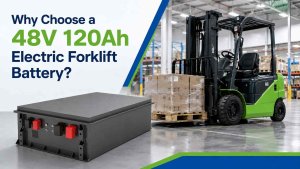
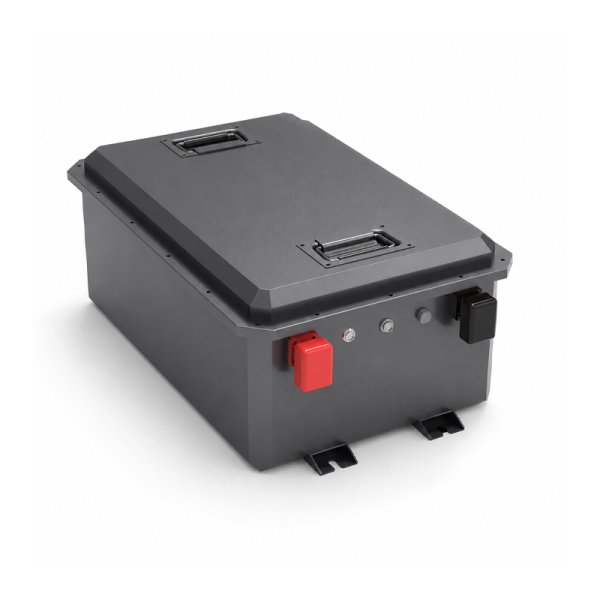
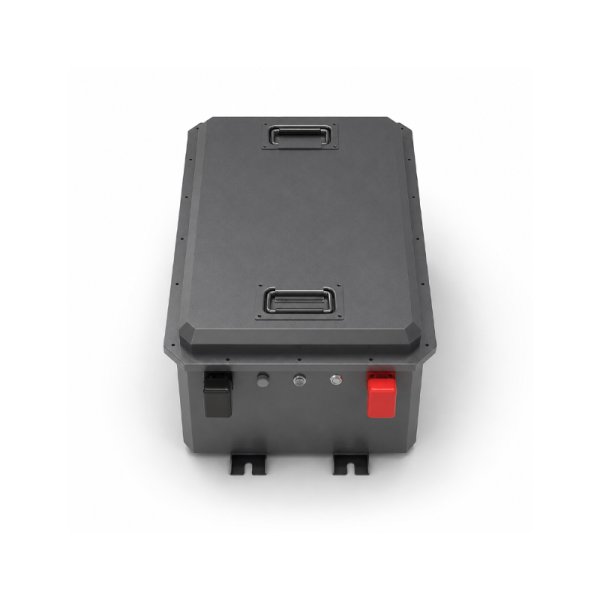
For B2B buyers, forklift battery selection is not only a specification comparison. It affects equipment uptime, charging planning, safety, maintenance workload, and long-term replacement cost. A 48V 30Ah forklift battery is a compact power solution designed for light-duty material handling equipment, small electric forklifts, pallet trucks, walkie stackers, order pickers, and customized warehouse vehicles that need stable 48V power without oversized capacity.
This 48V 30Ah forklift battery buying guide explains how to evaluate the battery from a practical procurement perspective. It covers real energy calculation, compatible applications, runtime planning, lithium chemistry, BMS protection, charger matching, service life, capacity comparison, and supplier selection. For procurement teams, a 48V 30Ah forklift battery buying guide should turn technical specifications into clear buying decisions, not just repeat product parameters.The goal is simple: help buyers choose a battery that fits the machine, supports the workload, and reduces avoidable operating risk.
What Is a 48V 30Ah Forklift Battery?
A 48V 30Ah forklift battery is a rechargeable battery pack with a nominal voltage of 48 volts and a capacity of 30 ampere-hours. The battery’s nominal energy can be calculated by multiplying voltage and amp-hours:
48V × 30Ah = 1,440Wh, or 1.44kWh
This is useful data for buyers because it shows the real energy class of the battery. A 1.44kWh pack is not meant to replace large traction batteries used in heavy-duty forklifts. It is better suited to compact electric equipment with moderate current demand and shorter operating cycles.
In most modern forklift battery projects, this type of pack often uses lithium chemistry, especially LiFePO4, because LiFePO4 offers stable discharge behavior, strong thermal stability, low maintenance, and long cycle potential when used correctly. However, a 48V 30Ah forklift battery should still be selected based on the machine’s actual current draw, compartment size, connector, charger, and working conditions.
For buyers reading a 48V 30Ah forklift battery buying guide, the most important point is not just “48V” or “30Ah.” The real question is whether this voltage and capacity match the forklift’s duty cycle.
Why Do Businesses Choose a 48V 30Ah Forklift Battery?
Businesses choose this battery format because it offers a compact balance of voltage, capacity, size, and cost. In light-duty warehouses or retail logistics environments, not every machine requires a high-capacity battery. Some compact forklifts, pallet trucks, and stackers operate in short working cycles and return frequently to a charging point. In these cases, a smaller lithium pack can be more practical than a larger and heavier battery.
A 48V 30Ah forklift battery can help reduce unnecessary battery weight, simplify installation, and lower procurement cost compared with larger capacity options. It can also reduce maintenance compared with traditional lead-acid batteries, especially when LiFePO4 chemistry is used. There is no watering, no acid handling, and less routine service work.
A useful 48V 30Ah forklift battery buying guide should also consider operational rhythm. If the equipment works intermittently, the battery may support the workflow well. If the forklift is expected to lift heavy loads continuously for a full shift, the same battery may be too small. The best choice depends on the relationship between energy demand and working schedule.
Which Equipment Is Compatible With a 48V 30Ah Forklift Battery?
Compatibility depends on more than voltage. A forklift may use a 48V electrical system but still require a different capacity, shape, weight, discharge current, or communication protocol. Before purchasing, buyers should confirm the forklift model, original battery specification, controller limits, charger profile, battery tray size, and connector type.
A 48V 30Ah forklift battery is usually more suitable for:
- Compact electric forklifts with light-duty cycles
- Electric pallet trucks
- Walk-behind stackers
- Order pickers
- Small warehouse utility vehicles
- AGV or AMR support platforms
- Customized industrial mobility equipment

This is why a 48V 30Ah forklift battery buying guide must start with the real vehicle type instead of only the battery name. It is less suitable for heavy-duty forklifts, long continuous shifts, outdoor rough-floor use, or high-load applications that demand large traction batteries. For buyers comparing a wider range of forklift power solutions, the FEBATT forklift battery category can be used as a broader reference.
This 48V 30Ah forklift battery buying guide recommends checking compatibility before discussing price. A low-cost battery is still a poor purchase if it cannot safely support the machine.
How Do You Estimate Runtime Accurately?
Runtime is not fixed by capacity alone. A 48V 30Ah battery stores about 1.44kWh of nominal energy, but actual runtime depends on average current draw, load weight, travel distance, lift frequency, floor resistance, temperature, battery age, and operator behavior.
A simple estimation method is:
Runtime ≈ usable capacity ÷ average current draw
For example, if a machine draws a low average current during intermittent operation, runtime can be longer. If the same battery is used under frequent acceleration, heavy lifting, or continuous movement, runtime will be shorter. This is why buyers should not rely on one universal runtime number.
A practical 48V 30Ah forklift battery buying guide should ask for real application data. Buyers should record expected working hours, average load weight, lift frequency, travel distance, charging windows, and required reserve capacity. If the machine must operate continuously for several hours under load, a higher-capacity battery may be more suitable.
What Battery Chemistry Should B2B Buyers Choose?
The main comparison is usually between lead-acid and lithium. Lead-acid batteries are familiar and may have lower upfront cost, but they usually require more maintenance, have lower usable energy efficiency, and charge more slowly. They also need more attention to handling, storage, and long-term maintenance.
LiFePO4 lithium batteries are popular in material-handling equipment because they offer stable voltage output, good safety performance, low maintenance, and longer cycle potential under proper use. For B2B buyers, this can reduce downtime and make charging management easier. In a 48V 30Ah forklift battery buying guide, LiFePO4 is usually discussed because it fits many compact, low-maintenance industrial power needs.
| Factor | Lead-Acid Battery | LiFePO4 Forklift Battery |
|---|---|---|
| Maintenance | Requires more routine checks | Low maintenance |
| Charging | Usually slower | Faster when charger is matched |
| Usable energy | More limited under deep discharge | More stable usable output |
| Weight | Usually heavier | Usually lighter |
| Cycle life | Shorter under frequent deep discharge | Often designed for thousands of cycles |
| Handling | Requires more care | Cleaner daily operation |
This does not mean lithium is always the right answer. If equipment is rarely used and budget is the only concern, lead-acid may still be considered. However, for buyers focused on long-term efficiency, a lithium-based 48V 30Ah forklift battery is often the stronger option.
What Technical Specifications Should Be Checked?
A professional purchase should go beyond voltage and capacity. The specification sheet should confirm whether the battery can meet the electrical, mechanical, and safety needs of the equipment. This is where many mistakes happen: two batteries may both be labeled 48V 30Ah, but their real performance can be very different.
Important specifications include:
| Specification | Why It Matters |
|---|---|
| Nominal voltage | Must match the forklift system |
| Capacity | Affects energy reserve and runtime |
| Nominal energy | 48V × 30Ah = 1.44kWh |
| Continuous discharge current | Must support normal operation |
| Peak discharge current | Must support lifting and acceleration |
| Charging voltage | Must match lithium charger requirements |
| BMS functions | Protects battery and equipment |
| Dimensions | Must fit the battery compartment |
| Weight | Affects handling and machine balance |
| Connector type | Must match the forklift wiring |
| Temperature range | Affects performance and safety |
Any 48V 30Ah forklift battery buying guide should treat current ratings seriously. If the forklift requires a higher peak current than the battery can safely provide, the BMS may shut down or the battery may operate under stress.
How Important Are Battery Size and Weight?
Physical fit is just as important as electrical fit. A battery that has the correct voltage but does not fit the tray cannot be used properly. According to this 48V 30Ah forklift battery buying guide, buyers should check length, width, height, fixing method, cable outlet direction, connector position, and available ventilation space.
Weight also matters. Lithium batteries are often lighter than lead-acid alternatives. A lighter battery can be easier to handle and may reduce mechanical stress, but some forklifts use battery weight as part of the balance structure. If the replacement battery is much lighter than the original pack, buyers should confirm whether the machine still meets stability requirements.
Before final purchase, compare the new 48V 30Ah forklift battery dimensions and weight with the existing battery. If the project involves OEM or ODM production, confirm whether casing, connector, handle, mounting hole, and cable length can be customized. A complete 48V 30Ah forklift battery buying guide should always connect dimensions, weight, and installation method together.
What Charging Options Are Available?
A 48V lithium forklift battery should be charged with a compatible lithium charger. The charger must match battery chemistry, voltage range, current limit, connector, and BMS requirements. Using an unsuitable charger can reduce battery performance, shorten service life, or create safety risks.
Common charging options include standard charging, fast charging, and opportunity charging. Standard charging is suitable for predictable schedules. Fast charging may reduce downtime if the battery and BMS support the charging current. Opportunity charging allows short charging sessions during breaks, but it must still follow the manufacturer’s charging limits.
This 48V 30Ah forklift battery buying guide recommends confirming charger specifications before ordering batteries in bulk. If buyers already have chargers on site, they should check whether those chargers are compatible with LiFePO4. If not, charger replacement or charger adjustment may be required.
What Safety Features Should Buyers Look For?
Safety should be a non-negotiable requirement. A quality 48V 30Ah forklift battery should include a Battery Management System that monitors and protects the pack during charging, discharging, storage, and abnormal operation.
Important BMS protections include:
- Overcharge protection
- Over-discharge protection
- Overcurrent protection
- Short-circuit protection
- Temperature monitoring
- Cell balancing
- Voltage monitoring
- Charging protection

LiFePO4 chemistry is valued because of its stable thermal behavior, but chemistry alone is not enough. A safe battery also needs reliable cells, proper mechanical design, qualified wiring, correct charger matching, and BMS protection. Buyers should also request safety documents and transport documents when purchasing for commercial use. For this reason, a 48V 30Ah forklift battery buying guide should treat BMS and safety documentation as buying requirements, not optional extras.
How Long Is the Service Life of a 48V 30Ah Forklift Battery?
Service life depends on cell quality, BMS design, depth of discharge, charging habits, temperature, current load, and storage environment. A well-designed LiFePO4 battery is often built for thousands of charge-discharge cycles, but exact cycle life should always be confirmed from the manufacturer’s datasheet.
For real-world B2B use, the following practices can help extend service life:
- Avoid frequent deep discharge when possible.
- Use the correct lithium charger.
- Keep the battery away from extreme heat.
- Store it in a dry and stable environment.
- Avoid loose connectors and damaged cables.
- Follow recommended current limits.
- Inspect the battery regularly.
- Do not use a damaged pack.
A responsible 48V 30Ah forklift battery buying guide should avoid unrealistic lifespan promises. The correct statement is this: lithium batteries can offer long service life, but only when the battery is properly matched, charged, installed, and maintained.
How Does a 48V 30Ah Battery Compare With a 48V 120Ah Battery?
Capacity comparison is important because 30Ah and 120Ah batteries serve different workloads. A 48V 30Ah battery stores about 1.44kWh of nominal energy. A 48V 120Ah battery stores about 5.76kWh. That means the 120Ah version has four times the nominal energy capacity.
| Battery Option | Nominal Energy | Typical Fit |
|---|---|---|
| 48V 30Ah | 1.44kWh | Compact equipment and light-duty use |
| 48V 120Ah | 5.76kWh | Longer runtime and heavier-duty operation |
The 48V 30Ah option is more compact and cost-efficient for light workloads. The 48V 120Ah option is more suitable when the buyer needs longer runtime, greater energy reserve, or more demanding shift coverage. For buyers who need a higher-capacity option, FEBATT’s 48V 120Ah forklift battery can be used as a related product reference.
This comparison helps buyers avoid oversizing or undersizing. Bigger capacity is useful only when the operation truly needs it. A 48V 30Ah forklift battery buying guide should show this comparison clearly because many buyers confuse voltage match with capacity match.

How Should Buyers Choose a Supplier?
Supplier quality matters as much as battery specification. A reliable supplier should provide accurate datasheets, stable production quality, clear warranty terms, technical support, and customization options when needed. For B2B buyers, support before purchase is especially important because compatibility mistakes can be costly.
A strong supplier should be able to answer questions about discharge current, BMS design, charger compatibility, certifications, dimensions, cycle life, packaging, and application fit. If the supplier cannot explain these points clearly, the buyer should be cautious.
Before purchasing, ask for:
- Full product datasheet
- Battery dimensions and weight
- BMS protection details
- Charger recommendation
- Connector specification
- Available certifications
- Warranty terms
- Customization ability
- Lead time and production capacity
- After-sales support process
For buyers reviewing a specific product option, FEBATT’s 48V 30Ah forklift battery page can be used as a direct product reference. When using a 48V 30Ah forklift battery buying guide, supplier evaluation should be part of the buying process, not the final step after price negotiation.
Quick Checklist for B2B Buyers
Use this checklist before placing an order:
| Checkpoint | What to Confirm |
|---|---|
| Voltage | Is the forklift system 48V? |
| Capacity | Is 30Ah enough for the duty cycle? |
| Energy | Does 1.44kWh support the required work? |
| Current | Can the battery support peak demand? |
| Chemistry | Is LiFePO4 suitable for the operation? |
| Charger | Is the charger compatible? |
| Size | Does the battery fit the tray? |
| Weight | Is machine balance still safe? |
| Connector | Does it match the forklift wiring? |
| BMS | Are protections complete? |
| Certifications | Are documents available? |
| Supplier | Can the supplier provide technical support? |
This 48V 30Ah forklift battery buying guide is useful because it turns battery selection into a structured decision. Instead of choosing by price alone, buyers can check each risk point before purchase.
FAQ About 48V 30Ah Forklift Battery
1.What Is the Difference Between a 48V 30Ah Forklift Battery and a Lead-Acid Battery?
A 48V 30Ah forklift battery is often a compact lithium pack, while lead-acid batteries are usually heavier and require more maintenance. Lithium batteries can offer faster charging, lower maintenance, and more stable output when properly matched with the equipment and charger.
2.How Long Does a 48V 30Ah Forklift Battery Last on a Single Charge?
A 48V 30Ah battery typically lasts 45 minutes to 1.5 hours of continuous, heavy-duty use in a forklift. Runtime depends on current draw, load weight, travel distance, floor condition, lift frequency, and temperature. Because the battery stores about 1.44kWh of nominal energy, it is best suited to compact and light-duty operation rather than heavy continuous forklift work.
3.Can a 48V 30Ah Forklift Battery Be Fast Charged?
Yes, but only if the battery, BMS, charger, connector, and cables support the charging current. Fast charging should follow the manufacturer’s charging limits. An incompatible charger can reduce service life or trigger protection faults.
4.Is a 48V 30Ah Forklift Battery Suitable for Heavy-Duty Forklifts?
Usually no. A 48V 30Ah battery is compact and better suited to light-duty forklifts, pallet trucks, stackers, and specialized small equipment. Heavy-duty forklifts usually require higher-capacity traction batteries.
5.How Many Charge Cycles Can a LiFePO4 48V 30Ah Forklift Battery Deliver?
A LiFePO4 (Lithium Iron Phosphate) 48V 30Ah battery typically delivers between 2,000 and 6,000+ full charge cycles. Many LiFePO4 batteries are designed for thousands of cycles, but the actual cycle count depends on cell quality, BMS design, depth of discharge, charging method, temperature, and operating conditions. Buyers should confirm the rated cycle life from the product datasheet.
Conclusion
A 48V 30Ah forklift battery is a practical solution for compact material-handling equipment when the duty cycle is light to moderate. Its nominal energy of 1.44kWh makes it suitable for equipment that needs stable 48V power in a compact format, not for heavy-duty forklifts that require long runtime and high energy reserve.
The right buying decision should be based on verified data: voltage, capacity, nominal energy, discharge current, charger compatibility, BMS protection, dimensions, weight, connector type, and supplier support. A good battery should fit the machine, support the workload, charge safely, and reduce avoidable maintenance.
This 48V 30Ah forklift battery buying guide gives B2B buyers a practical framework for selection. When the battery is correctly matched, it can support reliable operation, cleaner charging management, and better long-term value for compact electric forklift fleets.