AGM vs Lithium RV Battery: Which Is Better for RV Power Systems?
Choosing between an AGM vs lithium RV battery is one of the most important decisions when building or upgrading an RV power system. AGM batteries are familiar, widely available, and often cheaper upfront, while lithium batteries offer higher usable capacity, lighter weight, faster charging, and longer service life. The best choice depends on how the RV is used, what appliances need power, how often the system is charged, and whether the goal is basic backup power or longer off-grid independence.

Why Does the AGM vs Lithium RV Battery Choice Matter?
The battery is the heart of an RV power system. It affects how long lights, fans, refrigerators, water pumps, laptops, inverters, and other appliances can run when the RV is not connected to shore power. A poor battery choice can lead to short runtime, slow charging, limited usable energy, and a frustrating off-grid experience.
For many RV users, power demand is increasing. Modern RVs are no longer used only for lighting and phone charging. Many people now want to run refrigerators, ventilation fans, entertainment systems, kitchen appliances, work equipment, and solar-supported power systems. This makes the AGM vs lithium RV battery decision more important than before.
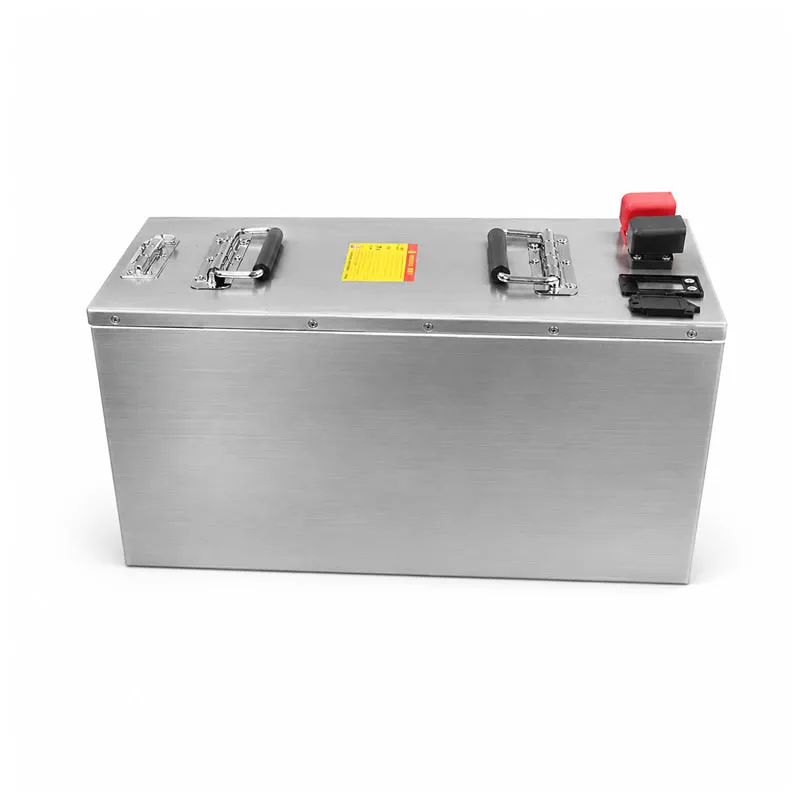
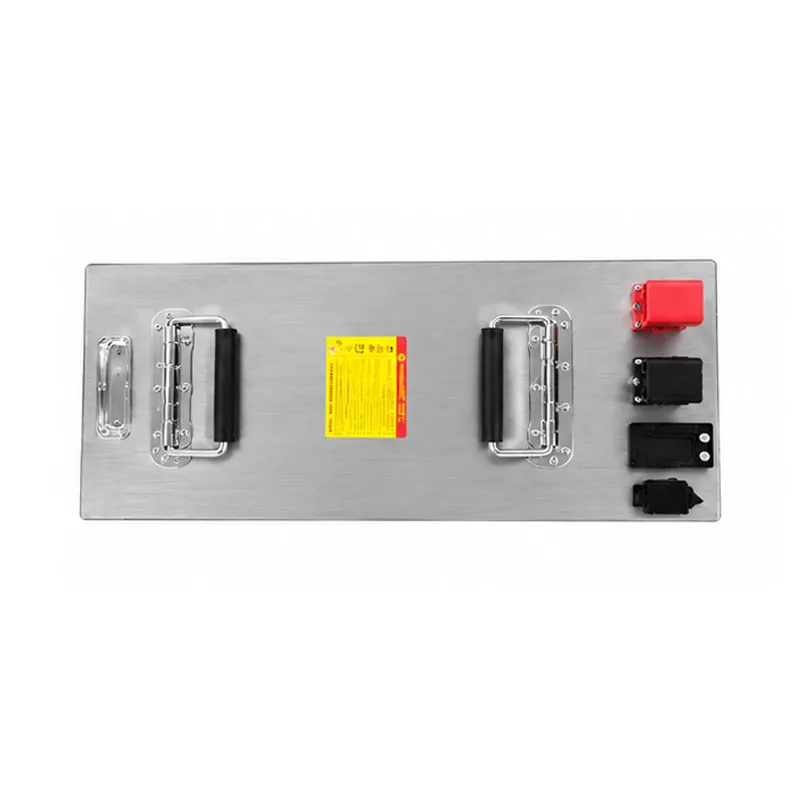
For these higher power needs, reliable lithium RV battery solutions can help improve runtime, charging efficiency, and off-grid comfort.
AGM batteries can still work well for simple or budget-sensitive RV setups. However, lithium batteries are becoming more common in RV power systems because they provide higher energy density, longer service life, and stronger performance for modern power needs. RVIA also notes that lithium batteries have become more widely used in RV products and are addressed in RV industry standards.
What Is an AGM RV Battery?
An AGM RV battery is a type of lead-acid battery. AGM stands for Absorbent Glass Mat. Inside the battery, the electrolyte is absorbed into fiberglass mats, which helps reduce spills and makes the battery more suitable for sealed applications than traditional flooded lead-acid batteries.
AGM batteries are often used in RVs because they are maintenance-free, relatively safe when properly installed, and easier to use than flooded lead-acid batteries. They can also handle vibration better than some traditional lead-acid designs, which makes them practical for vehicle-based applications.
The main advantages of AGM batteries include:
- Lower upfront cost than lithium batteries
- Wide availability
- Simple replacement for many existing lead-acid systems
- Maintenance-free sealed design
- Good performance for light to moderate use
However, AGM batteries still have the limitations of lead-acid chemistry. They are heavier, charge more slowly than lithium, provide less usable capacity in many real-world RV applications, and may have a shorter cycle life when deeply discharged. Battery University notes that AGM batteries can deep cycle and charge faster than flooded lead-acid batteries, but they still have lower specific energy compared with some alternatives.
What Is a Lithium RV Battery?
A lithium RV battery usually refers to a LiFePO4 battery, also called a lithium iron phosphate battery. This battery chemistry is widely used in RV power systems because it offers stable performance, long cycle life, lighter weight, and higher usable capacity compared with traditional lead-acid batteries.
A lithium RV battery is often equipped with a BMS, or battery management system. The BMS helps protect the battery from overcharge, over-discharge, over-current, short circuit, and temperature-related risks. For RV applications, this protection is important because the battery may be used with solar panels, DC-DC chargers, inverter chargers, alternator charging, and shore power.
The main advantages of lithium RV batteries include:
- Higher usable capacity
- Lighter weight
- Faster charging
- Longer cycle life
- Better voltage stability
- Lower maintenance
- Stronger performance for off-grid use
When comparing AGM vs lithium RV battery options, lithium is usually the stronger choice for users who need longer runtime, regular off-grid travel, solar charging, or higher daily power consumption.
How Do AGM and Lithium RV Batteries Compare?
The easiest way to understand the AGM vs lithium RV battery difference is to compare the factors that matter most in real RV use.
| Comparison Factor | AGM RV Battery | Lithium RV Battery |
|---|---|---|
| Upfront cost | Lower | Higher |
| Usable capacity | Lower in many applications | Higher |
| Weight | Heavier | Lighter |
| Charging speed | Slower | Faster |
| Cycle life | Shorter under deep discharge | Longer |
| Maintenance | Low | Very low |
| Voltage stability | Drops more under load | More stable |
| Off-grid performance | Basic to moderate | Stronger |
| Solar compatibility | Works, but less efficient | Better for solar-supported systems |
| Long-term value | Lower upfront cost | Better long-term performance |
AGM batteries are suitable when the budget is tight and the power demand is simple. Lithium batteries are more suitable when the RV needs longer runtime, lighter weight, faster charging, and better off-grid reliability.

Which Battery Offers Better Usable Capacity?
Usable capacity is one of the biggest differences in the AGM vs lithium RV battery comparison.
A battery’s rated capacity does not always mean the full amount of energy should be used every day. AGM batteries are more sensitive to deep discharge. If an AGM battery is deeply discharged too often, its service life can be shortened. Lithium batteries, especially LiFePO4 batteries with proper BMS protection, can usually provide more usable energy in regular RV use.
For example, a 100Ah AGM battery and a 100Ah lithium battery may look similar on paper. But in real use, the lithium battery can often deliver more practical usable capacity while maintaining stronger voltage stability. This means appliances may run longer and perform more consistently.
This matters for RV users who rely on refrigerators, fans, water pumps, laptops, lighting, and small inverters. If the system uses an AGM battery, the user may need a larger or heavier battery bank to reach the same usable power experience that a lithium battery can provide.
Which Battery Is Better for Weight and Installation Space?
Lithium batteries are usually much lighter than AGM batteries with similar usable capacity. This is important in RV applications because weight affects vehicle payload, fuel efficiency, handling, and installation flexibility.
AGM batteries are heavy because of their lead-acid structure. For small RVs, campervans, caravans, and motorhomes, extra battery weight can quickly become a problem. If a user wants more capacity, adding multiple AGM batteries may take up more space and add significant weight.
A lithium RV battery can help reduce weight while providing more usable energy. This makes lithium more attractive for compact RV layouts, under-seat battery compartments, off-grid builds, and solar-supported systems where space is limited.
In the AGM vs lithium RV battery decision, weight is not only a technical detail. It affects installation design, storage space, travel comfort, and long-term system flexibility.

Which Battery Charges Faster in RV Power Systems?
Charging speed is another major advantage of lithium batteries. AGM batteries can be charged with standard lead-acid charging systems, but they may charge more slowly, especially as they approach full capacity.
Lithium RV batteries can usually accept charge more efficiently when paired with the right charger. This is useful for RV systems that charge from solar panels, shore power, alternators, DC-DC chargers, or inverter chargers.
Faster charging is especially valuable for off-grid travel. If the RV has limited sunlight, short driving time, or limited access to shore power, a battery that can recharge efficiently makes the power system easier to manage.
However, charger compatibility must be checked before upgrading from AGM to lithium. A lithium RV battery should be charged with a suitable lithium charging profile. If the charger is not compatible, the battery may not charge fully or perform as expected.
Which Battery Is Better for Off-Grid RV Travel?
For off-grid RV travel, lithium is usually the better option. Off-grid use requires more stored energy, better charging efficiency, and stronger performance under repeated charge and discharge cycles.
An AGM battery can support short trips and light loads, but it may become limited when the RV needs to power a refrigerator, fan, lighting, laptop, water pump, and inverter loads at the same time. The more appliances are used, the more important usable capacity becomes.
A lithium RV battery is better suited for:
- Longer off-grid stays
- Solar-supported RV systems
- Higher daily power consumption
- Regular refrigerator operation
- Laptop and mobile work setups
- Inverter use
- Users who want fewer charging interruptions
In the AGM vs lithium RV battery comparison, AGM may be enough for simple weekend use, but lithium is the stronger choice for users who want more independence and comfort away from shore power.
When Is an AGM RV Battery Still a Practical Choice?
AGM batteries are not useless. They can still be a practical choice in some RV power systems, especially when the user has simple power needs and wants to control upfront cost.
An AGM RV battery may be suitable when:
- The RV is used only occasionally
- Power demand is low
- The system mainly supports lights, USB charging, and small fans
- The existing charger is designed for lead-acid batteries
- Budget is the main concern
- The user does not need long off-grid runtime
For entry-level systems, AGM can still work. It is familiar, widely available, and simple to replace in many older RVs. If the RV does not use a refrigerator, inverter, or solar-supported power system, AGM may provide enough performance.
However, AGM becomes less attractive when users expect longer runtime, lighter weight, faster charging, and better deep-cycle performance.
When Is a Lithium RV Battery the Better Long-Term Choice?
A lithium RV battery is usually the better long-term choice when the RV power system needs better performance, stronger capacity, and more reliable off-grid use.
Lithium is a better choice when:
- The RV is used frequently
- The user wants longer runtime
- The system includes solar charging
- Weight reduction is important
- The RV powers refrigerators or inverters
- The user wants lower maintenance
- The battery needs to support repeated deep cycling
- The goal is long-term value, not only low upfront cost
The upfront cost of lithium is higher, but the long-term value can be stronger because the battery provides more usable energy, longer service life, and better charging efficiency. Understanding lithium battery cycle life helps explain why proper charging and system design are important for long-term performance.
For RV users who travel regularly or rely on off-grid power, lithium can provide a much better daily experience.
What Should You Check Before Upgrading from AGM to Lithium?
Before replacing an AGM RV battery with a lithium RV battery, the full power system should be checked. A battery upgrade is not only about removing one battery and installing another.
Important points include:
1. Charger Compatibility
Check whether the RV charger, solar charge controller, DC-DC charger, or inverter charger supports lithium battery charging profiles.
2. Battery Size and Installation Space
Make sure the new lithium battery fits the battery compartment and has suitable cable access, mounting direction, and ventilation space.
3. BMS Protection
A reliable lithium RV battery should have BMS protection against overcharge, over-discharge, over-current, short circuit, and temperature-related risks.
4. Discharge Current
If the RV uses an inverter or high-power appliances, the battery must support the required continuous discharge current.
5. Solar and Alternator Charging
If the RV uses solar panels or alternator charging, check whether the charging equipment is compatible with lithium battery requirements.
6. Parallel Expansion
If more capacity may be needed later, check whether the battery supports parallel connection and how many units can be connected safely.
A proper upgrade from AGM to lithium can improve runtime, reduce weight, and make the RV power system more efficient. But the system must be designed correctly to get the full benefit.

What Are the Common Mistakes When Comparing AGM vs Lithium RV Battery Options?
Many battery selection problems come from comparing only price or amp-hour ratings. To make a better decision, users should avoid these common mistakes.
Mistake 1: Only Looking at Upfront Cost
AGM batteries are cheaper at purchase, but lithium batteries may provide better long-term value through longer service life, more usable capacity, and better charging efficiency.
Mistake 2: Comparing Ah Ratings Without Usable Capacity
A 100Ah AGM battery and a 100Ah lithium battery do not always provide the same real-world usable energy. Usable capacity matters more than the label alone.
Mistake 3: Ignoring Weight
Adding multiple AGM batteries can increase RV weight quickly. Lithium can reduce weight while providing strong usable capacity.
Mistake 4: Forgetting Charger Compatibility
Lithium batteries need compatible charging profiles. Using the wrong charger can limit battery performance.
Mistake 5: Underestimating Future Power Demand
Many RV users add more appliances over time. A system that works today may become too small after adding a refrigerator, inverter, laptop setup, or solar charging system.
Mistake 6: Choosing Battery Type Without Considering Travel Style
Weekend trips and long off-grid travel have different energy needs. The right battery depends on how the RV is actually used.
Is AGM or Lithium Better for Solar-Supported RV Systems?
For solar-supported RV systems, lithium is usually the better match. Solar power depends on sunlight, charging time, battery acceptance, and daily consumption. A lithium RV battery can store energy efficiently and provide stable power after sunset.
AGM batteries can work with solar systems, but they may charge more slowly and provide less usable capacity. If the RV depends heavily on solar charging, lithium can make the system more efficient and easier to manage.
A lithium battery is especially useful when the RV needs to power:
- Refrigerators
- Fans
- Lighting
- Water pumps
- Laptops
- Inverters
- Small kitchen appliances
- Communication or work equipment
For users who want longer off-grid travel, a lithium RV battery paired with solar charging can provide a stronger and more flexible power solution than AGM.

Which Battery Is Better for Different RV Use Types?
The best choice in the AGM vs lithium RV battery comparison depends on the use case.
| RV Use Type | Better Option | Reason |
|---|---|---|
| Occasional weekend use | AGM or lithium | AGM can work if power demand is low |
| Regular RV travel | Lithium | Better runtime, charging, and usable capacity |
| Long off-grid camping | Lithium | Stronger energy storage and fewer charging interruptions |
| Budget replacement | AGM | Lower upfront cost |
| Solar-supported system | Lithium | Better charging efficiency and usable capacity |
| Weight-sensitive RV setup | Lithium | Lighter and easier to install |
| High appliance demand | Lithium | Better support for refrigerators, fans, inverters, and daily loads |
If the RV only needs simple backup power, AGM may be enough. If the RV needs reliable daily power and better off-grid performance, lithium is usually the smarter choice.
What Should You Look for in a Reliable Lithium RV Battery?
If you decide that lithium is the better option, battery quality matters. A reliable lithium RV battery should provide more than a high capacity number.
Look for:
- LiFePO4 chemistry
- Clear BMS protection
- Stable continuous discharge current
- Compatibility with RV charging systems
- Clear product specifications
- Parallel expansion support
- Proper safety design
- Technical documents and installation guidance
- Multiple capacity options such as 100Ah, 200Ah, and 300Ah
A good lithium RV battery should be easy to understand, easy to install, and stable in daily use. For RV power upgrades, the best battery is not always the cheapest or the largest one. It is the one that matches real power demand, charging conditions, installation space, and long-term travel needs.
Which Is Better: AGM vs Lithium RV Battery?
For simple, low-cost, and occasional RV use, AGM can still be a practical option. It is familiar, widely available, and suitable for basic power needs.
For regular travel, solar-supported systems, longer off-grid stays, and higher appliance demand, lithium is usually the better choice. It provides more usable capacity, lighter weight, faster charging, longer cycle life, and stronger long-term value.
The best answer to AGM vs lithium RV battery is not always the same for every RV. If the goal is only basic backup power, AGM may be enough. If the goal is a stronger, lighter, and more reliable RV power system, lithium is the better long-term solution.
Choosing the right battery type helps improve runtime, reduce charging pressure, and create a more comfortable RV power experience. For modern RV power upgrades, lithium is becoming the preferred direction because it better supports the way RV users travel, work, and live off-grid today.