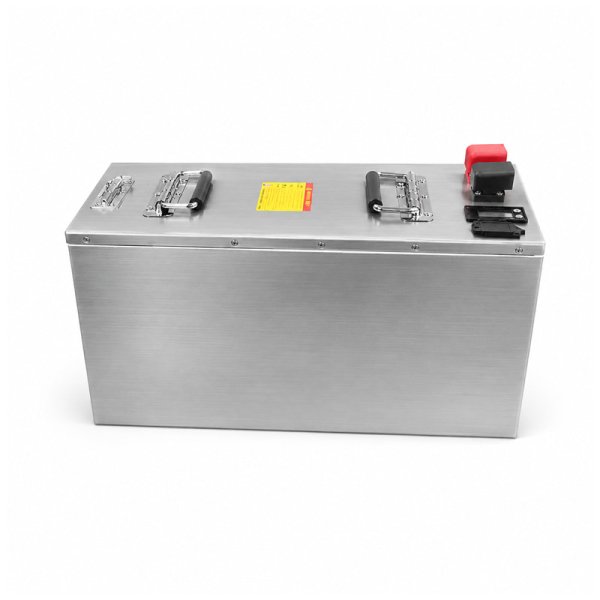
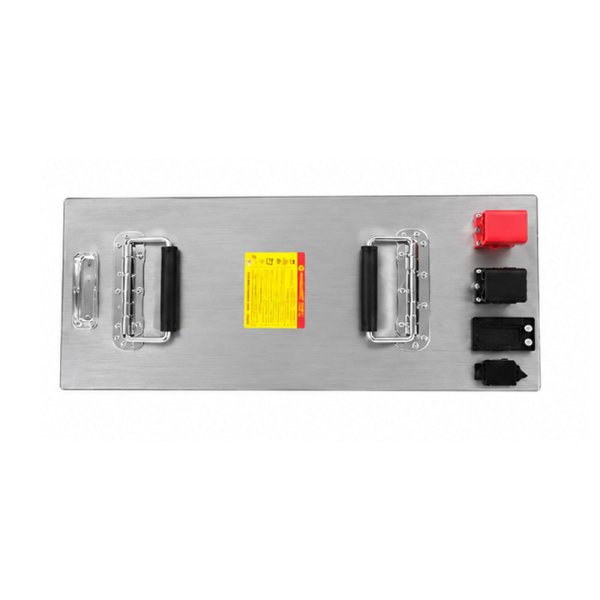
A 24V 50Ah LFP pack stores about 1.28kWh, while a 24V 160Ah pack stores about 4.10kWh—roughly 3.2 times more nominal energy. The larger pack can support longer operation and fewer charging stops, but it also changes cost, size, weight and charging time. Neither option should be treated as a universal golf-cart replacement.
Battery capacity is a major purchasing decision for golf cart fleet operators, resorts, industrial parks, campuses, rental companies, distributors, and vehicle manufacturers. A battery that is too small can create frequent charging stops, while unnecessary capacity can raise the initial cost without producing an equal return.
The choice between a 24V 50Ah vs 160Ah LFP Golf Cart Battery should be based on daily distance, operating hours, payload, terrain, charging access, installation limits, and total cost of ownership. The 50Ah model usually fits short routes and intermittent use. The 160Ah model targets longer shifts, fewer charging interruptions, and operations where downtime is expensive.
This guide explains the practical differences and provides a B2B framework for comparing energy, runtime, range, installation requirements, cycle life, and long-term value.
What Do 24V 50Ah and 160Ah Mean?
Voltage and capacity describe different parts of battery performance. Voltage identifies the electrical platform that must match the vehicle system. Capacity, measured in ampere-hours, indicates how much charge the battery can store.
A 24V-class LiFePO4 battery is often built with eight cells in series. Because a LiFePO4 cell is commonly rated at 3.2V nominal, the pack may have a nominal voltage of 25.6V even though it is sold for a 24V vehicle platform. Buyers should confirm the exact nominal and charging voltage on the manufacturer’s datasheet.
Energy is calculated by multiplying nominal voltage by capacity:
- Using the 24V product-class label, 24V × 50Ah equals 1.20kWh.
- Using a 25.6V nominal LiFePO4 value, 25.6V × 50Ah equals 1.28kWh.
- Using the 24V product-class label, 24V × 160Ah equals 3.84kWh.
- Using a 25.6V nominal LiFePO4 value, 25.6V × 160Ah equals 4.096kWh.
This means the 160Ah option stores about 3.2 times as much energy as the 50Ah option when both use the same nominal voltage. That difference affects potential runtime, range, charging frequency, weight, and purchase cost.
When comparing a 24V 50Ah vs 160Ah LFP Golf Cart Battery, use one voltage standard consistently. Do not compare 24V-based energy for one model with 25.6V-based energy for the other.
Why Does Battery Capacity Matter for Commercial Fleets?
In a commercial fleet, a charging stop can interrupt guest transport, maintenance work, security patrols, warehouse movement, or rental schedules. Capacity therefore affects trips per shift, charging frequency, driver waiting time, peak-hour availability, reserve energy, and operating cost.
A 50Ah battery can be suitable when vehicles travel short, predictable routes and recharge between assignments. A 160Ah battery becomes more valuable when carts must remain available for long shifts or when one charging interruption affects service quality.
The correct 24V 50Ah vs 160Ah LFP Golf Cart Battery decision is not automatically the larger model. It is the capacity that covers the required duty cycle with a reasonable reserve while avoiding unnecessary investment.
Key Differences Between 50Ah and 160Ah
| Comparison factor | 24V-class 50Ah | 24V-class 160Ah |
|---|---|---|
| Approximate nominal energy at 25.6V | 1.28kWh | 4.096kWh |
| Energy ratio | 1× | 3.2× |
| Typical operating profile | Light or intermittent use | Long or intensive use |
| Charging frequency | More frequent | Less frequent |
| Pack size and weight | Usually smaller and lighter | Usually larger and heavier |
| Initial investment | Lower | Higher |
| Reserve for hills and accessories | Limited | Greater |
| Best business objective | Control acquisition cost | Maximize uptime |
This table provides a capacity-level comparison only. Exact dimensions, weight, discharge current, connector, charger, BMS communication, and mounting design must be confirmed for the actual product.
When Is a 24V 50Ah Battery the Better Choice?
A 50Ah model is not automatically too small for commercial use. It can be the more efficient purchase when a cart has a limited duty cycle and regular access to charging.
A 24V 50Ah LFP golf cart battery can suit:
- Small golf courses with short routes
- Residential communities
- Property maintenance vehicles
- Light sightseeing use
- Low-utilization rental fleets
- Short campus transport
- Industrial carts with intermittent assignments
- AGV or utility applications with modest energy demand
Its advantages are lower acquisition cost, easier handling, a smaller installation footprint, and shorter charging time with the same charger power. The limitation is the smaller energy reserve. Continuous operation, heavy loads, hills, or accessory use may push a 50Ah pack to its charging threshold too early.
Within a 24V 50Ah vs 160Ah LFP Golf Cart Battery evaluation, the 50Ah option is strongest when daily routes are short, charging is convenient, and keeping the initial investment low is important.
Choose 50Ah when measured daily consumption fits within usable energy and still leaves a reserve for unexpected trips, temperature effects, aging, and route changes.

When Is a 24V 160Ah Battery the Better Choice?
A 24V 160Ah LFP golf cart battery is better suited to operations that value uninterrupted service and longer runtime.
Common applications include:
- Large golf resorts
- Hotels and tourist attractions
- Airports and transport hubs
- Industrial parks
- Large campuses
- Security patrol fleets
- Multi-shift rental operations
- Vehicles carrying passengers, tools, or cargo
- Carts operating far from charging points
- Applications with lighting, GPS, communication, or other accessories
The higher capacity supports more work before recharging and provides a larger reserve for hills, payloads, and changing conditions. For a resort shuttle or patrol cart, finishing a full shift without a charging stop can be more valuable than a lower purchase price.
Trade-offs include higher cost, larger size, more weight, and potentially longer charging time. Compartment fit, mounting, connector, current rating, charger, and vehicle balance must be verified.
In a 24V 50Ah vs 160Ah LFP Golf Cart Battery comparison, 160Ah is usually justified when downtime, missed trips, or vehicle rotation costs more than the extra battery investment.

How Should Buyers Estimate Range?
No responsible supplier should promise one universal range without knowing the vehicle. Range depends on energy consumption per kilometer, and that consumption changes with vehicle weight, passenger load, speed, tire pressure, terrain, temperature, motor efficiency, controller settings, and driving behavior.
A practical calculation is:
Estimated range = usable battery energy ÷ average vehicle consumption per kilometer
For an illustrative example only, assume a cart consumes between 60Wh and 80Wh per kilometer:
- A 1.28kWh battery provides a theoretical range of about 16–21km before applying an operating reserve.
- A 4.096kWh battery provides a theoretical range of about 51–68km before applying an operating reserve.
Actual range may be lower or higher. A fleet should conduct a route test using its own cart, payload, terrain, speed, and accessory load.
The most reliable process is to record energy used during a normal shift, add a reserve margin, and then select the capacity. This produces a more accurate 24V 50Ah vs 160Ah LFP Golf Cart Battery decision than relying on a generic mileage claim.
How Should Buyers Estimate Runtime?
Runtime also depends on the average electrical load. The basic calculation is:
Estimated runtime = usable battery energy ÷ average power demand
For example, using nominal energy before reserve and system losses:
- A 1.28kWh battery supplying an average 500W load would provide about 2.56 hours theoretically.
- The same battery at an average 800W load would provide about 1.6 hours theoretically.
- A 4.096kWh battery at 500W would provide about 8.2 hours theoretically.
- The same battery at 800W would provide about 5.1 hours theoretically.
These are calculations, not guaranteed operating times. Real runtime should account for usable depth of discharge, controller losses, temperature, acceleration, slopes, payload, and BMS limits.
A cart that stops frequently may operate across a longer clock period than a cart driven continuously. Fleet managers should therefore distinguish between motor-running hours and total shift duration.
Runtime calculations are especially important when comparing a 24V 50Ah vs 160Ah LFP Golf Cart Battery for shuttle, patrol, maintenance, or industrial fleet use.
How Does Capacity Affect Daily Productivity?
Capacity affects productivity by changing how long the vehicle remains available between charging events. A small battery can still deliver excellent productivity when the route is short and charging fits naturally into the schedule. A larger battery is more productive when charging interrupts revenue-generating or service-critical work.
Consider a resort shuttle operating ten hours per day. If a 50Ah pack cannot cover the full duty cycle, the operator may need a midday charging stop, a second cart, or a vehicle rotation plan. A 160Ah pack may allow the same cart to remain in service for the full schedule, depending on actual consumption.
Higher capacity can mean fewer charging interruptions, better peak-hour availability, simpler shift planning, and more reserve for accessories or payloads. However, a lightly used cart that returns to base after short trips may gain little from a 160Ah pack. Paying for unused capacity weakens the return on investment.
The best 24V 50Ah vs 160Ah LFP Golf Cart Battery choice aligns capacity with the actual operating schedule rather than the maximum possible specification.
How Do Pack Size and Weight Affect the Vehicle?
Higher capacity normally requires more cells, so a 160Ah pack will generally be larger and heavier than a 50Ah pack. Exact figures should come from the product drawing and approved datasheet, not from generic online estimates.
Pack size and weight affect compartment fit, mounting, center of gravity, ballast, suspension loading, handling, and service access. A lighter battery is not automatically better. Some vehicles use battery mass as part of their balance, so a lithium conversion may require ballast or a revised mounting frame.
Before purchasing, provide the supplier with the original battery dimensions, weight, cable position, connector, mounting points, and vehicle model.
Mechanical compatibility should be reviewed together with energy capacity during every 24V 50Ah vs 160Ah LFP Golf Cart Battery project.
How Do These LFP Batteries Compare with Lead-Acid?
LiFePO4 batteries can offer important operational advantages over traditional lead-acid systems, including stable voltage, lower routine maintenance, faster charging potential, and longer cycle life.
FEBATT’s official product pages list the following for both referenced models:
- 4,500 charge-discharge cycles
- Dedicated BMS protection
- Protection against overcharge and over-discharge
- Short-circuit and temperature protection
- MSDS documentation
- Operating-temperature range from −20°C to 60°C
- Applications in golf carts, sightseeing vehicles, and industrial AGV carts
A lithium conversion should still be evaluated as an engineering project rather than assumed to be a universal drop-in replacement. Confirm:
- Vehicle voltage
- Maximum continuous and peak current
- Charger profile and charging voltage
- Battery compartment dimensions
- Connector and polarity
- Cable size
- BMS communication
- Required ballast
- Mounting and vibration resistance
- Low-temperature charging controls
- Warranty conditions
When evaluating a 24V 50Ah vs 160Ah LFP Golf Cart Battery as a lead-acid replacement, buyers must verify both electrical and mechanical compatibility before installation.
Use the phrase low routine maintenance rather than zero maintenance. Lithium packs do not need watering or acid cleaning, but the vehicle still requires inspections of cables, connectors, mounting hardware, charger condition, and diagnostic data.
Which Capacity Has the Better Total Cost of Ownership?
Total cost of ownership includes more than purchase price. It should account for battery life, electricity use, charging labor, downtime, maintenance, vehicle availability, spare equipment, and replacement frequency.
A 50Ah pack may provide the lowest TCO when:
- Daily routes are short
- Vehicles are used intermittently
- Charging is easily available
- Downtime has little business impact
- Lower initial investment is important
A 160Ah pack may provide the lowest TCO when:
- Vehicles work long shifts
- Midday charging disrupts operations
- Fleet availability affects revenue or service
- Routes are long or unpredictable
- Payloads and accessory loads are high
- The operator wants a larger reserve for future demand
The financially correct 24V 50Ah vs 160Ah LFP Golf Cart Battery choice depends on the value of uptime. A higher-capacity pack can be cheaper over time if it eliminates costly interruptions. A smaller pack can be more economical when its capacity is fully adequate.
What Should B2B Buyers Check Before Ordering?
Before selecting a capacity, collect operating and vehicle data rather than relying on guesswork.
Vehicle information
- Vehicle manufacturer and model
- Existing battery voltage
- Battery compartment dimensions
- Original battery weight
- Connector type and polarity
- Motor and controller ratings
- Maximum current demand
- Charger model and output
- Communication requirements
Operating information
- Daily distance
- Shift length
- Passenger or cargo load
- Terrain and slopes
- Average and maximum speed
- Accessory loads
- Charging opportunities
- Ambient temperature
- Required reserve
- Planned fleet growth
Supplier information
- Cell type and traceability
- BMS functions
- Cycle-life test conditions
- Safety and transport documents
- Product warranty
- Quality-control process
- OEM or private-label capability
- Production capacity
- Lead time
- Technical support
A professional supplier should use these details to recommend the correct 24V 50Ah vs 160Ah LFP Golf Cart Battery configuration rather than selecting capacity from Ah alone.
How Can Fleets Maximize Battery Life?
Both capacities can provide long service when properly integrated. FEBATT lists 4,500 cycles for both referenced products, but actual life depends on test conditions and real use.
Best practices include:
- Use the approved LiFePO4 charger.
- Avoid storing the battery fully discharged.
- Follow the recommended charge and discharge limits.
- Keep connectors clean and secure.
- Inspect mounting hardware and cables.
- Avoid unnecessary exposure to extreme heat.
- Confirm low-temperature charging protection.
- Monitor BMS warnings and state-of-health data.
- Do not exceed rated current.
- Follow storage guidance during long idle periods.
Do not convert a cycle rating directly into guaranteed years; calendar life depends on use, depth of discharge, temperature, charging, and storage.
For final procurement, the 24V 50Ah vs 160Ah LFP Golf Cart Battery comparison should be validated with measured fleet data.
24V 50Ah vs 160Ah LFP Golf Cart Battery: Quick Decision
| Operating requirement | Recommended direction |
|---|---|
| Short, predictable routes | 50Ah |
| Frequent access to charging | 50Ah |
| Lower upfront budget | 50Ah |
| Light passenger or cargo load | 50Ah |
| Long daily routes | 160Ah |
| Continuous or multi-shift work | 160Ah |
| Limited charging access | 160Ah |
| High payload or accessory use | 160Ah |
| Maximum vehicle availability | 160Ah |
| Uncertain future demand | Measure consumption and add reserve |
This 24V 50Ah vs 160Ah LFP Golf Cart Battery decision table is a starting point rather than a replacement for vehicle testing and engineering confirmation.

FAQ About 24V 50Ah vs 160Ah LFP Golf Cart Battery
1.Is a 24V 50Ah battery sufficient for commercial golf cart fleets?
Yes, it can be sufficient for light-duty commercial fleets, short routes, residential communities, golf courses with modest daily mileage, and vehicles that can recharge frequently.
It may not be sufficient for long shifts, heavy loads, large properties, or operations where charging interruptions are costly. The correct answer depends on measured daily energy consumption rather than the word “commercial” alone.
2.How many hours can a 24V 50Ah LFP battery typically operate?
There is no universal runtime. If the pack has a 25.6V nominal voltage, 50Ah represents about 1.28kWh before reserve and losses.
At an average 500W load, the theoretical runtime is about 2.56 hours. At 800W, it is about 1.6 hours. Actual runtime will be lower after accounting for reserve, efficiency, terrain, payload, acceleration, temperature, and BMS limits.
3.How far can a 24V 160Ah golf cart battery travel on one charge?
Range depends on the cart’s real energy consumption. A 25.6V 160Ah pack stores about 4.096kWh before reserve and losses.
If the cart uses 60–80Wh per kilometer, the theoretical range is approximately 51–68km before applying a safety reserve. A route test with the actual vehicle, load, terrain, and speed is required for a reliable range figure.
4.Can existing lead-acid golf carts be upgraded to 24V LiFePO4 batteries?
Often yes, but compatibility must be verified. The lithium pack must match the vehicle voltage, compartment, current demand, connector, polarity, charger, mounting method, and balance requirements.
Some carts may require a compatible lithium charger, cable changes, ballast, a mounting frame, or communication adjustments. Installation should follow the vehicle and battery manufacturer’s instructions.
5.How long do 24V LFP golf cart batteries typically last?
FEBATT’s official pages for the referenced 50Ah and 160Ah products list 4,500 charge-discharge cycles.
Actual calendar life depends on depth of discharge, temperature, charge rate, storage, current demand, and maintenance of the electrical connections. A cycle rating should not be presented as a fixed number of years without knowing the fleet’s operating pattern.
6.Does the 160Ah battery always provide better value?
No. It provides more stored energy and can reduce charging interruptions, but it also costs more and normally requires more space and weight allowance.
It offers better value when the fleet uses the extra capacity. For short routes and frequent charging access, the 50Ah model may produce a better return.
Conclusion
The 24V 50Ah vs 160Ah LFP Golf Cart Battery comparison is ultimately a choice between a smaller, lower-cost energy reserve and a larger pack designed for longer operating periods. Neither capacity is universally better.
The 50Ah option is suitable for short routes, intermittent work, lighter demand, and projects that prioritize acquisition cost. The 160Ah option is stronger for resorts, large campuses, industrial sites, patrol fleets, and other operations where vehicles must remain available for long hours.
Both FEBATT product pages identify the batteries for golf carts, sightseeing vehicles, and industrial AGV applications, and list 4,500 cycles, BMS protection, MSDS documentation, and operation from −20°C to 60°C. The final selection must still account for the vehicle’s measured consumption, compartment, current demand, charger, connector, mounting, balance, and working environment.
For a reliable B2B decision, calculate daily energy demand, add a practical reserve, verify the full installation requirements, and compare the financial value of uptime against the additional capacity cost. That process will identify whether the 50Ah or 160Ah model provides the better operational and commercial fit.