


At the very start of mobile robot power configuration design, the LiFePO4 Battery for Mobile Robots has emerged as the core power option for industrial and commercial robots due to its high safety, ultra-long cycle life, and stable performance. Mastering its core characteristics, accurately adapting to application scenarios, and standardizing operation and maintenance are the keys to balancing robot battery life, reliability, and cost.
Key Takeaways
- These batteries offer excellent cost-effectiveness, with a cycle life of 2000-7000 times and wide temperature adaptability, greatly reducing maintenance costs.
- When selecting the power source for mobile robots, focus on core indicators: energy density of 90-120Wh/kg, power density of 200-7000W/kg, nominal voltage of 3.2-3.3V, and voltage compatibility with robot motors.
- Safety protection requires matching thermal management systems and Battery Management Systems (BMS) to avoid overheating and short-circuit risks.
- Mobile robots of different sizes have varying requirements for voltage, capacity, and packaging of their power supplies, so targeted selection is necessary.
- A dedicated BMS can extend the service life of these energy storage units by more than 30%, realizing cell balancing and safety monitoring.
1. Core Characteristics of LiFePO4 Battery for Mobile Robots
1.1 Chemical Nature and Key Parameters
Thanks to its unique crystal structure, LiFePO4 endows the battery with excellent safety and cycle stability. Its core parameter advantages are as follows:
| Core Parameter | Specific Value | Application Value for Robots |
|---|---|---|
| Nominal Cell Voltage | 3.2-3.3V | Series-parallel adaptation to common voltages such as 12V and 24V |
| Energy Density | 90-120Wh/kg | Ensure battery life in a compact volume, adapting to lightweight design |
| Power Density | 200-7000W/kg | Support peak current requirements for motor startup and heavy loads |
| Cycle Life | 2000-7000 Cycles | Meet high-frequency charging and discharging needs, reducing replacement frequency |
| Operating Temperature | -20°C to 60°C | Adapt to multiple environments with a low performance attenuation rate |
| Self-discharge Rate | ≤3% per month | Low idle loss, no need for frequent recharging |
Compared with nickel-metal hydride batteries, NMC, LCO, and other alternatives, the core advantages of this power solution lie in safety and long service life: there is no risk of thermal runaway under extreme conditions, and its cycle life is 2-7 times that of nickel-metal hydride batteries and 1.5-3 times that of ordinary lithium batteries.
1.2 Why is it Suitable for Mobile Robots?
- High safety margin: Cobalt-free composition and strong thermal stability address the heating hazard of long-term operation;
- Battery life adaptation: Although its energy density is lower than that of NMC, it supports 8-12 hours of continuous operation, with a stable discharge curve that does not drop suddenly;
- Cost advantage: No replacement is needed for 3-5 years, far outperforming nickel-metal hydride batteries (1-2 years of service life) and ordinary lithium batteries (2-3 years of service life);
- Environmental tolerance: Its wide temperature range adapts to cold storage facilities, high-temperature workshops, and outdoor environments, solving the power pain point of multi-scenario operations.
2. Core Differences Between LiFePO4 Battery for Mobile Robots and Other Batteries
2.1 Comparison with Nickel-Metal Hydride Batteries
Nickel-metal hydride batteries are gradually being replaced, and the core differences are as follows:
Comparison Dimension | LiFePO4 Battery for Mobile Robots | Nickel-Metal Hydride Battery | Application Advantage for Robots |
Energy Density | 90-120Wh/kg | 40-120Wh/kg | Battery life increased by more than 50% at the same weight |
Cycle Life | 2000-7000 Cycles | 500-1000 Cycles | Reduce replacement and lower operating costs |
Charging Time | 1-2 hours of fast charging | 2-4 Hours | Shorten downtime and improve utilization rate |
Self-discharge Rate | low with ≤3% per month | high with 20-30% per month | No need for frequent recharging when idle |
Voltage Stability | Stable during discharge | Obvious attenuation with power | Avoid performance fluctuations |
2.2 Comparison with Other Lithium Batteries
As lithium batteries, their positioning differences are significant:
Battery Type | Core Advantage | Core Disadvantage | Robot Application Scenario |
LiFePO4 Battery for Mobile Robots | High safety, long cycle life, wide temperature adaptability | Slightly lower energy density | Industrial AGVs, heavy-duty/outdoor inspection robots |
NMC | high energy density of 180-220Wh/kg | short cycle life of 1000-2000 cycles | Compact delivery robots, lightweight UAVs |
LCO | High energy density | Poor safety, short service life | Consumer small robots non-industrial scenarios |
Conclusion: Industrial robots prefer LiFePO4 battery for mobile robots. Commercial light-load robots can be weighed, but LiFePO4 battery for mobile robots is better in terms of long-term cost and safety.
3. Application of LiFePO4 Battery for Mobile Robots in Different-Scale Robots
3.1 Small Robots Inspection and Education
- Requirements: Weight ≤5kg, low voltage 3.7V/11.1V, battery life 2-4 hours
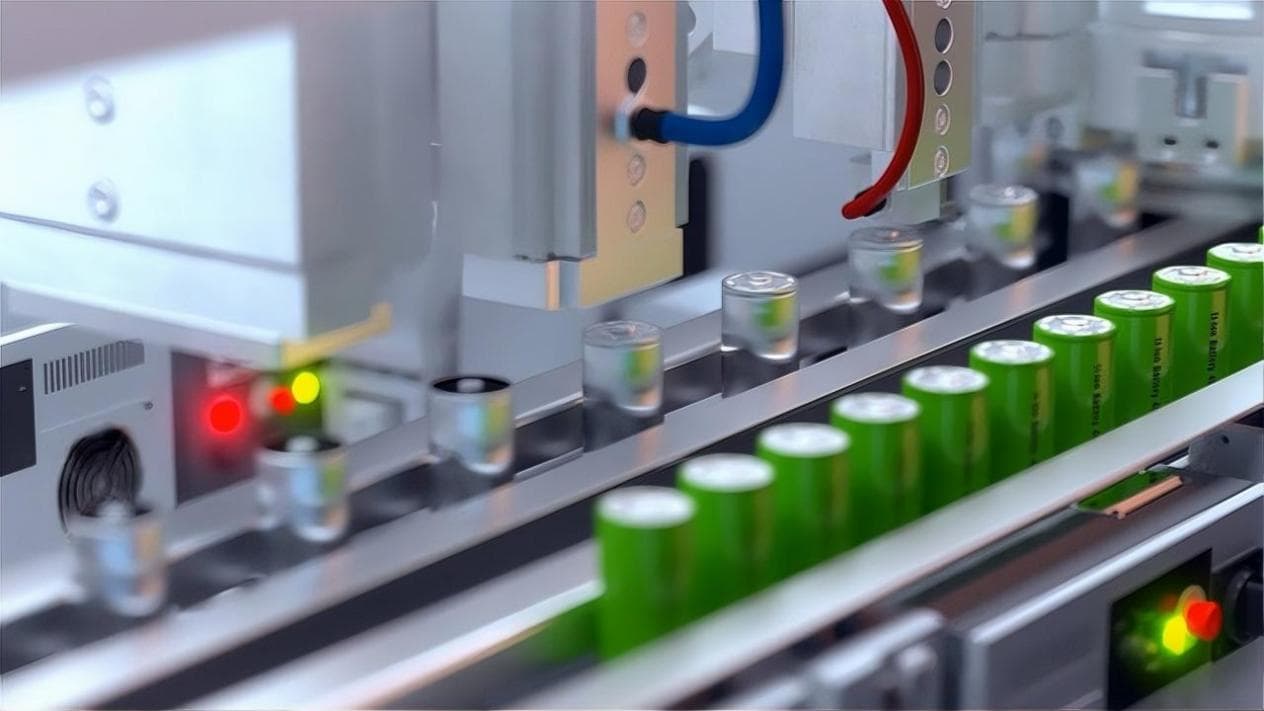
- Solution: 1-3 series soft-pack LiFePO4 battery for mobile robots 3.2V/6.4V/9.6V, capacity 2-5Ah, weight ≤200g
- Advantages: Flexible packaging of LiFePO4 battery for mobile robots adapts to customized casings, high discharge rate supports flexible start-stop, and safety avoids accidents in education scenarios
3.2 Medium Robots Delivery and Warehouse Assistance
- Requirements: Load 5-50kg, battery life 6-12 hours, voltage 12V/24V
- Solution: 4-8 series prismatic or cylindrical LiFePO4 battery for mobile robots 12.8V/25.6V, capacity 10-20Ah, integrated with simple Battery Management System
- Advantages: Long cycle life of LiFePO4 battery for mobile robots adapts to 1-2 charging and discharging cycles per day for warehouse robots, low self-discharge rate is suitable for intermittent delivery operations, no need for full charging every day
3.3 Large Robots Industrial AGVs and Heavy-Duty Service
- Requirements: Load ≥50kg, battery life 8-24 hours, voltage 24V/48V, high power
- Solution: LiFePO4 battery for mobile robots with multiple sets of cylindrical cells in series and parallel 24V/48V, capacity 20-100Ah, matched with industrial-grade Battery Management System and active thermal management, IP65 protection
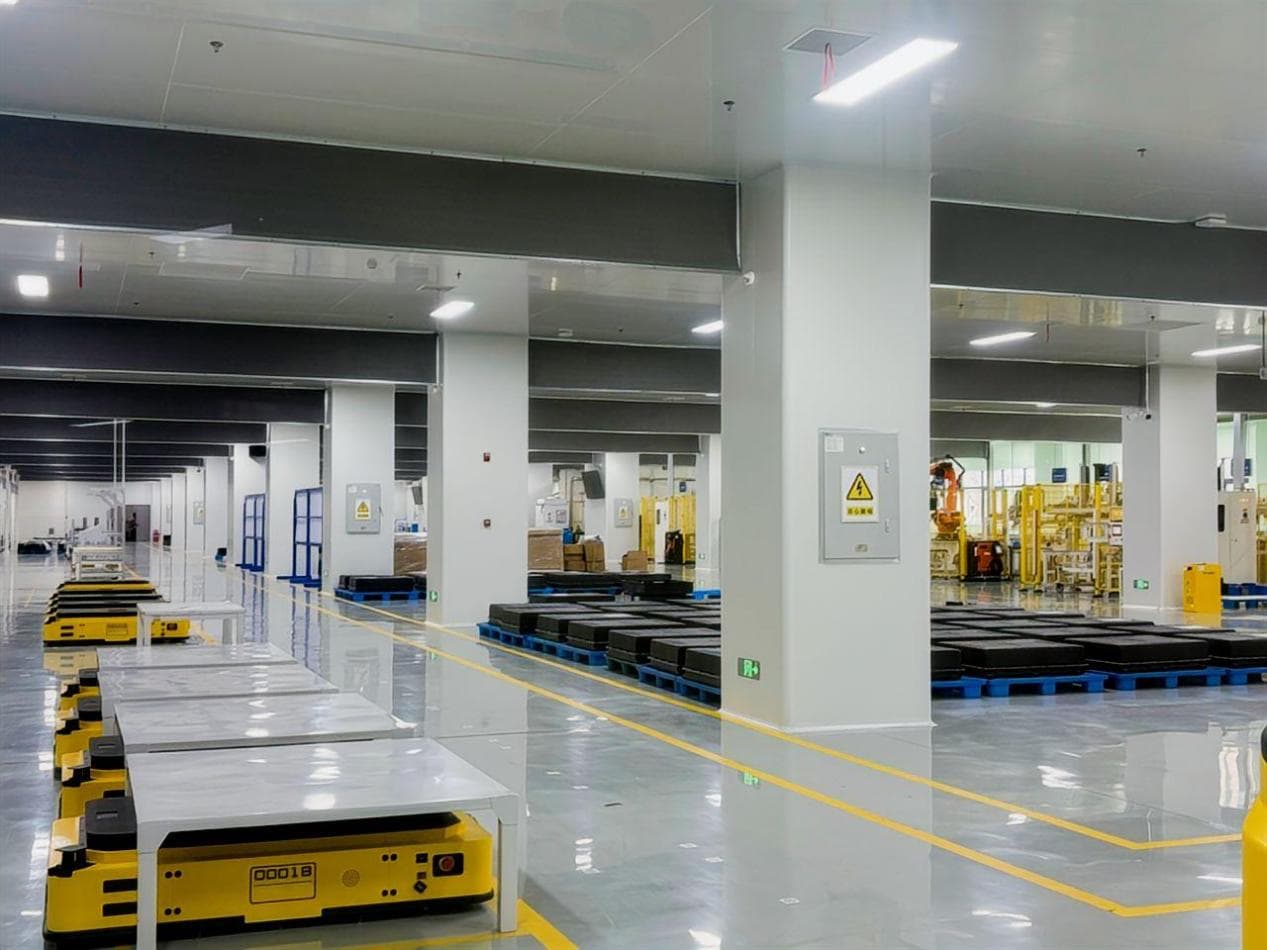
- Advantages: High power density of LiFePO4 battery for mobile robots meets heavy-load startup of AGVs, wide temperature adaptability to workshop environment, cycle life ≥3000 cycles reduces maintenance costs
4. Key Factors for Selecting LiFePO4 Battery for Mobile Robots
4.1 Voltage and Capacity Matching
- Voltage adaptation: The rated voltage of the robot motor must be consistent with the LiFePO4 battery for mobile robots pack, for example, 12V motor matches 4-series 12.8V LiFePO4 battery for mobile robots, with a deviation ≤±5% to avoid motor damage;
- Capacity calculation: Required capacity Ah = Average current A × Working time h × 1.2 Safety margin. Example: AGV with average current 10A and working time 10 hours needs 120Ah LiFePO4 battery for mobile robots.
4.2 Discharge Rate and Packaging Form
- Discharge rate: Industrial AGVs choose LiFePO4 battery for mobile robots with 10C-25C discharge rate, ordinary inspection robots choose LiFePO4 battery for mobile robots with ≤5C to match peak load;
- Packaging form: Cylindrical LiFePO4 battery for mobile robots has high mechanical strength, suitable for heavy-duty robots; prismatic LiFePO4 battery for mobile robots has high space utilization, suitable for medium robots; soft-pack LiFePO4 battery for mobile robots is lightweight and customizable, suitable for small robots.
4.3 Safety and Protection Configuration
- Thermal management: LiFePO4 battery for mobile robots in high-power applications requires active or passive heat dissipation to avoid temperature exceeding 60°C;
- Protection level: LiFePO4 battery for mobile robots used in outdoor or humid environments requires IP65 plus to prevent dust and rain;
- Certification: LiFePO4 battery for mobile robots must pass UN38.3, CE and RoHS certifications to ensure transportation and use safety.
The battery must pass UN38.3, CE, and RoHS certifications to ensure safe transportation and use. For detailed technical requirements of these certifications in mobile robot power systems, you can refer to the IEEE Robotics and Automation Society’s Power System Safety Guidelines (this resource covers compliance standards for LiFePO4 battery applications in industrial robots).
4.4 Battery Management System
- Cell balancing: Avoid overcharging/overdischarging of individual cells;
- Status monitoring: Real-time display of State of Charge (SOC) and State of Health (SOH);
- Safety protection: Overcharge, overdischarge, overcurrent, short circuit, and overtemperature protection;
- Communication compatibility: Support protocols such as CAN and RS485 for integration with robot control systems.
5. Usage and Maintenance Tips for LiFePO4 Battery for Mobile Robots
5.1 Charging and Discharging Specifications
- Charging: Use a dedicated constant current and constant voltage charger, with voltage matched according to the number of series cells (3.65V per cell) to avoid overcharging caused by ordinary chargers;
- Discharging: Follow the “20-80%” principle. Avoid long-term storage with power ≤20% or ≥80%. Deep discharge (power ≤10%) will shorten the battery’s service life;
- Fast charging: The product supports 1C-2C fast charging. Industrial robots can be recharged during intervals without affecting the next day’s operation.
5.2 Daily Maintenance Points
- Regular inspection: Monthly checks for battery bulging or leakage, and ensure connecting wires are free of looseness or oxidation. In industrial scenarios, calibrate battery capacity every quarter;
- Storage: Keep the battery with 40-60% power when idle, and store it in a dry environment at 0-25°C to avoid extreme temperature and humidity;
- Service life extension: Reduce full charge-discharge cycles and high-rate discharge. Matching with a dedicated BMS can extend the battery’s service life by more than 30%.
- Browse our product line: Explore LiFePO4 batteries for AGVs, logistics robots, and industrial robots to find off-the-shelf options;
- Free custom solution: Fill out this form to share your robot’s specifications (size, load, runtime), and our engineers will provide a tailored plan;


