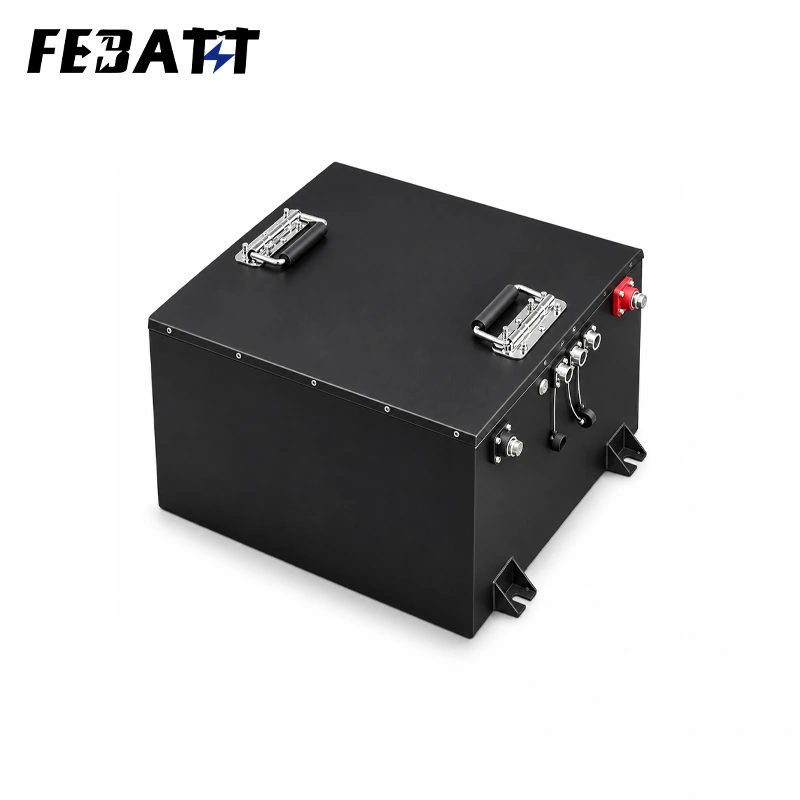
48V 190Ah LiFePO4 Warehouse Battery for Reach Trucks
9.12 kWh Onboard Energy: The 48V 190Ah warehouse battery gives warehouse fleets a defined energy reserve in an industrial pack.
Longer Replacement Intervals: LiFePO₄ chemistry is rated for over 5,000 cycles, helping operators manage costs across repeated shifts.
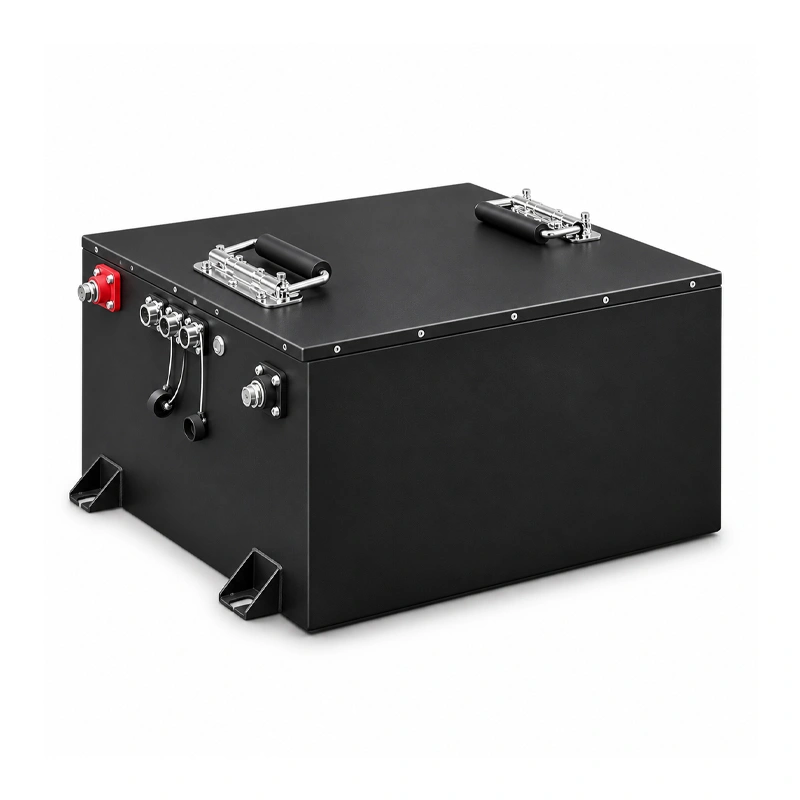
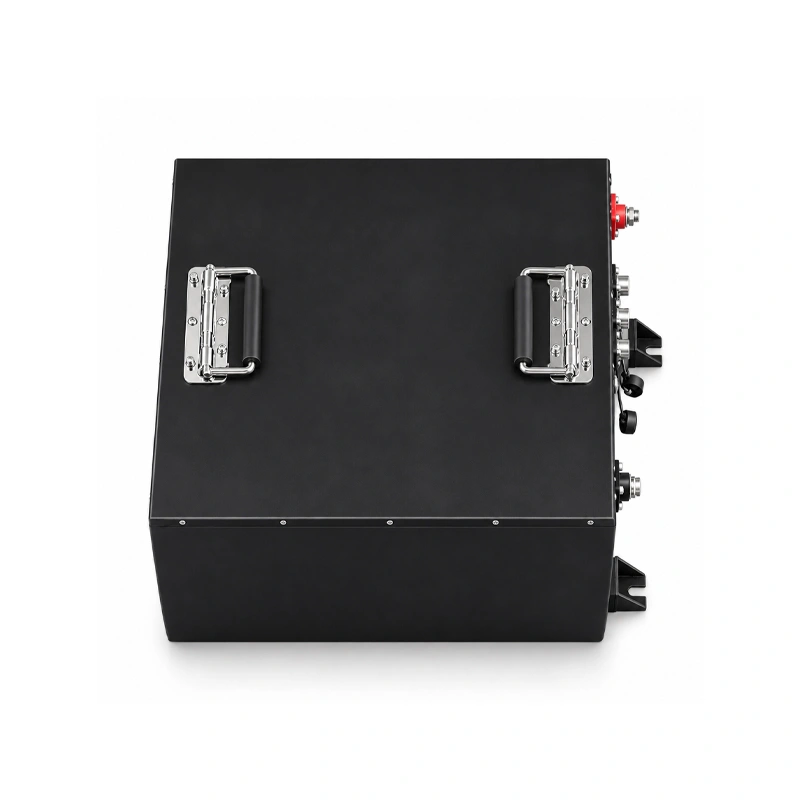
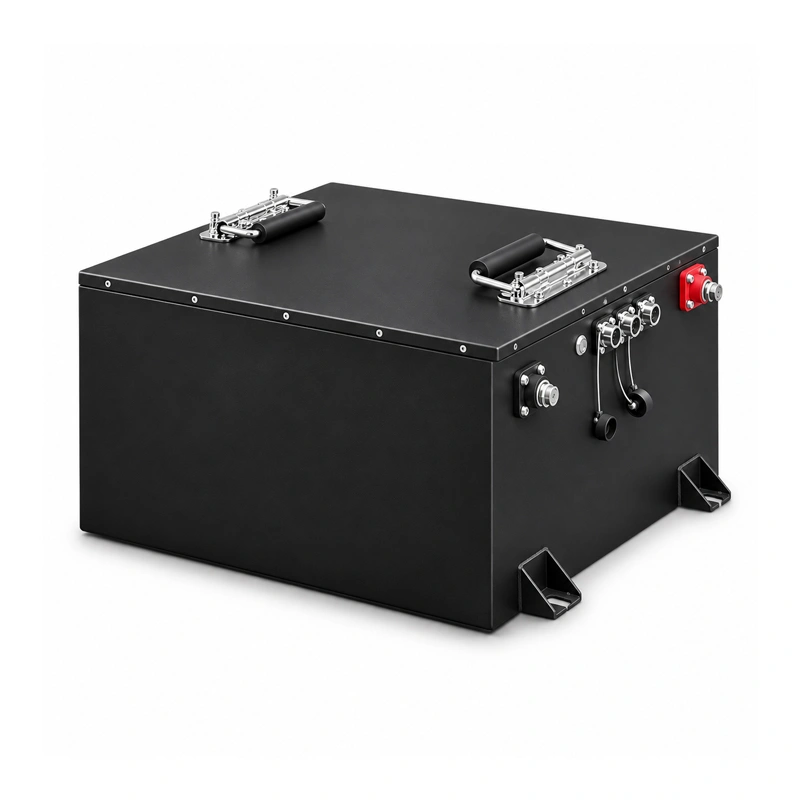
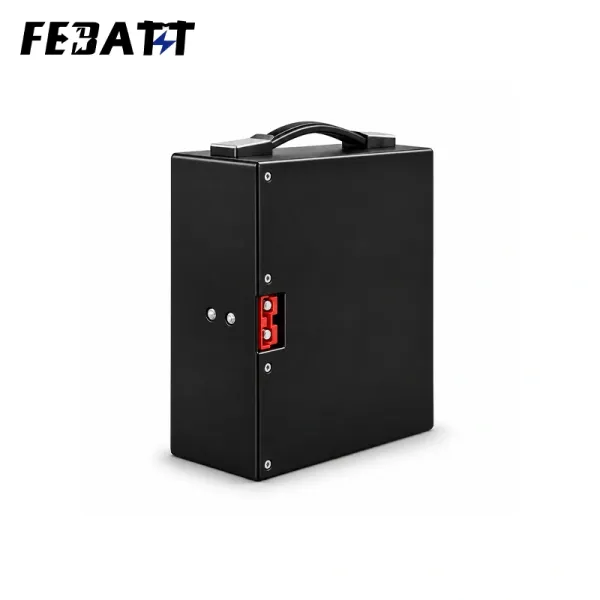
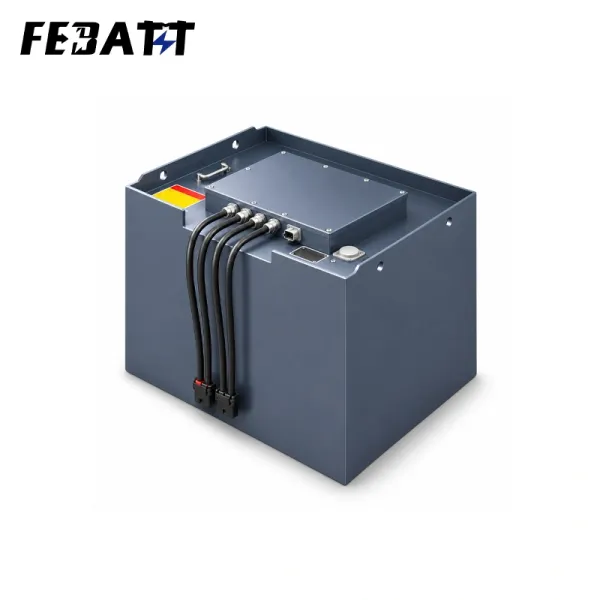
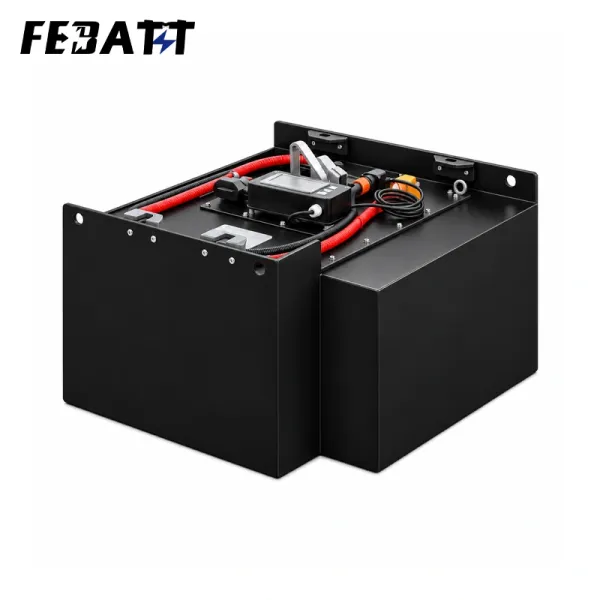
Installation-Ready Construction: A rugged metal enclosure, reinforced handles, industrial connectors and secure mounting brackets support integration into material-handling vehicles.
Wide Operating Range: The specification image lists charging from 0°C to 55°C and discharging from -20°C to 60°C for varied warehouse conditions.
Equipment-Specific Integration: Designed for electric pallet trucks, stackers, reach trucks and order pickers, the 48V 190Ah warehouse battery offers custom integration support and BMS protection.
Rated at 48V and 190Ah, this LiFePO₄ pack stores 9.12kWh of energy. The 48V 190Ah warehouse battery uses a rugged metal enclosure with reinforced handles and secure mounting brackets for industrial vehicle installation.
Where Warehouse Battery Downtime Starts
Frequent battery changes, routine servicing and inconsistent output can interrupt material flow. The 48V 190Ah warehouse battery is presented as a LiFePO₄ alternative designed to reduce maintenance demands and extend replacement intervals.
Powering Four Warehouse Truck Types
The illustrated equipment range covers electric pallet trucks, electric stackers, reach trucks and order pickers. Match the pack to each vehicle’s compartment, connector, mounting points and current requirements before ordering.
Core Specification
Parameter
Specification
Nominal Voltage
48V
Rated Capacity
190Ah
Nominal Energy
9.12kWh
Battery Chemistry
LiFePO4
Cycle Life
>5,000 cycles
Charging Temperature
0°C to 55°C
Discharging Temperature
-20°C to 60°C
Enclosure Design
Rugged metal housing, reinforced handles, industrial connectors and mounting brackets
Applications
Electric pallet trucks, electric stackers, reach trucks and order pickers
Compare the Cost of Keeping Trucks Moving
The comparison graphic weighs cycle life, energy density, battery weight, maintenance, charging and ownership cost. Validate the stated 40–60% weight reduction and 1–2-hour charging claim against a like-for-like system before quoting.
Mounting and Temperature Specs That Matter
The 48V 190Ah warehouse battery is specified at 9.12kWh, over 5,000 cycles, and LiFePO₄ chemistry. The image lists 0–55°C charging and -20–60°C discharging, plus industrial connectors and a rugged metal enclosure.
Engineer the Fit Before Fleet Rollout
For fleet or OEM projects, FEBATT can assess the 48V 190Ah warehouse battery around vehicle layout, BMS communication, connector selection and charger interface, then move through prototype validation, safety testing, quality control and production.