Home > Robot Battery > Service Robot Battery > 18650 25.2V 60Ah NMC Battery for Service Robots with RS485

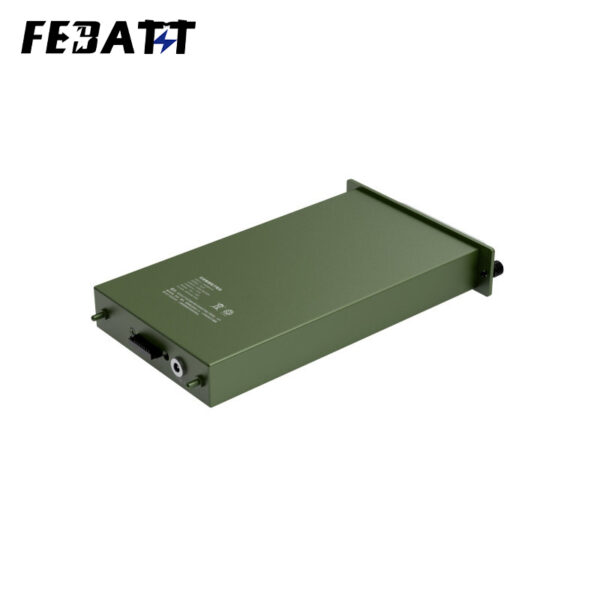
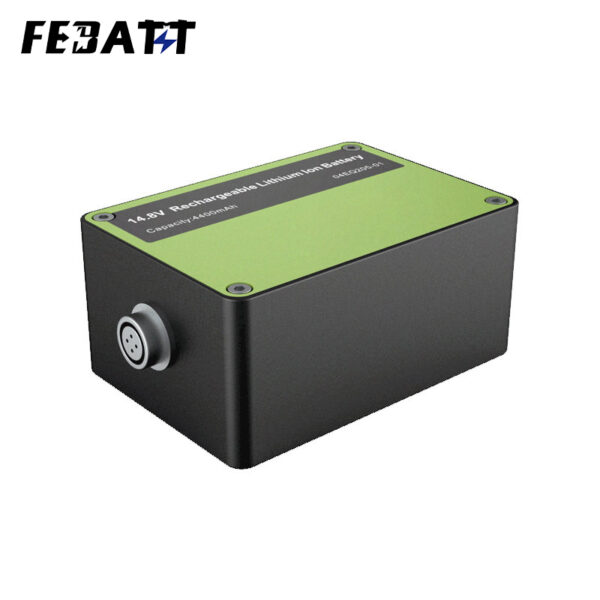
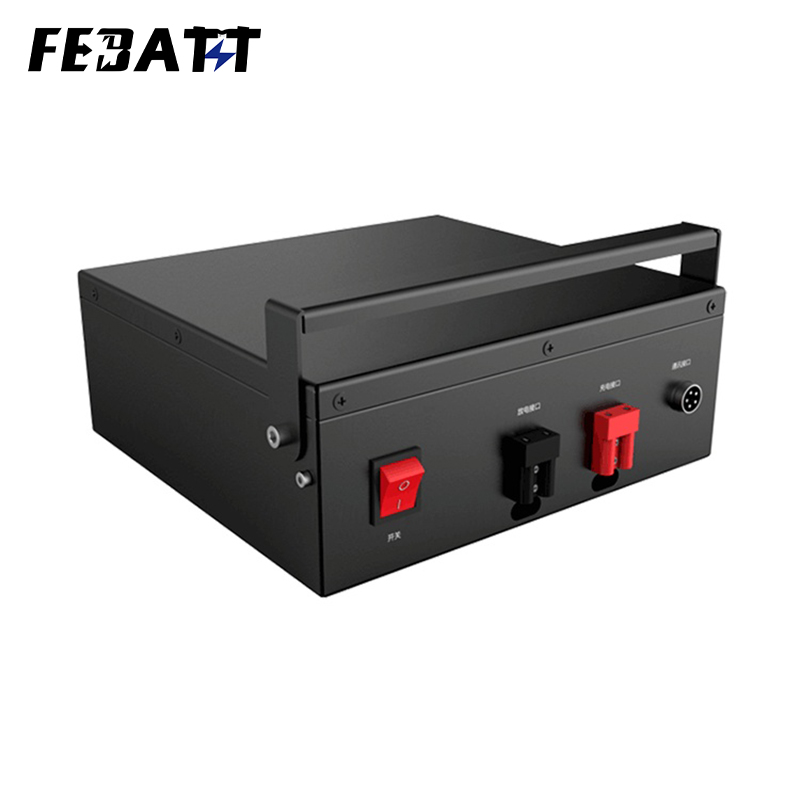
18650 25.2V 60Ah NMC Battery for Service Robots with RS485

NMC Battery for Service Robots with RS485 delivers 25.2V 60Ah power, 100A instantaneous discharge, RS485 communication, and -20~50℃ operation—ideal for home, medical, hotel, restaurant, and educational service robots.

  • Nominal Voltage:25.2V
  • Rated Capacity:60Ah
  • Dimension:265*250*100mm
  • Charge Voltage:29.4V
  • Charge Current:≤15A
  • Discharge current:40A
  • Discharge cut-off Voltage:19.6V
  • Weight:7.5Kg
  • Operating Temperature:-20~50 ℃

NMC Battery for Service Robots with RS485: 25.2V 60Ah 18650 Battery for Automated Service Fleets

Product Introduction

Engineered as a NMC Battery for Service Robots with RS485, this 18650 NMC solution is purpose-built for the dynamic workflows of service robotic systems. Featuring 25.2V nominal voltage, 60Ah capacity, and integrated RS485 communication, this RS485-Enabled NMC Battery for Service Robots combines NMC’s high energy density with real-time data transmission capabilities. Unlike standard batteries, it supports 100A instantaneous discharge for peak robotic movements, withstands -20~50℃ temperature extremes, and features a rugged cold-rolled metal casing—making it the reliable power source for home service robots, medical assistance bots, hotel concierge machines, restaurant automation systems, and educational programming robots.

Technical Specifications

Table: NMC Battery for Service Robots with RS485 Core Parameters

Parameter Details
Chemistry NMC
Cell Type 18650 (3.6V 3.35Ah)
Nominal Voltage 25.2V
Rated Capacity 60Ah
Charging Voltage 29.4V
Charging Current ≤15A
Discharge Current 40A (Continuous) / 100A (Instantaneous)
Discharge Cut-off Voltage 19.6V
Weight 7.5Kg
Dimensions (L×W×H) 265mm×250mm×100mm (Max)
Operating Temperature Charging: 0~45℃; Discharging: -20~50℃
Storage Temperature -20~40℃
Communication RS485 (For Fleet Monitoring)
Casing Cold-Rolled Metal Plate
Protection Features Short Circuit, Overcharge, Over-discharge, Overcurrent, Temperature Protection
Application Home Service Robots, Medical Service Robots, Hotel Service Robots, Restaurant Bots, Educational Service Robots

Core Advantages of NMC Battery for Service Robots with RS485

1. RS485-Driven Smart Service Fleet Management

“The NMC Battery for Service Robots with RS485 integrates advanced RS485 communication:
  • Transmits real-time data on voltage, current, temperature, and capacity to robotic control systems. Hotel managers can monitor 50+ concierge robots simultaneously, while healthcare facilities track battery health of patient-assist bots to ensure uninterrupted care.
  • Supports custom protocols for niche service robot brands, enabling seamless integration with AI-driven workflows (e.g., voice-controlled home robots or curriculum-linked educational bots).”

2. NMC High Energy Density & 100A Instantaneous Discharge

“Leverages NMC chemistry and 18650 cell architecture:
  • Delivers 60Ah capacity in a compact 265mm×250mm×100mm form factor, powering home service robots through 12-hour cleaning cycles or restaurant bots through peak dining hours without mid-shift recharging.
  • 100A instantaneous discharge sustains heavy-load tasks like medical robot patient lifts or hotel robot luggage transport, ensuring dynamic service operations.”

3. -20~50℃ Wide Temperature Adaptability

“Engineered for diverse service environments:
  • Powers medical service robots in hospital cold rooms (-20℃) and restaurant bots in commercial kitchens (50℃), ensuring consistent performance regardless of climate.
  • Maintains stable 25.2V output in temperature extremes, enabling educational robots to run coding workshops or home bots to operate in unheated garages.”

4. Cold-Rolled Metal Casing & Multi-Layer Protection

“Built for industrial service robot demands:
  • Cold-rolled metal casing withstands impacts and vibrations during robotic movement, protecting the battery in high-traffic hospitality environments.
  • Comprehensive protection (short circuit, overcharge, etc.) prevents power anomalies that could disrupt guest service or medical care workflows.”

Application Scenarios

1. Home Service Robots

Domestic Automation: The NMC Battery for Service Robots with RS485 powers vacuum bots, lawn mowers, and companion robots. RS485 communication lets homeowners track battery status via smart home hubs, while -20℃ operation enables outdoor tasks like snow removal.”

2. Medical Service Robots

Patient Care & Supply Transport: Energizes robots delivering medications, assisting with mobility, and sterilizing equipment. 60Ah capacity supports 10-hour hospital shifts, and 100A instantaneous discharge handles peak-load tasks like patient transfer.”

3. Hotel & Restaurant Service Robots

Hospitality & Food Service: Supplies energy for concierge bots, luggage transporters, and meal-delivery machines. 40A continuous discharge handles simultaneous operation of robotic arms and navigation systems, while RS485 integrates with venue management software for fleet optimization.”

4. Educational Service Robots

STEM Learning & Coding Workshops: Powers programming robots and lab automation devices. Long cycle life supports multi-day robotics camps, and the rugged metal casing withstands student-led project handling.”
FAQ

Q1: What applications are lithium batteries for service robots designed for?

A: Lithium batteries for service robots are commonly used in hotel service robots, restaurant delivery robots, reception and guidance robots, retail service robots, and other mobile service automation platforms. Battery selection should be based on the robot’s voltage, required runtime, continuous and peak load, available installation space, charging method, and communication requirements.

A: Start with the robot’s nominal voltage, required capacity, continuous and peak current, target runtime, battery compartment dimensions, weight limit, charging current, connector type, and communication interface. Output power and capacity should be matched to the robot’s real duty cycle rather than selected from voltage or ampere-hours alone.

A: Yes. FEBATT can develop custom lithium battery packs for service robot projects, including voltage, capacity, dimensions, housing, connector type, BMS settings, charging parameters, and communication interfaces. This is useful when a robot has a proprietary battery compartment, non-standard power requirements, or specific integration requirements.

A: Cycle life varies with cell chemistry, depth of discharge, charge and discharge rate, operating temperature, and duty cycle. As a published reference, one FEBATT 25.6V 60Ah service robot battery is rated for 2,000+ cycles. The cycle-life rating for each service robot battery should be confirmed from the specifications of the selected model and its test conditions.

A: The Battery Management System (BMS) monitors key battery conditions such as voltage, current, and temperature and can provide protection against overcharge, over-discharge, overcurrent, short circuit, and abnormal temperature conditions. Depending on the configuration, the BMS may also provide state-of-charge information, fault data, cell balancing, and communication with the robot controller.

A: Yes, when the battery is engineered for the robot’s load profile. Service robots can experience short power peaks during startup, acceleration, lifting, turning, or operation of actuators and accessories. The battery cells, BMS, wiring, and connectors must therefore be selected to support both the required continuous current and short-duration peak current without excessive voltage drop or unintended protection shutdown.

A: Service robot lithium batteries can be configured with communication interfaces such as CAN or RS485, depending on the project. These interfaces allow the robot controller to access battery information such as state of charge, voltage, current, temperature, and fault status. FEBATT’s published service robot battery configurations include CAN and RS485 examples, but the required protocol and message format should be confirmed during integration.

A: Temperature affects available capacity, charging behavior, internal resistance, and battery aging. FEBATT’s published service robot references include selected configurations with operating ranges down to -20°C and up to 60°C, while another 25.6V 60Ah service robot battery is specified at -15°C to 60°C. Actual charge and discharge temperature limits are model-specific and should be confirmed for the robot’s operating environment.

A: Charging strategy should be matched to the battery design and the robot’s operating schedule. Charge current, charger voltage, allowable charging window, duty cycle, and whether the robot charges between tasks all affect practical uptime. For reference, FEBATT’s published 48V 45Ah service robot battery configuration specifies a 21A (0.5C) charge current. This is an example rather than a universal charging rate for all service robot batteries.

A: LiFePO4 and other rechargeable lithium-ion chemistries can both be used in service robots. LiFePO4 is often selected when long cycle life and thermal stability are priorities, while other lithium-ion chemistries can be useful when energy density, compact size, or lower weight is more important. The best chemistry depends on the robot’s runtime target, space and weight limits, load profile, charging strategy, and operating environment.

Ready to Partner with FEBATT?

Join hundreds of B2B partners worldwide who trust us for reliable lithium battery solutions.

This site is protected by reCAPTCHA and the Google Privacy Policy and Terms of Service apply.
Scroll to Top

Professional Battery Solution Supplier

This site is protected by reCAPTCHA and the Google Privacy Policy and Terms of Service apply.