For commercial fleets, battery replacement cost is more than the price of a new pack. Each replacement can add labor, vehicle downtime, spare inventory, warranty handling, and missed operating hours. For electric tricycles, golf carts, forklifts, delivery motorcycles, and other motive-power vehicles, those hidden costs can matter more than the initial battery price.
Lead-acid can look attractive at quotation stage, but lithium often performs better when fleets value repeated cycling, usable energy, lower mass, and service continuity. LiFePO4 is especially suitable for high-use duty because of its cycle durability and thermal stability. The B2B question is which system creates the lowest battery replacement cost over the planned fleet service period.
Why Can Lead-Acid Create Higher Battery Replacement Cost?
Lead-acid batteries age through sulfation, grid corrosion, active-material loss, and plate expansion. Deep discharge and high temperature accelerate that wear. Battery University notes that deep-cycle lead-acid systems can provide roughly 200 to 300 cycles under deep-cycling conditions, while shallower discharge can extend service life.
In a commercial fleet, shorter service life means more battery replacement cost. A replacement can remove a vehicle from service, require technician time, consume spare inventory, and interrupt a route or shift. Actual life still varies by depth of discharge, charging quality, temperature, current demand, and battery design.
How Can LiFePO4 Lower Battery Replacement Cost?
LiFePO4 does not suffer from lead-acid sulfation and is commonly associated with longer cycle life. Battery University lists about 2,000 cycles for a representative LiFePO4 power cell, although real pack life still depends on cell quality, depth of discharge, current, temperature, and charging conditions.

Longer cycle potential can reduce battery replacement cost by reducing how often a vehicle needs a new pack. BMS protection also helps keep the battery within defined charge, discharge, current, and temperature limits, reducing avoidable operating stress.
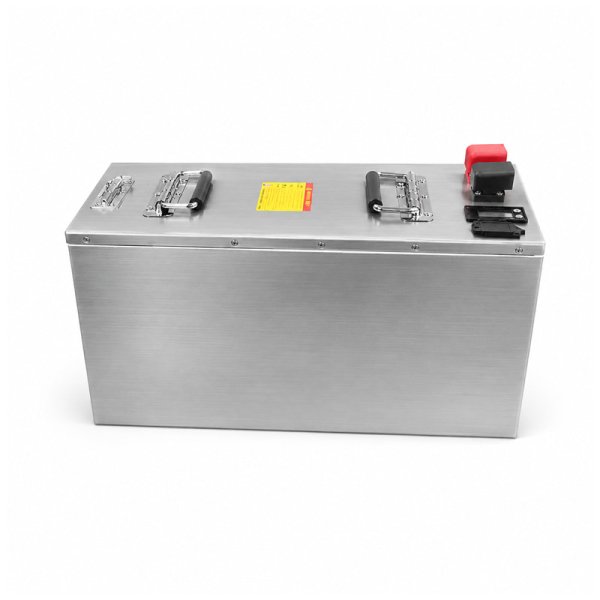
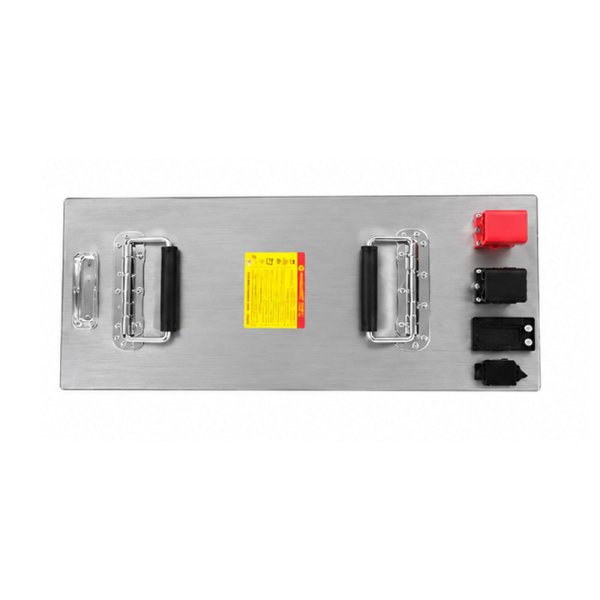
This application-matched power battery solution is designed around route, current demand, installation space, operating environment, BMS, and charger matching rather than a fixed lifespan promise.
Which Costs Should Fleets Include in Battery Replacement Cost?
A useful battery replacement cost model should include pack price, removal and installation labor, diagnostics, spare-pack inventory, warranty administration, transport, disposal or recycling, and the productivity lost while a vehicle is unavailable.
Downtime is especially important for revenue-producing vehicles. A delivery tricycle that misses a route, a forklift that cannot enter a shift, or a golf-cart fleet with units out of service creates a business cost that does not appear on the battery invoice.
If one battery can deliver the required duty with fewer replacements, a higher upfront price may still produce lower battery replacement cost and lower total cost of ownership.
Which Fleet Conditions Increase Battery Replacement Cost?
Deep discharge, high current, elevated temperature, poor charger matching, unsuitable storage state of charge, and repeated operation near the pack’s limits can shorten service life in both lithium and lead-acid systems.
A cargo tricycle climbing hills at high payload stresses a battery differently from a golf cart on a flat route or a forklift running short indoor cycles. Route energy, payload, peak current, charging windows, ambient temperature, and end-of-shift reserve should all be part of replacement planning.

Good battery replacement cost forecasting uses real operating data. Buyers evaluating long service life should also understand the factors affecting lithium battery cycle life before setting fleet replacement assumptions.
How Should B2B Buyers Compare Lead-Acid and LiFePO4?
Lead-acid can still fit low-utilization, budget-sensitive, or legacy applications. Its lower purchase price may matter when daily cycling is light and downtime has limited business impact. In high-use fleets, more frequent replacement and maintenance can weaken that upfront advantage.
LiFePO4 often becomes more attractive when vehicles cycle daily and service interruptions have measurable cost. Lower mass, higher usable energy, longer cycle-life potential, and lower routine maintenance can all contribute to lower battery replacement cost when the pack is correctly engineered.

The right comparison is battery replacement cost plus downtime, service labor, spare inventory, replacement frequency, and total cost of ownership. Fleets comparing these factors can also review how deep-cycle lithium batteries affect total cost of ownership.
What Should Buyers Specify to Control Battery Replacement Cost?
Start with route distance, payload, motor or equipment demand, peak current, working hours, ambient temperature, charging windows, storage conditions, installation limits, and annual utilization.
Then ask for cell chemistry, cycle-test conditions, depth of discharge, capacity-retention endpoint, continuous and peak current limits, BMS protection, charger requirements, temperature limits, warranty terms, and sample-validation procedures.
Do not select a battery only because it carries a high cycle number. To reduce battery replacement cost, the cells, BMS, charger, controller, connectors, enclosure, thermal design, and duty cycle must work as one system. For high-frequency motive-power fleets, LiFePO4 is often the strongest chemistry to validate first.
Frequently Asked Questions About Battery Replacement Cost
Q: What is included in battery replacement cost?
A: Battery replacement cost can include the new pack, labor, diagnostics, downtime, spare inventory, warranty handling, transport, and disposal or recycling. B2B fleets should model these costs together.
Q: How often should fleet batteries be replaced?
A: Replacement frequency depends on chemistry, depth of discharge, temperature, current demand, charging, and required remaining capacity. Use tested performance and real duty requirements rather than a fixed calendar interval.
Q: Why can LiFePO4 reduce battery replacement cost?
A: LiFePO4 often offers longer cycle potential, lower routine maintenance, and strong thermal stability. In high-use fleets, fewer replacement events can reduce labor, downtime, and spare-pack demand.
Q: Does depth of discharge affect battery replacement cost?
A: Yes. Deeper cycling generally increases battery stress and can shorten service life. Keeping the pack within a suitable operating window can reduce replacement frequency and lower long-term cost.
Q: Is LiFePO4 worth the higher upfront price?
A: For high-use fleets, often yes. When longer cycle potential, lower maintenance, reduced downtime, and fewer replacement events are included, LiFePO4 can deliver lower total cost of ownership.
Conclusion
Battery replacement cost should be treated as a fleet operating metric, not a surprise repair expense. Lead-acid remains useful in some low-cost or low-utilization applications, but demanding duty can create more replacement events and more service disruption.
For electric tricycles, golf carts, forklifts, delivery motorcycles, and similar motive-power fleets, lithium is often the stronger long-term platform, and LiFePO4 is usually the first chemistry worth validating. A correctly sized pack with suitable BMS protection and charger matching can reduce battery replacement cost and make fleet expenses more predictable.