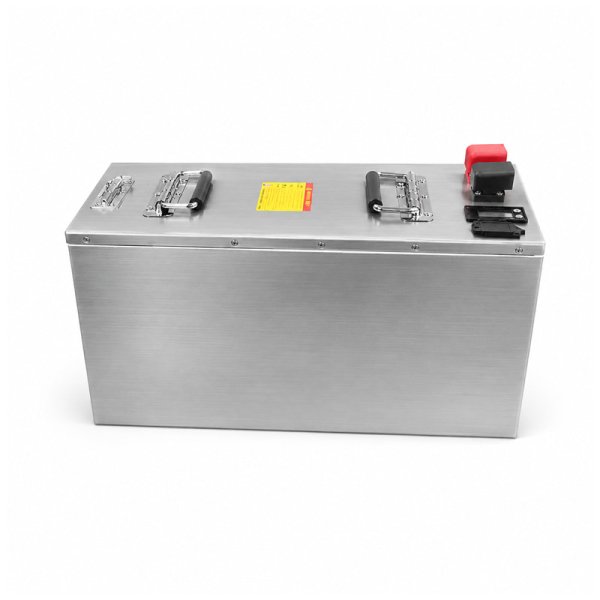
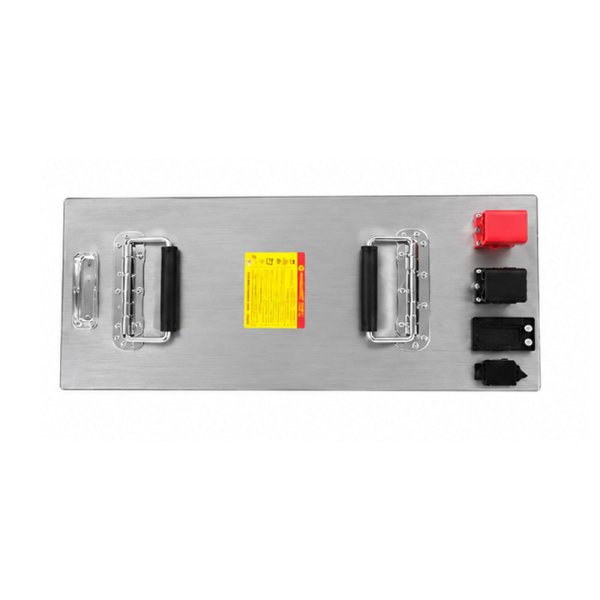
Industrial electric tricycles used in factories, farms, municipal operations, warehouses, and construction support work can face repeated starts, uneven surfaces, high cargo mass, long hours, and limited charging windows. The heavy duty electric tricycle battery is therefore part of the traction system, and its electrical, thermal, mechanical, and control performance directly affects shift completion.
A heavy duty electric tricycle battery should therefore be selected from the real duty cycle backward. Nominal voltage and amp-hour capacity are only the starting point. B2B buyers also need to evaluate usable energy, continuous and peak discharge current, voltage sag, conductor sizing, battery management system limits, installation geometry, vibration exposure, ingress protection, charging windows, and service access.
A pack can store enough energy for the route yet still perform poorly if repeated high-current events create excessive voltage drop or heat. A heavy duty electric tricycle battery can also become unreliable when its enclosure, connectors, mounting, or sealing are not suited to the working environment.
For procurement teams defining a traction system, FEBATT’s power battery solutions provide a framework for comparing voltage, capacity, current, BMS, dimensions, protection, and integration as one system. A broader purchasing framework is available in the commercial electric tricycle battery guide. The final heavy duty electric tricycle battery should still be matched to the actual platform and duty profile.
What Engineering Features Define a Heavy Duty Electric Tricycle Battery?
A genuine heavy duty electric tricycle battery is defined by stable performance under sustained commercial stress, not by capacity alone. It must deliver required current without unacceptable voltage depression, stay within validated temperature limits, remain secure under shock and vibration, and provide predictable protection during abnormal conditions.
For an industrial electric trike battery, buyers should evaluate the complete pack rather than one attractive specification. The following items should be reviewed together:
- Continuous discharge current matched to normal high-load operation.
- Peak current capability and the allowed duration of that peak.
- Usable energy at the expected route, temperature, and load profile.
- BMS monitoring of voltage, current, temperature, faults, and protection events.
- Busbars, connectors, fuses, contactors, and cables sized for the same current path.
- Enclosure, mounting, vibration control, ingress protection, and serviceability.

These requirements are interconnected. More capacity does not automatically solve a power problem, and high-current cells do not compensate for undersized connectors or weak mechanical integration. A heavy duty electric tricycle battery should behave as one coordinated traction subsystem.
This systems approach matters when a high power cargo tricycle battery supports repeated acceleration, gradients, short transport cycles, or multi-shift work. The heavy duty electric tricycle battery must remain within approved electrical, thermal, and mechanical limits throughout the intended duty cycle.
How Should Continuous Discharge Capability Be Matched to Heavy Industrial Loads?
Heavy cargo increases motor torque demand. During a loaded start, hill climb, ramp entry, or low-speed acceleration, the controller can demand substantially more current than during steady travel. Excessive resistance anywhere from cells to cables can add voltage loss and heat.
A heavy duty electric tricycle battery should therefore be sized using vehicle-level data. Useful inputs include motor rated and peak power, controller current limit, gross operating mass, validated payload, maximum gradient, wheel and gearing characteristics, route speed, daily distance, ambient temperature, and the number of high-current events expected during a shift.
A battery alone does not determine whether a tricycle can legally or safely transport a 1,000 kg-class load. Chassis, axles, brakes, tires, motor, controller, gearing, stability, and local limits must support the operating mass. If an OEM has validated a vehicle in that class, the heavy duty electric tricycle battery can then be engineered around the measured current and energy requirements.
Repeated high-current operation can be more demanding than one short peak. A factory vehicle may stop, load, accelerate, travel a short distance, and repeat all day. The high power cargo tricycle battery must therefore be evaluated for sustained thermal performance as well as peak output.

For this reason, procurement teams should request pack-level continuous current, peak current, peak duration, and applicable temperature conditions. Those values are more useful than a vague “high power” claim when comparing a heavy duty electric tricycle battery for industrial work.
What Advantages Can Prismatic LiFePO4 Cells Offer in Heavy-Duty Applications?
Large-format prismatic LiFePO4 cells can reduce the number of individual cells and interconnections needed for a high-capacity pack. In vibration-intensive vehicles, fewer cell-to-cell connections can simplify the electrical path and reduce the number of joints that must remain mechanically stable.
Prismatic geometry can support compact packaging and structured restraint. When cells are correctly supported and movement is controlled, this architecture can suit a heavy duty electric tricycle battery for rough-road and industrial service.
Cell format alone does not make a battery vibration resistant. Cell support, required compression, insulation, busbar flexibility, connector retention, enclosure stiffness, mounting, and vehicle-level vibration all influence durability. Well-engineered cylindrical-cell systems can also perform reliably, so buyers should compare validated pack performance rather than assume universal superiority.
For a heavy load rickshaw battery pack, LiFePO4 can also be attractive where the project prioritizes cycling capability, thermal stability, and a relatively stable discharge profile. The final choice should still be based on approved cell data, pack design, temperature range, current requirements, and lifecycle targets for the actual vehicle.
How Do Properly Sized Copper Busbars Reduce Resistive Heating?
Busbars are an important part of high-current battery design. Conductors always have resistance, so the objective is to keep voltage loss and resistive heating controlled at the maximum expected current.
Because resistive heating rises with the square of current, starts and climbs place disproportionate stress on weak connections. Short, adequately sized, high-conductivity current paths help control losses. Copper busbars can reduce resistance when correctly dimensioned for the application.
Busbar thickness alone is not a complete design criterion. Joint quality, contact area, plating, fastening or welding process, protection devices, cable size, connector rating, and thermal environment all affect the current path. One poor connection can become a local hot spot even when the rest of the heavy duty electric tricycle battery is well engineered.
B2B buyers should ask how the complete path from cells to output terminals is rated. This is especially important for an industrial electric trike battery with frequent high-torque starts. A heavy duty electric tricycle battery cannot rely on one oversized component to compensate for a bottleneck elsewhere in the circuit.
What Enclosure and Mounting Features Protect Packs on Rough Routes?
Industrial tricycles can expose the battery to potholes, gravel, road debris, chassis movement, loading impacts, and vibration. Electrical performance is useful only if the pack remains mechanically secure through those conditions.
A heavy duty electric tricycle battery can use a reinforced metal enclosure where impact protection is required, but there is no universal material thickness. Design depends on battery mass, installation position, space, impact exposure, corrosion environment, vehicle weight limits, and validation methods.
A robust mechanical design may include:
- A rigid enclosure with appropriate corrosion protection.
- Secure cell or module restraint and electrical insulation.
- Protected cable exits, connectors, and service openings.
- Mounting brackets designed around actual vehicle load paths.
- Vibration-isolation or shock-control features where validated for the pack.
- Service access that does not compromise sealing after maintenance.
For a heavy load rickshaw battery pack, the mounting interface is critical. A strong enclosure on weak brackets simply moves the failure point. Supplier and OEM should agree on mounting geometry, fasteners, cable strain relief, clearance, and inspection access before production.
FEBATT’s power battery solution portfolio is relevant at this stage because mechanical, electrical, BMS, and environmental requirements need to be considered together. The heavy duty electric tricycle battery should be validated as part of the host vehicle rather than treated as a stand-alone box.
How Does BMS Thermal Monitoring Protect High-Load Operation?
High-current operation produces heat in cells and conductors, while ambient temperature and limited airflow reduce thermal margin. Temperature monitoring is therefore central to a heavy duty electric tricycle battery used for sustained hauling.
The BMS can monitor selected temperature points against validated limits. Depending on the pack design, it may warn, restrict allowable current, or shut down at defined thresholds. Exact temperatures and derating curves must come from the approved battery design.
A staged response can reduce permitted power before a critical limit is reached and may avoid abrupt shutdown. A high power cargo tricycle battery should use approved BMS logic rather than generic temperature thresholds copied from another pack.
Thermal data can also support diagnostics. Repeated heating at the same route point or current level may justify investigation of load, cell balance, connector resistance, cable condition, mounting, or cooling conditions. For fleet managers, trend data from a heavy duty electric tricycle battery can be more valuable than a single temperature snapshot.
How Should Opportunity Charging Be Planned for Multi-Shift Trikes?
Opportunity charging adds energy during planned idle periods such as shift changes, loading breaks, depot stops, or meal periods. It can improve availability only when the battery, charger, connectors, cables, BMS, and thermal conditions support the strategy.
A heavy duty electric tricycle battery should therefore be matched to the actual break duration and the energy required for the next operating period. The useful question is not whether the pack is advertised as “fast charging.” It is how much usable route energy can be restored within the available window while remaining inside the approved charge-current and temperature limits.
Fleet engineers should review charger output, usable energy, starting SOC, route consumption, thermal conditions, infrastructure, and dispatch schedule together. Some fleets benefit more from added capacity; others can use planned partial charging to reduce spare-vehicle or battery-swapping needs.
The commercial electric tricycle battery guide provides additional context for matching charging strategy to fleet duty cycle. Any opportunity-charging plan for a heavy duty electric tricycle battery should use the approved charger and documented battery limits rather than an arbitrary C-rate or universal charging-time target.
How Does Ingress Protection Support Wet Industrial Environments?
Industrial vehicles may operate in rain, mud, road spray, or facilities where cleaning creates water exposure. IP67 can be useful, but the designation applies under defined test conditions and is not a promise of unlimited washdown or flood operation.
A heavy duty electric tricycle battery intended for wet service needs coordinated sealing across enclosure joints, gaskets, cable glands, connectors, vents, fasteners, and service covers. One damaged or incorrectly assembled interface can weaken the system.
Installation matters as much as the enclosure rating. External connectors, cable routing, mounting orientation, drainage, collision exposure, and repeated service access can affect real-world ingress protection. Fleet technicians should inspect for seal damage, impact marks, loose covers, connector contamination, or evidence of moisture after abnormal exposure.
For an industrial electric trike battery, buyers should verify the actual rating and test documentation applicable to the production configuration. A heavy duty electric tricycle battery with an IP designation should still be operated within the vehicle and battery supplier’s environmental limits.
How Should Plant Managers Compare TCO and ROI?
A heavy duty electric tricycle battery may cost more initially than a conventional lead-acid system, so industrial procurement should compare total operating value. Maintenance, charging flexibility, replacement frequency, energy use, and downtime are key economic variables.
A practical ROI model can include:
- Initial battery, charger, and integration cost.
- Expected battery replacement criteria and replacement frequency.
- Routine maintenance labor and battery-handling labor.
- Vehicle downtime caused by charging, faults, or battery replacement.
- Electricity consumption and charger efficiency based on verified equipment data.
- Spare battery or spare vehicle requirements.
- Disposal, recycling, and replacement handling costs where applicable.
Higher utilization can make availability and maintenance time more valuable, but buyers should not assume a fixed payback period. Use local labor and electricity costs, actual utilization, approved battery data, and the fleet’s own downtime cost.
A high power cargo tricycle battery can create value if stable current delivery prevents interruptions or charging flexibility adds productive hours. Translate those benefits into cost per operating hour, route, or delivered load rather than broad ROI claims.

How Can Fleet Engineers Specify a Custom Heavy-Duty Pack?
Customization should begin with the vehicle and duty profile. A generic request for voltage and capacity does not provide enough information to engineer a heavy duty electric tricycle battery for industrial service.
Before requesting a quotation, B2B buyers should define:
- Nominal and operating voltage range.
- Required usable energy and daily energy throughput.
- Continuous current, peak current, and peak duration.
- Motor and controller ratings and protection limits.
- Validated vehicle mass, payload, gradients, and route conditions.
- Battery-space dimensions, mounting points, and maximum installed mass.
- Charging window, charger requirements, and depot electrical constraints.
- BMS functions, communication protocol, and diagnostic access.
- Ingress, vibration, temperature, and service conditions.
- Destination market and applicable product, transport, or vehicle documentation.
Physical and electrical integration should be developed together. A heavy load rickshaw battery pack that fits the compartment but cannot meet current demand is not a successful design; neither is a high-current pack that overloads the mounting structure or leaves inadequate service clearance.
For fleets with several vehicle variants, common connectors, communication architecture, diagnostics, and BMS platforms may simplify service when engineering permits. FEBATT’s power battery solutions and commercial tricycle guidance can inform early comparison, but the production heavy duty electric tricycle battery should be confirmed against the final vehicle specification.
Relevant Technical FAQ
1.What makes a battery “heavy duty” for an electric tricycle?
There is no single voltage, capacity, or chemistry that automatically makes a battery heavy duty. A heavy duty electric tricycle battery should have pack-level continuous and peak current capability matched to the motor and controller, sufficient usable energy for the route, a BMS with appropriate protection, robust conductors and connectors, and mechanical and environmental protection suitable for the vehicle’s duty cycle.
2.Can a heavy-duty battery support a tricycle carrying a 1,000 kg load?
The battery alone cannot establish whether a tricycle can safely carry a 1,000 kg load. The OEM must validate chassis, axles, brakes, tires, motor, controller, gearing, stability, operating mass, and local requirements. If the vehicle is approved for that class, the heavy duty electric tricycle battery can be sized to its measured current, energy, and thermal demands.
3.Are prismatic LiFePO4 cells always better for heavy cargo tricycles?
No. Prismatic cells can reduce cell count and interconnection density and support structured packaging, but durability depends on the complete pack. Cell support, joints, busbars, insulation, enclosure, vibration control, BMS settings, and manufacturing quality all matter. The supplier should justify the architecture with application-specific engineering.
4.Can an industrial electric tricycle battery be opportunity charged during scheduled breaks?
Yes, when the battery and charging system are validated for the strategy. Approved charger output, charge-current limits, temperature, starting SOC, break time, and route energy determine the benefit. A heavy duty electric tricycle battery should not be connected to a higher-power charger simply to shorten charging time.
5.Does an IP67 rating mean the battery can be pressure washed or submerged indefinitely?
No. An IP rating applies under defined test conditions. Buyers should verify the production pack, connectors, cable entries, vents, and installation. The heavy duty electric tricycle battery should still be operated and cleaned according to approved environmental and service procedures.
6.What safety and transport documentation should B2B buyers verify?
Requirements depend on battery design, vehicle classification, destination market, and transport method. Buyers should verify which product, vehicle, and transport requirements apply and confirm that reports match the production battery. For international lithium-battery transport, applicable testing and documentation should be confirmed for the shipment rather than treated as universal product-safety certification.
Conclusion
Industrial hauling places simultaneous electrical, thermal, mechanical, and operational demands on the battery. A heavy duty electric tricycle battery should therefore be engineered around the actual vehicle duty cycle rather than selected from nominal voltage and capacity alone.
Stable high-current output requires suitable cells, low-resistance current paths, correctly rated connectors and cables, protection devices, and BMS logic matched to vehicle demand. Mechanical reliability requires appropriate enclosure, mounting, strain relief, and vibration control. Wet-environment reliability requires coordinated sealing and correct service practices rather than reliance on one IP label.
For industrial fleets, purchasing should connect battery engineering with measurable outcomes: route completion, payload compatibility, operating hours, maintenance burden, charging flexibility, and lifecycle cost. The right industrial electric trike battery stays within validated electrical, thermal, and mechanical limits while meeting productivity requirements.
When those requirements are clearly defined, a heavy duty electric tricycle battery can become a more predictable traction subsystem for demanding cargo and multi-shift applications. That is the standard B2B buyers should use when comparing a heavy load rickshaw battery pack or high power cargo tricycle battery for long-term industrial service.