If you sleep in your truck often, you already know the problem: the cab can turn into a heat trap by evening, but you do not want to wake up to a dead starting battery. The good news is that you do not need to choose between comfort and reliability. With the right airflow, shade, insulation, and a properly planned LiFePO4 battery setup, you can keep the cab much cooler overnight without putting the starting battery at risk.

Why does the starting battery run out so fast when you sleep in the cab?
A starting battery is built for short, high-power bursts, not long overnight use. It is designed to crank the engine and then let the alternator take over. Once you begin running lights, fans, chargers, a radio, a fridge, or even small comfort devices while the engine is off, the starting battery starts doing a job it was never meant to do. That is when trouble begins.
The issue is not only runtime. It is depth of discharge. A starting battery does not like being drawn down repeatedly. Even a moderate drain can shorten its life, and a few nights of use can leave it weaker than it was before. If you also try to cool the cab with a fan, you may be pulling power all night while the truck is parked in heat that never really leaves the metal shell.
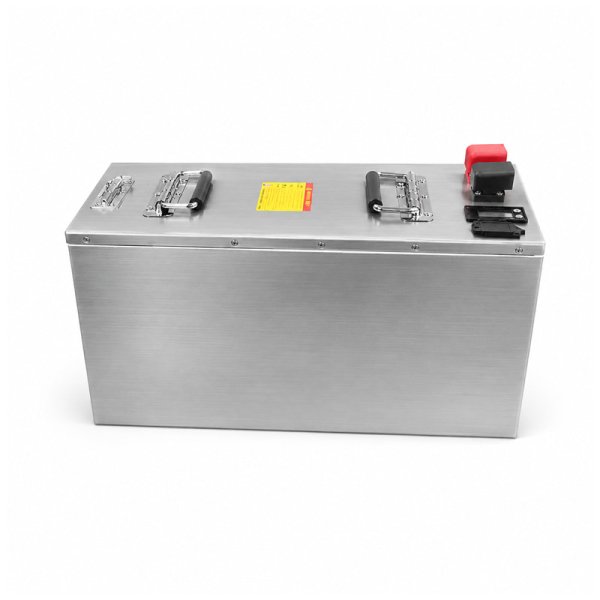
That is why a LiFePO4 battery keeps coming up in these conversations. Unlike a starting battery, a LiFePO4 battery is designed to deliver usable energy over a longer period. It handles deeper discharge far better and keeps voltage steadier while loads are running. That makes it a much better fit for overnight comfort power.
In practical terms, the starting battery gets stressed when:
- The cab fan runs for hours
- The truck sits with interior lights on
- Phones and devices charge overnight
- Small refrigerators or coolers keep cycling
- The alternator is not available to recharge the system
The problem becomes worse in hot weather because the battery is already working harder and the cab starts the night with retained heat. A LiFePO4 battery can take over the accessory load so the starting battery stays untouched. That is the cleanest way to protect the truck and still sleep more comfortably.
Why is a LiFePO4 battery such a practical answer?
A LiFePO4 battery is practical because it gives you the kind of power profile overnight cab use actually needs. It does not just store energy; it delivers it in a stable way, over a longer period, with far less drama than a starting battery. For truck drivers, that matters because overnight comfort usually depends on low, steady loads rather than big bursts of power.
One of the biggest advantages is usable capacity. A LiFePO4 battery can usually be discharged much deeper than a lead-acid starting battery without suffering the same kind of damage. That means a larger share of its capacity is actually available for fans, charging ports, lights, and other comfort gear. You are not forced to keep a huge reserve just to protect the battery from damage.
Voltage stability is another big plus. A LiFePO4 battery tends to hold voltage more evenly during discharge, which helps small electronics work properly. Fans stay consistent. USB chargers behave more predictably. LED lighting remains steady. That may sound minor, but when you are trying to sleep in a hot cab, those small differences matter.
A LiFePO4 battery also brings practical weight savings. Truck drivers often care about payload, installation space, and easy handling. A lighter battery is easier to mount, easier to service, and easier to fit into a dedicated auxiliary setup. In a tight cab or tool area, that can make a real difference.
There is also the lifecycle advantage. A LiFePO4 battery usually offers many more cycles than a typical starting battery and often more than many lead-acid auxiliary options. If you use overnight cooling often, that longevity can be a major value point.
A few reasons truck drivers like it:
- More usable overnight power
- Better voltage stability
- Lighter than many alternatives
- Long cycle life
- Better fit for repeated accessory use
If the goal is to keep the cab cool without touching the starting battery, a LiFePO4 battery is one of the most sensible tools available.
What is the lowest-power way to make the cab feel cooler?
Before you think about battery size, it helps to reduce heat at the source. The cheapest and most efficient way to keep a truck cab cooler is not to create more cooling power, but to stop heat from building up in the first place. This can reduce the runtime needed from any LiFePO4 battery and make the whole setup more efficient.
Start with parking strategy. If you can park in shade, do it. If there is no shade, position the truck so the windshield gets less direct sun if possible. That alone can lower the interior temperature by a surprising amount. Reflective windscreen covers are also worth using because they cut down solar gain before the cab even gets a chance to absorb it.
Window management matters too. Cracking a window slightly can help, but only if it is safe and weather conditions allow it. Rain guards or vent visors make this more practical because they let air move without leaving the cab wide open. Pair that with a small fan on a LiFePO4 battery, and the cab can feel much more livable.
Other low-power tricks include:
- Reflective sunshades for the windshield and side windows
- Cab curtains or blackout panels
- Removing heat-generating electronics before parking
- Using seat covers that do not hold heat
- Venting the cab early, before the truck fully cools down
The big idea is simple: every degree you stop from entering the cab is a degree you do not need to remove later. That means less power draw from your LiFePO4 battery and a lower chance of draining anything important. A good comfort strategy starts with heat reduction, not just cooling equipment.
How does ventilation help more than people expect?
Ventilation can do more than people think because moving air often feels cooler even when the actual temperature does not change much. In a truck cab, stale heat is the enemy. If the air can move, moisture and trapped warmth do not settle as aggressively around your body. That is why even a modest fan powered by a LiFePO4 battery can make sleeping conditions much better.
The best ventilation is cross-ventilation. If one opening lets air in and another lets air out, the cab feels less stagnant. A roof vent, a cracked window, or a vent insert can all help. A small 12V fan can then push air through the sleeping area instead of letting it sit in one hot pocket. You do not need a hurricane; you need steady movement.
This is where a LiFePO4 battery really starts earning its place. Small DC fans are efficient, and the battery can support them for many hours without the starting battery taking any hit. If you are trying to sleep in a warm cab, that airflow can be enough to turn a miserable night into a tolerable one.
Useful ventilation ideas include:
- Roof vents or vented hatches
- Window visors that allow rain-safe cracking
- Small circulating fans near the sleeper area
- Directed airflow rather than full-cab blasting
- Leaving hot air escape paths open
A fan is often more useful than people expect because it helps your body cool itself through sweat evaporation. That means the actual temperature does not have to drop dramatically for the sleeping experience to improve. The important part is that the airflow comes from a dedicated power source, not the starting battery.
A LiFePO4 battery gives you that independence. It lets you keep the cab breathable overnight without worrying that the engine will not start in the morning.
What insulation and shading tricks work best overnight?
Insulation is easy to overlook because people think of cooling only in active terms. But if your truck cab is still soaking up heat from the day, any cooling device has to fight a losing battle. Good insulation and shading reduce the load before it starts, which means your LiFePO4 battery does not have to work as hard overnight.
The most effective shading tools are usually the simplest. A reflective windshield sunshade blocks a huge amount of direct solar heat. Side window shades help too, especially if the truck is parked in full sun for long periods. Cab curtains can isolate the sleeping area from the front glass, which tends to be one of the biggest heat sources in a parked truck.
Insulation does not need to be complicated. Even small improvements can make a difference:
- Reflective shades on the windshield and side windows
- Thermal curtains between cab zones
- Insulated mattress pads or sleeping mats
- Covering metal surfaces that radiate heat
- Sealing air leaks around doors and windows
Truck interiors store heat in surprising ways. Dashboard plastics, seat foam, and metal panels all hold warmth long after sunset. If that heat stays trapped, your fan or cooling device works harder. A LiFePO4 battery can handle the load, but the smarter move is to reduce the load first.
There is also a comfort effect that many drivers notice immediately. A shaded cab cools faster, stays cooler longer, and needs less overnight power. That means the LiFePO4 battery can spend less time fighting retained heat and more time keeping the cab comfortable at a lower speed.
This approach is often overlooked because it does not look as impressive as a battery or fan upgrade. But if the cab begins the night cooler, every other system becomes more effective. In many setups, that is the difference between a short-lived fan and a real overnight solution.
How do auxiliary fans and small comfort devices fit into the plan?
Small comfort devices are often the sweet spot because they deliver real benefit without creating huge power demand. A fan, a USB charger, a reading light, or a small control unit can all run efficiently from a LiFePO4 battery if the system is set up properly. For overnight cab comfort, that is often enough.
A fan is usually the first device to consider. Not because it makes the cab cold, but because it makes the air usable. A low-watt DC fan can run for a long time on a properly sized LiFePO4 battery, and the effect on comfort is far greater than the numbers suggest. If the fan moves air across your face or torso while you sleep, the cab feels much cooler.
Small comfort devices also tend to be predictable in their power use. That makes it easier to size the battery bank. A LiFePO4 battery is especially useful here because it can deliver stable voltage through the night, which prevents fans from slowing down and electronics from acting strangely as the battery drains.
A few good candidates for overnight use:
- 12V DC fan
- LED reading light
- Phone charger
- Small portable cooler
- Temperature monitor
- Window vent fan
Keep the loads efficient and the system becomes much easier to manage. It is not a good idea to build an overnight cooling plan around power-hungry devices when a small fan and good ventilation would do the job better. If you want the cab cooler without touching the starting battery, a LiFePO4 battery can support that strategy very cleanly.
The key is to choose devices designed for low power. That keeps runtime high and stress low. A well-matched LiFePO4 battery can support these small loads comfortably while the truck’s starting battery stays fully protected.
What about air conditioning and bigger cooling loads?
This is where expectations need to stay realistic. Air conditioning uses far more power than a fan. If you want to cool a truck cab overnight with full A/C, you need a much larger system than a simple starting battery or a small auxiliary setup. That does not mean it is impossible, but it does mean the battery must be sized intentionally.
For many drivers, a LiFePO4 battery is part of the solution, not the whole solution. A large LiFePO4 battery bank may support a compact 12V air-conditioning system or a high-efficiency rooftop unit for a limited period, but runtime depends entirely on load size and battery capacity. A small portable fan is one thing. A compressor-based cooling system is another.
This is why many truck drivers use a tiered approach:
- Shade and ventilation first
- Insulation second
- Low-power fans third
- Bigger cooling only if the battery system is designed for it
A LiFePO4 battery can make more ambitious cooling setups possible because it handles deep cycling better and delivers more usable capacity than a starting battery. But the power math still has to be respected. If the cooling load is large, the battery must be large enough to support it safely.
That is also why many drivers prefer to avoid idling the engine just for cooling. It is noisy, wasteful, and hard on the truck. A better-designed LiFePO4 battery system can often give you enough comfort for sleep without that compromise. If the load is small, the setup is simple. If the load is large, the design has to be much more careful.
The practical takeaway is this: for overnight comfort, a well-sized LiFePO4 battery can support more than just fans, but the more cooling you ask for, the more important it becomes to calculate runtime before you buy anything.
How do you size a LiFePO4 battery for overnight cooling?
Sizing is where the whole plan becomes real. If you know how much power your devices use and how long you want them to run, you can estimate the battery capacity you need. A LiFePO4 battery works best when it is chosen for the actual overnight load, not guessed at by feel.
Start with your loads. A small fan might use 5 to 20 watts. A phone charger maybe another few watts. A light adds a little more. If you run only a fan and a small light, the total load can stay surprisingly low. But if you add a portable cooler, inverter, or bigger ventilation device, the number rises quickly.
A simple way to estimate:
- Fan: 10W x 8 hours = 80Wh
- Light: 5W x 8 hours = 40Wh
- Phone charging: 10Wh to 20Wh
- Small vent fan: 10W x 8 hours = 80Wh
That total is often manageable with a modest LiFePO4 battery. But if you want more margin, you can scale up quickly. Many truck drivers like having extra buffer so the battery is not being drained to its limit every night. A LiFePO4 battery is forgiving, but it still makes sense to leave room.
General sizing advice:
- Light fan-only use: smaller battery bank may be enough
- Fan plus lights plus charging: medium-sized battery bank
- Fan plus cooling accessories or longer runtime: larger battery bank
- Frequent overnight use: choose more reserve than the bare minimum
A good battery monitor helps a lot because it shows real state of charge rather than guessing from voltage alone. If you are comparing systems from a source like Febatt, look at the usable capacity and the support for proper monitoring as part of the package.
The goal is to avoid either extreme. Too little capacity means you wake up worried. Too much means you spend more than you need. A properly sized LiFePO4 battery gives you the balance: enough power for comfort, without risking the starting battery.

What wiring and protection make the setup safe?
Safety matters because the whole point is to protect the starting battery, not create a new electrical headache. The safest setup usually separates the starting system from the auxiliary system with proper charging and protection hardware. A LiFePO4 battery should not be wired casually into the truck and hoped for the best.
At minimum, a good setup should include correct fusing, solid cable sizing, and a plan for isolating the starting battery from overnight loads. Many drivers use a battery isolator, DC-DC charger, or other charging-management device so the auxiliary battery charges while driving but cannot drain the starting battery while parked. That is the cleanest approach.
Important safety pieces include:
- Fuse protection near the battery
- Proper cable gauge for the load
- A charging isolator or DC-DC charger
- Secure battery mounting
- Reliable connectors and terminal protection
- A battery monitor for state-of-charge tracking
If the truck’s alternator or charging system is not designed for lithium, a LiFePO4 battery may need a matching charger profile or DC-DC setup. That is especially important if you want long battery life and predictable charging. The battery should not be overcharged, undercharged, or left connected in a way that lets the starter battery drain overnight.
Installation quality matters more than people think. A great battery with bad wiring is still a bad system. The cables should be short enough to reduce voltage drop, but large enough to carry the current safely. Connections should be tight, protected, and easy to inspect.
One more thing: if the cab is set up with a portable auxiliary battery, make sure it cannot shift during travel. A LiFePO4 battery is lighter than many alternatives, but it still needs to be secured like a serious electrical component. Good protection keeps the system safe and reliable night after night.
How do heat, cold, and weather change the plan?
Weather changes the way every battery behaves. In hot conditions, the truck cab gets harder to cool and the battery system has to work longer. That is exactly when a LiFePO4 battery becomes useful, because it can support steady overnight loads without suffering the same kind of deep-discharge wear as a starting battery. Still, heat management matters for the battery too.
If the auxiliary battery sits in a hot compartment or close to heat sources, it should be mounted with ventilation and protection in mind. No battery likes being baked. The cab, the battery, and the cooling devices all work better if the battery is kept as physically comfortable as possible. Even a LiFePO4 battery benefits from sane installation and thermal awareness.
Cold weather creates a different challenge. The cab may not overheat, but the battery can behave differently when temperatures fall. A LiFePO4 battery used in freezing conditions may need a low-temperature charge strategy or a heater depending on the design. That does not mean it cannot be used in cold weather. It simply means the system should be chosen correctly.
Practical weather tips include:
- Keep the battery out of direct engine heat when possible
- Avoid charging below freezing unless the battery is designed for it
- Vent hot compartments
- Use reflective covers and shades in summer
- Monitor battery temperature if the setup is heavily used
Weather is one of the reasons a small plan often beats a big guess. A LiFePO4 battery can be part of a strong all-season solution, but only if the rest of the cab comfort plan supports it. The best systems work because they respect real conditions, not because they try to overpower them.

What habits keep the cab cool and the battery healthy night after night?
Good habits make the system last. Even the best LiFePO4 battery cannot fix a cab that starts the night full of heat and poor planning. The easiest habit is to begin cooling before the sun goes down. If you wait until the cab is already sweltering, every device has to work harder for longer.
A few routines help a lot:
- Park in shade when possible
- Use windshield and window shades before stopping
- Vent hot air out early
- Run a small fan from the auxiliary battery, not the starting battery
- Keep unnecessary electronics off overnight
- Check the state of charge before bed
- Recharge the LiFePO4 battery promptly after use
It also helps to keep the cab uncluttered. Heat gets trapped in fabric, electronics, and gear left around the sleeping area. The less clutter, the less the cab acts like a heat sink. That makes the fan or vent more effective and reduces the energy demand on the LiFePO4 battery.
Battery health is easier to protect if you do not drain the system to the bottom every night. Leave some reserve. Monitor the battery. Recharge it properly during the day. If the truck is used regularly, the charging setup should be able to recover the battery before the next overnight stay.
A good cab-cooling system is really a combination of small wins. Shade lowers the starting temperature. Ventilation moves the air. A fan keeps the sleeping area usable. A LiFePO4 battery powers the comfort loads without touching the starting battery. When those parts work together, the truck becomes much easier to live in.
If you want to set it up once and forget about it, keep the system simple, use the right battery size, and build around the loads you actually need. That is usually enough to keep the cab cool overnight without making the starting battery pay for it in the morning.