Home > Blog > How to Upgrade Lithium Batteries to Backup Power Supplies for Better Practicality?
Share The Post
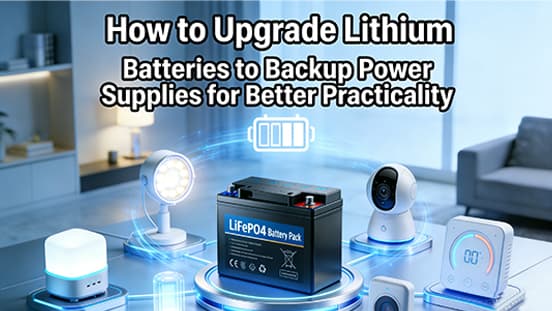
In today’s era of widespread smart homes, the continuous operation of devices such as lighting, security systems, and home appliances relies on stable power support. However, sudden incidents like power outages and voltage fluctuations are inevitable. A reliable backup power supply upgraded from lithium batteries has become crucial to ensuring the normal operation of smart homes.
Thanks to its core advantages including ultra-long lifespan, high safety, and low maintenance requirements, lithium iron phosphate (LiFePO4) batteries have gradually replaced traditional lead-acid batteries as the preferred choice for upgraded lithium battery backup power supplies. From a practical perspective, this article will detail the advantages, integrated applications, and practical value of lithium iron phosphate batteries in backup power systems, providing users with actionable reference plans for upgrading lithium batteries to backup power supplies.
I. Lithium Iron Phosphate Batteries: Core Advantages for Upgraded Backup Power Supplies
(1) Ultra-Long Lifespan and High Cycle Count, Reducing Long-Term Costs
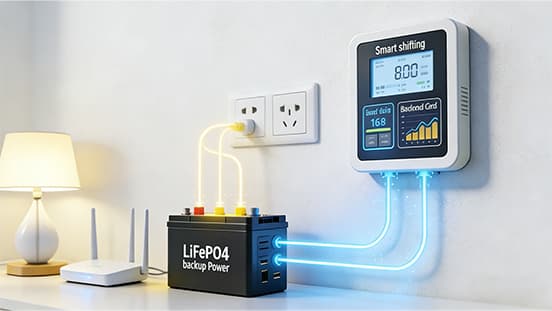
Backup power supplies sit idle for long stretches, so battery lifespan has a direct impact on costs and reliability. Lithium iron phosphate batteries handle 3,000-5,000 charge-discharge cycles and last up to 20 years—way more than traditional lead-acid batteries (300-500 cycles, 3-5 years)—making them perfect for upgraded backup systems.
Take a regular home using a 12V 100Ah lithium iron phosphate battery. If there are 5 power outages a year, each draining 30% of the battery, it only wears down 0.06% per cycle—so it should work reliably for over 15 years in theory. On the flip side, lead-acid batteries would need replacing every 3 years under the same use, meaning 3-4 times more in replacement costs over 15 years. Plus, lithium iron phosphate batteries have a low self-discharge rate (less than 3% per month), so even if unused for ages, they hold enough charge—no frequent top-ups needed, saving you more money long-term.
(2) High Safety and Stable Performance, Adapting to Complex Home Environments
Most backup power supplies go indoors, so safety’s super important. Lithium iron phosphate batteries have a stable crystal structure and don’t have harmful stuff like lead or sulfuric acid—they’re eco-friendly and basically cut down on risks of overheating, fires, or leaks. Even in extreme cases—like if they’re punctured or short-circuited—they won’t explode or burn violently, so they’re safe to install in common home spaces: living rooms, storage rooms, you name it.
They work well across a wide temperature range (-20°C to 70°C), so the backup can handle weather in different areas. Up north in winter’s cold, they still hold over 80% of their capacity; down south in scorching summers, they discharge steadily without losing performance from overheating. Compare that to lead-acid batteries—they lose a lot of capacity below -10°C and tend to bulge or leak when it’s hot. Lithium iron phosphate’s better adaptability makes it a better fit for household backup power needs.
(3) High Energy Density and Compact Design, Saving Installation Space
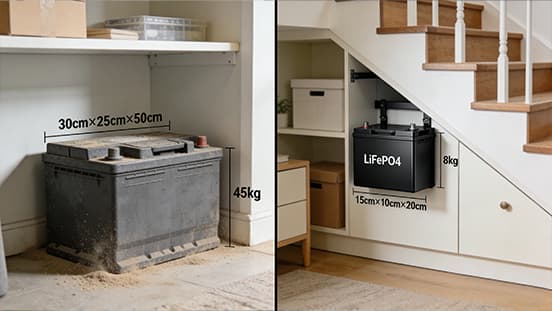
Now that there are so many smart home gadgets, backup power needs to run several devices without taking up too much room. Lithium iron phosphate batteries have an energy density of 90-120 Wh/kg—2 to 3 times higher than lead-acid ones. For the same capacity, they’re only 1/3 the size and 25-30% the weight of lead-acid backups.
Take an example: a lithium iron phosphate backup that powers smart security, lights, and routers for 8 hours only needs shoebox-sized space. You can tuck it into a smart home control cabinet or mount it on the wall. In contrast, an equivalent lead-acid pack is huge—over 20 kg—and needs a dedicated spot in the storage room corner, plus it’s a hassle to move and install. This compact design lets the backup fit right into your home without wasting precious living space—super practical.
(4) Low Maintenance and High Compatibility, Reducing Usage Hassles
Most home users don’t have professional battery maintenance know-how, so low maintenance is a big factor for backup power supplies. Lithium iron phosphate batteries basically need no extra upkeep—just a quick check every 6 to 12 months: wipe dust off the surface, make sure it’s well-ventilated, and check if the terminals are loose. Unlike lead-acid batteries, you don’t have to regularly top up electrolyte or do balanced charging, which makes them way easier to use.
Also, their nominal voltage is 3.2V (you can connect them in series to get common specs like 12V or 24V), which fits modern smart home devices’ power needs perfectly. That means the backup can plug straight into smart lights, security cameras, smart gateways, and other gadgets—no extra voltage converters needed. Some high-end models have a Battery Management System (BMS) that monitors voltage, current, and temperature in real time, automatically preventing overcharging, over-discharging, and overheating, making them even safer to use.
(5) Comparison of Different Lithium Battery Chemistries, Highlighting LiFePO4 Advantages
Battery chemistry directly affects the performance of backup power supplies. The following comparison of core parameters of common lithium battery types intuitively demonstrates the suitability of lithium iron phosphate batteries:
Chemistry Type
Nominal Voltage (V)
Energy Density (Wh/kg)
Cycle Life (Cycles)
Key Features
Suitability for Backup Power
Lithium Iron Phosphate (LiFePO4)
3.2
90–120
3,000–5,000
High safety, long lifespan, stable performance
★★★★★
NMC
3.6–3.7
150–220
1,000–2,000
High energy density, moderate cycle life
★★★☆☆
Lithium Cobalt Oxide (LCO)
3.7
150–200
500–1,000
High energy efficiency, mostly used in consumer electronics
★★★☆☆
Lithium Titanate Oxide (LTO)
2.4
70–80
7,000–20,000
Extremely long cycle life, low energy density
★★★☆☆
Solid-State Battery
3.7–4.2
250–500
1,000–10,000
High safety, immature technology
★★☆☆☆
The comparison shows that lithium iron phosphate batteries’ comprehensive advantages in safety, cycle life, and stability make them the optimal choice for backup power supplies. While batteries like NMC offer higher energy density, their shorter cycle life leads to higher long-term costs, making them unsuitable as the core of backup power systems. Emerging technologies such as solid-state batteries show potential but are currently expensive with underdeveloped supply chains, failing to meet the popularization needs of household backup power supplies.
II. Practical Integration Schemes for Upgraded Backup Power Supplies and Smart Homes
(1) Smart Lighting: Seamless Power Continuity During Outages, Balancing Safety and Energy Efficiency
Smart lighting is a basic home gadget—keeping the lights on during power cuts is super important for safe evacuation and nighttime use. Backup power supplies upgraded with lithium iron phosphate battery packs (especially 12V models) blend right in with LED smart lighting systems, delivering “instant power when the electricity goes out” and making the backup work its best.
Case 1: A resident in a Beijing neighborhood installed 12V LED smart spotlights in the entrance hall, corridors, and bedrooms, matching them with a 12V 50Ah lithium iron phosphate battery pack for backup. The small battery pack (30cm×20cm×15cm) was tucked into the ceiling, taking up no space. When the power suddenly went out, the backup kicked in right away, powering 8 LED spotlights for 6 hours. It not only kept the family safe at night but also automatically started security camera recording via smart gateway connection, eliminating security blind spots during the outage.
The compatibility between backup power and LED tech also saves energy: LEDs themselves use little power, and paired with lithium iron phosphate batteries’ efficient charging and discharging, they cut down energy loss a lot. Plus, backup power can link with light sensors and motion detectors—after an outage, the lights only turn on when human activity is detected, which makes the battery last longer.
(2) System Management: Intelligent Control to Enhance Usage Convenience
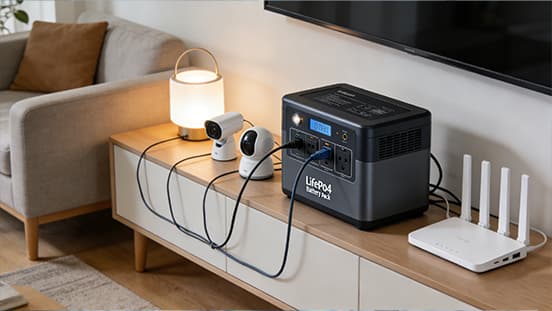
The intelligent features of lithium iron phosphate batteries make backup power supply management more convenient and efficient:
Real-Time Monitoring and Remote Management: By integrating with mobile apps or cloud platforms, users can real-time check the backup power supply’s remaining capacity, charging/discharging status, and temperature data. For example, when receiving a power outage alert while traveling, users can remotely view the remaining battery life via the app, decide whether to arrange for family members to return home, or remotely turn off non-essential devices to extend power supply for critical equipment, enhancing usage flexibility.
Load Shifting and Energy-Saving Optimization: When paired with renewable energy systems such as solar panels, backup power supplies can store solar energy during the day and release it at night or during peak electricity consumption periods, reducing reliance on municipal electricity. Additionally, the system can automatically analyze electricity usage habits, prioritizing power supply for frequently used devices and minimizing energy waste, making the backup power supply more environmentally friendly.
Fault Warning and Self-Protection: The backup power supply’s BMS system real-time detects battery faults such as overcharging, over-discharging, and short circuits. Upon detecting abnormalities, it immediately cuts off power and sends alerts via the app. Some high-end models support automatic balanced charging, ensuring consistent voltage across all cells in the battery pack and extending the overall lifespan of the backup power supply.
III. Precautions and Implementation Suggestions for Practical Application
(1) Installation and Usage Specifications
Choose a dry, well-ventilated installation location away from fire sources, avoiding direct sunlight and high-temperature environments. Reserve at least 10cm of heat dissipation space for the backup power supply to ensure stable operation.
Strictly follow the positive and negative terminal markings during wiring to avoid short circuits. If multiple batteries need to be connected in series for the backup power supply, select lithium iron phosphate batteries of the same model and capacity to ensure consistent performance.
Regular maintenance: Clean dust from the battery surface and check for loose terminals every 6-12 months. For long-term inactivity, maintain the battery capacity at 50%-80% and recharge it every 3 months.
(2) Cost and Cost-Effectiveness Considerations
Lithium iron phosphate batteries have a higher initial purchase cost than lead-acid batteries (approximately 2-3 times), but their 10-20 year service life delivers better long-term cost-effectiveness. Household users can choose backup power supplies with appropriate capacities based on their needs:
Basic Needs (Lighting, Routers): 12V 50Ah backup power supply, priced at 1,000-1,500 RMB, with 4-6 hours of runtime;
Medium Needs (Lighting, Surveillance, Refrigerators): 12V 100Ah backup power supply, priced at 2,000-3,000 RMB, with 8-12 hours of runtime;
High-End Needs (Whole-House Emergency Power): 24V 200Ah backup power supply, priced at 5,000-8,000 RMB, with 12-24 hours of runtime.
IV. A Practical Choice
Thanks to super long lifespan, high safety, compact size, and smart management, lithium iron phosphate batteries offer a practical, reliable solution for upgraded backup power supplies. Whether covering basic needs like daily lighting and security cameras or powering medical equipment and high-wattage appliances in emergencies, these backups perform great in all kinds of scenarios. While the upfront cost is a bit higher, their low maintenance, long life, and reliable long-term performance make them a cost-effective pick for home energy upgrades.
As smart home tech keeps advancing, integrated uses for upgraded backup power will get more common. Choosing a lithium iron phosphate backup with the right capacity not only solves the hassle of sudden outages but also provides steady protection for smart homes to run smoothly. It makes family life safer, more convenient, and energy-efficient—really showing the practical value and market potential of upgraded lithium battery backups.
Want to choose the right lithium battery upgrade backup power supply for your smart home? Contact us for a free capacity assessment!

 In today’s era of widespread smart homes, the continuous operation of devices such as lighting, security systems, and home appliances relies on stable power support. However, sudden incidents like power outages and voltage fluctuations are inevitable. A reliable backup power supply upgraded from lithium batteries has become crucial to ensuring the normal operation of smart homes.
 Backup power supplies sit idle for long stretches, so battery lifespan has a direct impact on costs and reliability. Lithium iron phosphate batteries handle 3,000-5,000 charge-discharge cycles and last up to 20 years—way more than traditional lead-acid batteries (300-500 cycles, 3-5 years)—making them perfect for upgraded backup systems.
 The intelligent features of lithium iron phosphate batteries make backup power supply management more convenient and efficient: