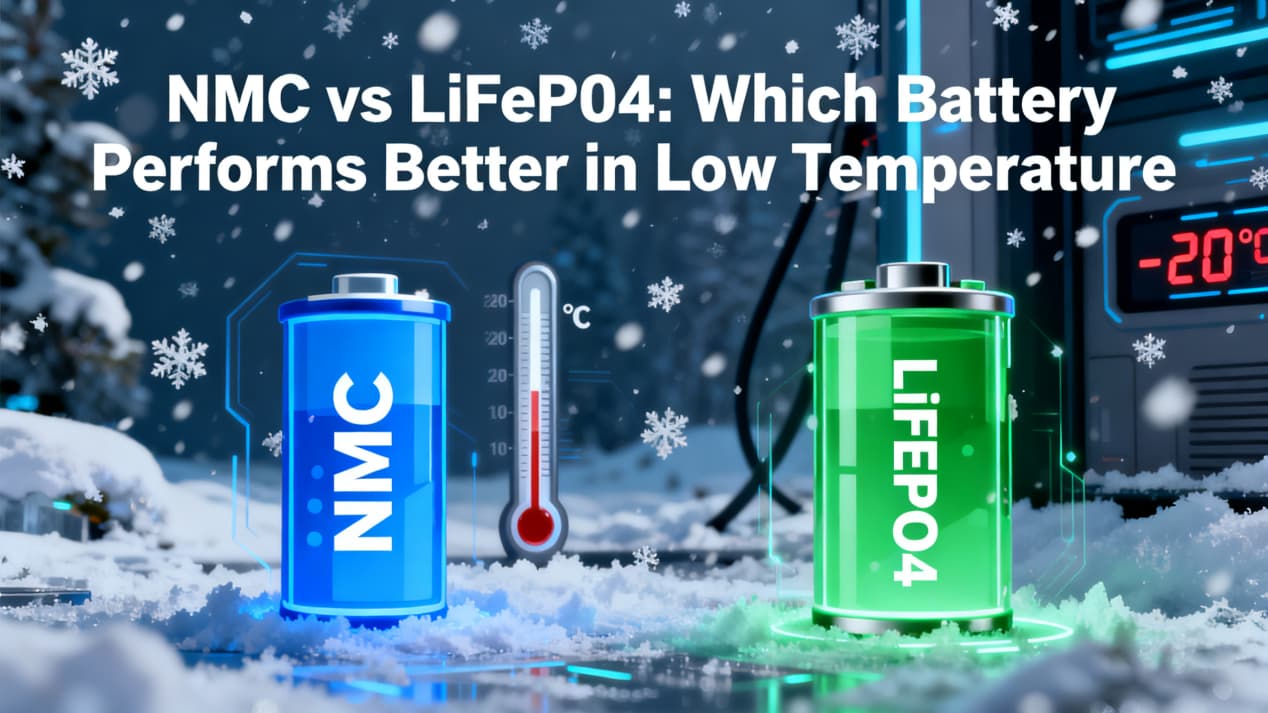
The debate between NMC vs LiFePO4 low temperature performance is critical for any application in cold climates. NMC (Nickel Manganese Cobalt) and LiFePO4 (Lithium Iron Phosphate) are two leading lithium-ion battery variants, each with distinct traits that affect their operation in sub-zero conditions… NMC batteries are known for high energy density and cold-weather adaptability, while LiFePO4 batteries excel in safety and long-term durability. Knowing how to distinguish them and optimize their performance is vital for making the right choice for your specific needs. This guide will walk you through key aspects to help you choose and optimize these two battery types for low-temperature use.
1. An Overview of NMC and LiFePO4 Batteries
1.1 What Are NMC Batteries?
NMC batteries are a widely used lithium-ion battery variant, distinguished by their cathode composition of nickel, manganese, and cobalt. This combination grants them exceptional energy density, allowing them to store large amounts of energy in a compact form factor. Commonly found in electric vehicles, often called EVs, portable electronics like laptops and smartphones, and renewable energy storage systems, NMC batteries are valued for their ability to deliver consistent power across a range of temperature conditions, making them a go-to choice for high-demand applications.
1.2 What Are LiFePO4 Batteries?
LiFePO4 batteries utilize iron phosphate as their cathode material, a design that prioritizes safety and longevity. These batteries are highly resistant to overheating and thermal runaway, making them one of the safest lithium-ion battery options available. They also boast an impressive cycle life, outlasting many other battery types. You’ll typically find LiFePO4 batteries in solar energy storage setups, backup power systems, and EVs where reliability and safety are top priorities. However, their lower energy density means they tend to be bulkier than NMC batteries for the same energy capacity.
1.3 Core Differences Between the Two Battery Types
To better understand their suitability for cold environments, let’s compare their key features:
Feature | NMC Batteries | LiFePO4 Batteries |
Price | Typically 20% more expensive | More budget-friendly |
Energy Density | High | Low |
Temperature Tolerance | Balanced performance across temperatures | Excellent heat resistance, poor cold tolerance |
Safety | Prone to overheating without proper management | Highly resistant to overheating |
Cycle Life | 1,200–2,000 charge-discharge cycles | 2,000–5,000 charge-discharge cycles |
A 2020 study published in the Journal of the Electrochemical Society highlighted that despite their lower energy density, LiFePO4 batteries offer superior longevity compared to NMC batteries, making them ideal for long-term, low-maintenance applications.
2. NMC vs LiFePO4: Low-Temperature Performance Showdown
2.1 Energy Density and Efficiency in Sub-Zero Conditions
In freezing temperatures, energy density and efficiency are critical performance metrics. NMC batteries maintain a clear advantage here thanks to their higher energy density and layered cathode structure, which enables smooth lithium-ion movement even in cold environments. At -20°C, NMC batteries can retain 70% to 80% of their original capacity, ensuring reliable energy output for high-demand uses.
LiFePO4 batteries, however, face significant challenges in sub-zero conditions. Their olivine crystal structure restricts lithium-ion diffusion, leading to a notable drop in efficiency. At the same -20°C temperature, LiFePO4 batteries typically retain only 50% to 60% of their capacity. While this limits their use in energy-intensive cold-weather applications, their safety and durability still make them viable for less demanding scenarios.
2.2 Discharge Rates and Voltage Stability in Cold Weather
Consistent discharge rates and voltage stability are essential for applications like EVs and portable electronics, especially in cold weather. NMC batteries shine in this area, maintaining a stable voltage platform even at low temperatures. This allows them to deliver consistent power, making them ideal for EVs that require reliable acceleration and sustained performance during cold-weather drives.
LiFePO4 batteries experience a marked decline in discharge rates and voltage stability when temperatures drop. Their internal resistance increases significantly, reducing their ability to deliver power efficiently. In extreme cases, their built-in protection mechanisms may activate, further limiting their usability. Data on discharge capacity across temperatures underscores this trend: as temperatures fall from -10°C to -60°C, both battery types see reduced discharge capacity, but LiFePO4 batteries suffer a more dramatic drop.
2.3 Safety and Thermal Stability in Low Temperatures
Safety is paramount when operating batteries in extreme conditions, and LiFePO4 batteries have a clear edge here. Their iron phosphate cathode provides exceptional thermal stability, minimizing the risk of overheating or thermal runaway even in extreme cold. This makes them a preferred choice for applications where reliability and safety are non-negotiable, such as remote backup power systems.
NMC batteries, while more efficient in cold weather, require careful management to ensure safety. At low temperatures, the increased viscosity of their electrolyte can lead to lithium plating, a phenomenon that raises the risk of short circuits and thermal events. Implementing an advanced Battery Management System, often called BMS, is crucial to mitigate these risks and ensure safe operation.
2.4 Lifespan and Degradation in Sub-Zero Environments
Cold temperatures accelerate battery degradation, but the impact varies between the two types. NMC batteries experience moderate degradation in sub-zero environments; short-term exposure has a manageable effect on their cycle life, but prolonged use in cold conditions requires robust thermal management to preserve their longevity.
LiFePO4 batteries face more pronounced degradation in cold climates, especially when subjected to deep discharges at low temperatures. However, their superior chemical stability means they retain a higher capacity over extended cycles compared to NMC batteries—provided they are not exposed to extreme cold for prolonged periods. To maximize the lifespan of both battery types in cold conditions, preheating systems and insulated storage are highly recommended to maintain optimal operating temperatures.
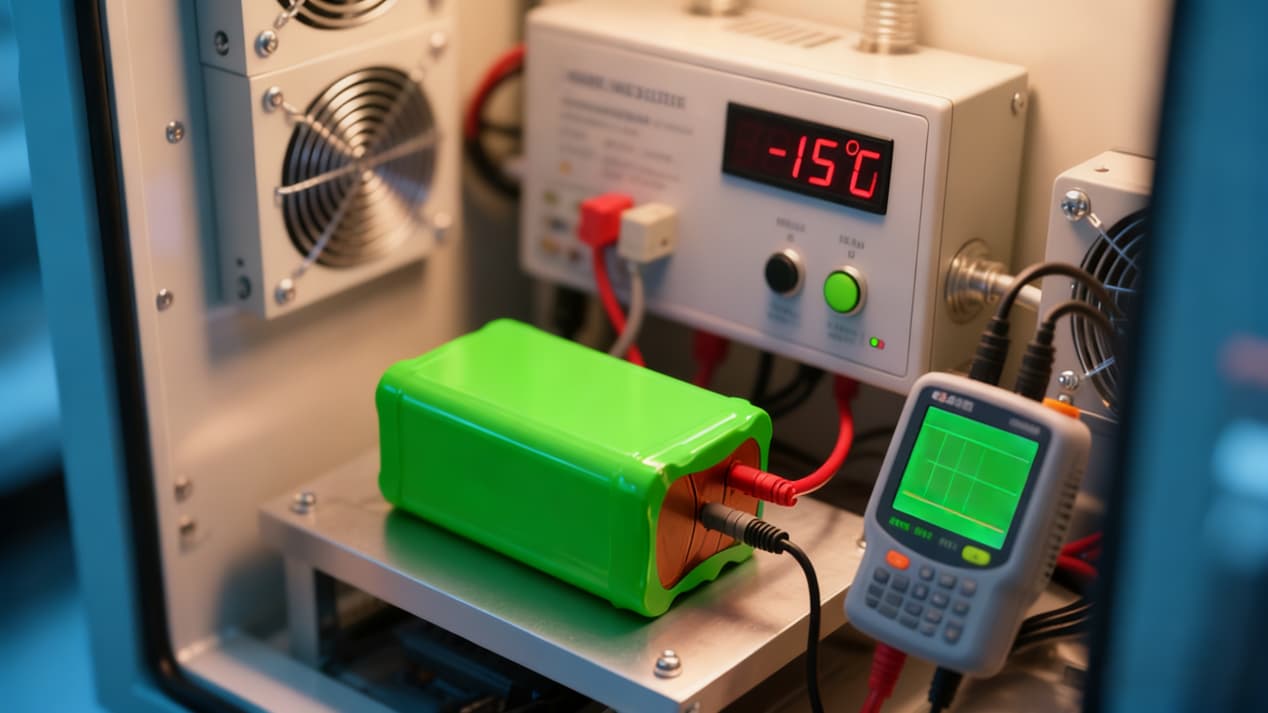
3. Key Factors Influencing Low-Temperature Performance
3.1 The Role of Cathode Material
The cathode material is a primary driver of battery performance in cold weather. LiFePO4 batteries’ olivine crystal structure hinders lithium-ion diffusion at low temperatures, directly impacting their efficiency and capacity retention. In contrast, NMC batteries’ layered cathode structure facilitates unrestricted lithium-ion movement, allowing them to retain more capacity in cold environments.
3.2 Electrolyte Composition and Temperature Sensitivity
Electrolyte composition plays a significant role in how batteries perform in cold weather. For LiFePO4 batteries, electrolyte viscosity increases at low temperatures, restricting ion movement and reducing efficiency. NMC batteries also face electrolyte-related challenges, but many are formulated with advanced additives that lower the freezing point and enhance ion conductivity, improving their low-temperature performance. These formulation differences make electrolyte composition a key consideration when choosing a battery for cold-climate applications.
3.3 The Importance of Battery Management Systems
A robust BMS is essential for optimizing battery performance in sub-zero conditions. For LiFePO4 batteries, a BMS regulates temperature and prevents overcharging, protecting both safety and longevity. NMC batteries rely on BMS to manage thermal conditions and prevent lithium plating, a common cold-weather issue. Modern BMS technology includes features like preheating systems and real-time temperature monitoring, ensuring both battery types operate efficiently and safely in cold environments.
4. Practical Guidelines for Choosing and Optimizing
4.1 When to Choose NMC Batteries for Low Temperatures
NMC batteries are the top choice for applications requiring high energy density and consistent power output in cold environments. Their ability to retain 70-80% of capacity at -20°C makes them perfect for:
- Electric vehicles operating in sub-zero regions, where reliable acceleration and range are critical.
- Portable electronics like laptops and smartphones, which need compact, high-energy storage for extended use in cold weather.
- Renewable energy storage systems wind and solar in colder regions, where efficient energy storage and distribution are essential.
If your application demands high power output and compact energy storage in cold conditions, NMC batteries are a dependable option.
4.2 When to Choose LiFePO4 Batteries in Cold Climates
LiFePO4 batteries excel in scenarios where safety and durability take precedence over maximum energy density. While their cold-weather performance is limited, proper optimization can expand their usability. Ideal applications include:
- Backup power systems in remote areas, where reliability and long lifespan are more important than peak energy output.
- Solar energy storage systems, where their extended cycle life offsets capacity losses mitigated by insulation or warm storage.
- Electric vehicles with moderate power requirements, especially when paired with a battery heating system that keeps the battery above 0°C limiting capacity loss to just 5% at -10°C.
4.3 Optimization Tips for Cold-Temperature Performance
To enhance LiFePO4 battery performance in cold climates:
- Install a battery heating system to maintain optimal operating temperatures.
- Charge at a low current 0.2C charging rate to reduce stress and improve efficiency.
- Use low-temperature-optimized electrolytes to boost ion conductivity.
- Insulate the battery or store it in a warm location to prevent cold-related damage.
- Regularly monitor battery health with a BMS.
For NMC batteries:
- Leverage their inherent high energy density and efficient discharge rates, but pair them with a robust BMS to prevent lithium plating and ensure safety.
- Prioritize BMS with preheating systems and real-time temperature monitoring.
Additional best practices for both battery types include storing batteries in insulated enclosures, preheating them before use, and regularly monitoring temperature and health via a BMS. Combining these measures can significantly extend battery lifespan and efficiency in cold climates.
Frequently Asked Questions (FAQ)
1. How do LiFePO4 batteries compare to NMC batteries in cold climates?
LiFePO4 batteries offer superior safety but poorer energy retention in cold conditions. NMC batteries retain more capacity 70-80% at -20°C and deliver better overall performance in sub-zero temperatures.
2. Can LiFePO4 batteries operate efficiently in freezing temperatures?
LiFePO4 batteries struggle in freezing conditions, with capacity dropping to 50-60% at -20°C. However, preheating systems, insulated storage, and optimized electrolytes can improve their performance.
3. Are LiFePO4 batteries suitable for electric vehicles in cold regions?
LiFePO4 batteries can be used in EVs in cold regions with proper thermal management such as battery heating systems. However, NMC batteries are often preferred for their higher energy density and more reliable cold-weather performance.
In summary, choosing between NMC and LiFePO4 batteries for cold environments depends on your priorities. For high-energy, cold-weather applications, NMC is ideal. For safer, more durable scenarios where energy density is less critical, LiFePO4 works well with proper optimization.