


At 3 a.m. on a highway outside Chicago, Raj, a long-haul freight trucker, slams his fist on the steering wheel. His truck’s engine won’t turn over—another lead-acid battery dead in the cold. “This is the third time this month,” he growls, dialing roadside assistance. By dawn, 200 miles away at a construction site in Pennsylvania, a foreman watches as a 50-ton excavator sits idle: its battery, swollen from heat and vibration, can’t power the starter. “We’re already 2 hours behind schedule,” he mutters.
For commercial vehicles that keep supply chains moving—from long-haul freight trucks crisscrossing highways to heavy-duty construction rigs digging foundations—battery failure isn’t just an inconvenience. It’s a costly breakdown that stalls deliveries, delays projects, and eats into profits. Traditional lead-acid batteries, designed for simpler, slower-paced work, can’t handle the demands of modern heavy-duty use: extreme temperatures, constant vibration, and the need for reliable power when engines are off. But the full range of 24V lithium batteries is changing that. These aren’t just “better batteries”—they’re engineered to solve the unique pain points of freight trucks and construction vehicles, proving that when it comes to power, lead-acid can’t keep up.
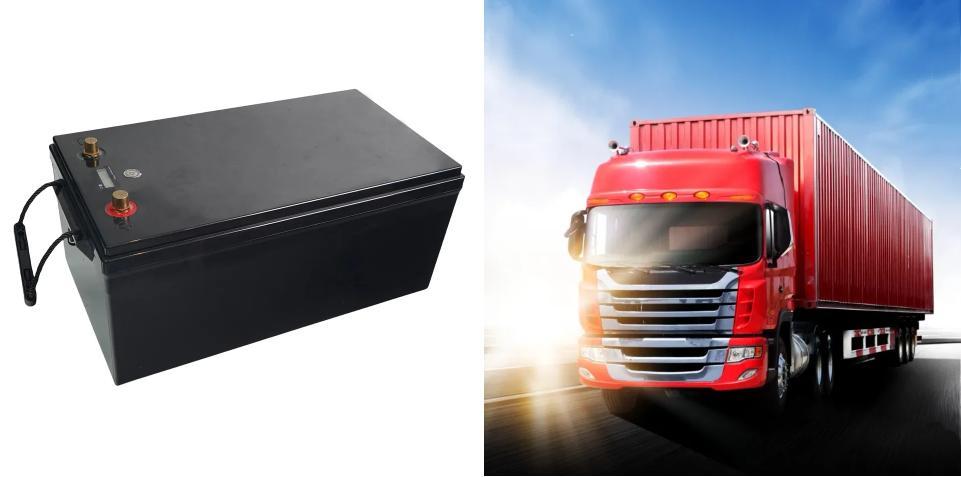
Lead-Acid Batteries VS 24V Lithium Batteries: Core Performance Comparison Table
| Comparison Dimension | Traditional Lead-Acid Batteries | 24V Lithium Batteries | Key Advantages of Lithium Batteries |
| Cycle Life | 300-500 cycles ≈1-2 years | 3,000-6,000 cycles ≈3-5 years | 6-10x longer life, reducing replacement frequency |
| Weight | 50-60kg | 25-30kg 40%-50% lighter | Lowers vehicle weight, boosting cargo capacity |
| Low-Temperature Starting | <50% success rate below -10℃ | >99% success rate at -35℃ | Reliable starts in frigid conditions |
| Peak Starting Current | 800-1200A | 1500-2000A | Powers even fully loaded heavy-duty trucks |
| Parking Power Runtime | 1-2 hours needs engine to recharge | 6-12 hours battery-only power | Saves diesel, cuts engine wear |
| Vibration/Protection Rating | Prone to damage at 3G IP44 | Fault-free at 6G IP65 | Withstands rough terrain, dust, and water |
| 10-Year Total Cost | ≈110/unit ×5 + 200/year = $750/vehicle | ≈275/unit ×2 + 50/year = $600/vehicle | Lower long-term costs despite higher upfront price |
| Additional Features | No smart management | Built-in BMS remote monitoring | Prevents failures with real-time alerts |
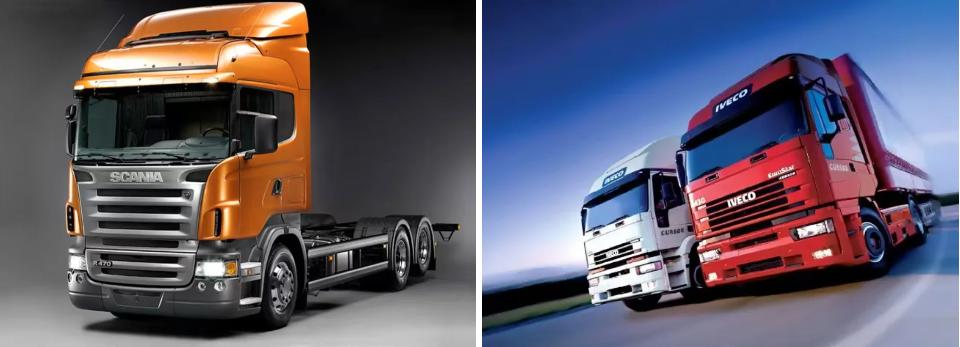
Freight Trucks: 24-Volt Lithium Batteries Keep Deliveries On Track
Long-haul freight trucks live a grueling life: 12-hour days on the road, extreme temperature swings from -20℃ in winter to 40℃ in summer, and constant stops where drivers need power for lights, refrigeration units, or cabin AC—all without idling the engine. Lead-acid batteries crumble under this pressure.
Take Mike, who manages a fleet of 30 freight trucks for a national logistics firm. “Lead-acid batteries were a nightmare,” he says. “In winter, 5-6 trucks a week would fail to start in subzero weather—we’d lose 4-5 hours per breakdown, not to mention the $300 in roadside assistance fees. In summer, the heat would kill their capacity—drivers couldn’t run the AC during rest stops without draining the battery, so they’d idle the engine, wasting 2 gallons of diesel an hour.”
Mike switched his fleet to 24V lithium batteries 18 months ago, and the difference is striking. “Winter starts? Zero issues. Even at -30℃ in North Dakota, every truck fires up on the first try. No more jump starts, no more missed delivery windows.” The savings add up: “We used to spend 15,000 a year on dead batteries and roadside help. Now? Maybe 500 on routine checks. And the diesel savings? Drivers run the AC for 8 hours a day during summer stops—with lithium, that’s 0 gallons wasted. For 30 trucks, that’s 480 gallons saved a day, 1,920 a day, over 700,000 a year.”
The lightweight design of 24V lithium-ion batteries also boosts efficiency. “Our trucks have strict weight limits,” Mike adds. “Shedding 25kg from the battery lets us carry 25kg more cargo per trip. Over a year, that’s 90,000kg extra freight—worth $45,000 in additional revenue. The batteries paid for themselves in 3 months.”

Heavy-Duty Construction Trucks: 24V Lithium Batteries Conquer the Toughest Sites
Heavy-duty construction vehicles—excavators, bulldozers, mining trucks—operate in conditions that would destroy most batteries. They bounce over rutted terrain with vibration six times stronger than highway driving, sit exposed to rain and dust for weeks, and endure temperature swings that make lead-acid batteries swell or crack.
Derek, a fleet supervisor at a Wyoming mining operation, knows this well. “Our 20-ton mining trucks are brutal on batteries,” he says. “Lead-acid ones lasted 6 months max. The vibration would shake their internal plates loose, and the dust? It seeped into every crevice, causing short circuits. We’d replace 3-4 batteries a month, each costing 110, plus 2,000 a day in lost production when a truck was down.”
Then Derek’s team switched to 24-volt lithium batteries. “These things are tanks,” he laughs. “We’ve got one battery that’s been in a mining truck for 3 years—12-hour shifts, 6 days a week, covered in mud and dust. It still starts the truck like it’s new. The IP65 protection means we can hose them off without worrying about damage, and the steel casing handles the vibration—no more loose plates.”
Cold weather performance is another win. “Last January, temps hit -32℃,” Derek recalls. “Our lead-acid trucks needed 2 hours of heating with portable generators to start. The lithium-powered ones? Turn the key, and they roar to life. We used to lose 10-12 hours a week to dead batteries in winter. Now? Zero. That’s $20,000 a week in saved production.”
Full Compatibility: One Series for All Heavy-Duty Vehicles
Fleet managers used to dread battery upgrades for heavy-duty vehicles. “Will it fit the freight truck’s tight battery bay? Can it handle the excavator’s high-amperage starter?” The 24V lithium battery series eliminates those worries with designs tailored to every heavy-duty need.
•Long-haul freight trucks like the Volvo VNL or Freightliner Cascadia: A compact model fits into standard battery compartments, with a slim profile to avoid interference with other engine parts. Its low weight helps meet payload limits.
•Mining and construction trucks like the Caterpillar 777 or Komatsu HD785: A reinforced model with a shock-absorbing casing handles extreme vibration. It includes heavy-duty terminals to connect to high-power starters, no adapters needed.
“We run 15 freight trucks and 10 mining rigs,” says Lina, logistics director at a national resource transport company. “Before, we stocked two types of batteries—one for the trucks, one for the rigs. Now, we use the 24V lithium battery series. It’s cut our parts costs by 40% and made maintenance easier. Our mechanics don’t have to learn two installation processes—just one.”
24V Lithium Batteries Are Non-Negotiable for Heavy-Duty Fleets
Lead-acid batteries might seem cheaper upfront, but their short life, frequent failures, and hidden costs—downtime, diesel waste, replacement fees—make them a bad long-term bet. 24V lithium batteries cost more to buy, but they deliver where it counts: reliability in extreme conditions, lower long-term costs, and the peace of mind that your vehicles will start when you need them.
For freight trucks, that means on-time deliveries and happy customers. For construction vehicles, that means on-schedule projects and reduced losses. For every heavy-duty vehicle, it means power you can trust—no matter what the road or job site throws at you.


