

In the fast-paced world of technology and industry, 18650 batteries stand out as a reliable workhorse for powering everything from everyday gadgets to cutting-edge innovations. These cylindrical lithium-ion cells, named for their dimensions (18mm in diameter and 65mm in length), deliver impressive energy density, longevity, and versatility. As the global market for these batteries surges from $8.5 billion in 2023 toward a projected $14.8 billion by 2032, driven by demand in electric vehicles, renewable energy, and advanced robotics, understanding their core specs is crucial for engineers, designers, and businesses alike. Whether you’re building custom battery packs for medical devices or scaling up energy storage systems, 18650 batteries offer a balance of performance and compactness that’s hard to beat. Let’s dive into their key specifications, explore real-world applications, and look ahead to emerging trends.
Core Specifications of 18650 Batteries
Dimensions: Compact Design for Versatile Integration
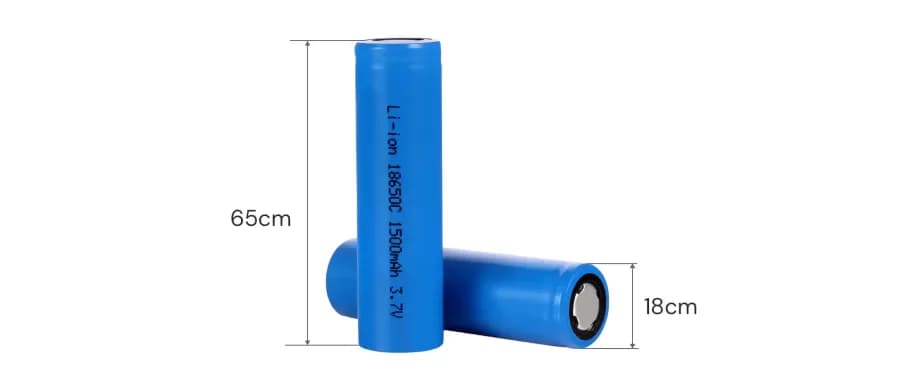
At the heart of the 18650’s appeal is its standardized size, making it a go-to choice for space-constrained applications. With a precise diameter of 18cm and length of 65cm, these batteries pack a punch in a small footprint, occupying roughly 16.5 cubic centimeters of volume. This uniformity ensures seamless compatibility across devices, simplifying manufacturing and assembly processes.
However, real-world variations can arise from protective casings or built-in circuits, sometimes extending dimensions slightly to 18.5mm by 70mm. For instance, models like the LP18650A+ (3.7V, 3500mAh) incorporate these adjustments to enhance safety features. In battery pack design, even minor tweaks matter—engineers must account for them to optimize thermal management and fit, especially in high-density setups like portable tools or drones.
Voltage: Balancing Power and Safety
Voltage Type | Standard Value | Alternative (LiFePO4) |
Nominal | 3.7V | 3.2V |
Maximum Charge | 4.2V | 3.65V |
Voltage is a cornerstone spec that dictates how 18650 batteries perform in demanding scenarios. Most models boast a nominal voltage of 3.7V and a maximum charge voltage of 4.2V, providing stable output for consistent operation. Alternatives like LiFePO4 variants drop to 3.2V nominal and 3.65V max, offering enhanced safety in exchange for slightly lower energy density.
Precise voltage management is non-negotiable—overcharging beyond the max can trigger thermal runaway, while dipping too low risks permanent damage. Advanced battery management systems (BMS) use series-connected monitoring to track cell voltages accurately, preventing issues in packs used for robotics or industrial tools.
Capacity: Energy Storage Capabilities for Extended Runtime
Capacity, measured in milliampere-hours (mAh), represents the amount of electrical charge an 18650 battery can store and deliver, directly impacting device runtime and efficiency. Standard capacities range from 2000mAh to 3600mAh, with entry-level cells around 2000-2500mAh suitable for low-drain applications like flashlights or remote controls, while high-performance variants exceed 3000mAh—often reaching 3500mAh or more in premium models from manufacturers like Samsung or LG. This metric is influenced by internal chemistry: Nickel Manganese Cobalt (NMC) formulations offer higher capacities (up to 3500mAh) due to denser energy packing, compared to safer but lower-capacity Lithium Iron Phosphate (LFP) options around 2500mAh. Manufacturing advancements, such as silicon-anode integration, further boost capacity by enhancing electron storage without enlarging the cell’s compact 18x65mm form.
In practical terms, higher capacity translates to extended usage— a 3500mAh cell might power a laptop for 8-10 hours versus 4-6 hours from a 2000mAh one—making it essential for demanding sectors like electric vehicles (EVs), where packs of thousands of 18650 cells provide ranges over 300 miles. However, trade-offs exist: ultra-high-capacity cells can suffer from reduced cycle life (500-800 charges) or increased heat during fast charging, necessitating advanced battery management systems (BMS) for safety.
Looking at market analysis, the 18650 capacity segment is segmented into below 2000mAh, 2000-3000mAh, and above 3000mAh, with the latter growing fastest due to EV and renewable energy demands. In 2025, the overall market is valued at around $5.26 billion, projected for slight contraction amid competition from larger formats like 21700 or 4680, yet high-capacity variants thrive with a push toward 4000mAh+ through energy density improvements (aiming for 300-350 Wh/kg). Trends indicate a 1.2-12.4% CAGR through 2031-2033, driven by Asia-Pacific manufacturing hubs and sustainability efforts, like recycling to reclaim materials for denser cells. Innovations in solid-state electrolytes promise even higher capacities without compromising safety, positioning 18650s in niche markets like drones and power tools despite broader shifts.
Applications and Future Trends: Powering Tomorrow's Innovations
18650 batteries aren’t just about specs—they’re enabling transformative technologies across industries. In robotics, their high energy density and compact form factor support agile, autonomous systems like warehouse drones and surgical robots, where reliable power in tight spaces is essential. As AI-driven automation explodes, expect 18650 packs to evolve with faster charging and integrated sensors for real-time health monitoring, aligning with the projected 20% annual growth in industrial robotics through 2030.
In power tools and electric mobility, these batteries shine for their durability and high discharge capabilities. From cordless drills to e-bikes, 18650 cells provide the burst power needed for heavy-duty tasks, outperforming bulkier lead-acid alternatives. Looking ahead, as electric vehicles (EVs) shift toward sustainable urban transport, 18650 variants could integrate into modular packs for scooters and light EVs, supporting the global push for net-zero emissions. Innovations like solid-state electrolytes promise to double energy density by 2030, making them even more efficient for high-power applications.
These trends underscore the battery’s adaptability: high cycle life (up to 5000 for LiFePO4 models) and low self-discharge make them ideal for future-proof designs, though challenges like temperature sensitivity require robust BMS integration.
Why 18650 Batteries Matter Now and in the Future
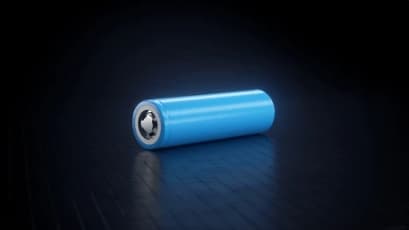
With the market eyeing $20.6 billion by 2032, fueled by EVs and electronics, 18650 batteries remain a smart choice for their blend of performance and reliability. Their specs—compact size, stable voltage, and robust capacity—make them indispensable in robotics, power tools, and energy storage, where future trends like AI integration and sustainability will amplify their role.
- Market Snapshot: Projected growth to $20.6 billion by 2032, driven by EVs and renewables.
- Key Benefits: High density, versatility, and long life for diverse industries.
For custom solutions tailored to your needs, reach out to experts in battery innovation.If you’re ready to take the next step and power your global operations with reliable, high-performance lithium batteries, feel free to contact us. We’re excited to partner with you and drive your success worldwide!
Frequently Asked Questions
Q: Are all 18650 batteries rechargeable?
A: No. Most 18650 batteries you’ll find are rechargeable lithium-ion cells, but there are rare non-rechargeable versions used in specialized industrial equipment. For everyday electronics, you can safely assume 18650 batteries are rechargeable.
Q: How long do 18650 batteries last?
A: Typically, they last 300–500 charge cycles, keeping about 80% of their capacity after that. Like phone batteries, they gradually lose capacity over time. To maximize lifespan, avoid fully charging or fully draining them whenever possible.
Q: Are all 18650 batteries the same?
A: No. While they all measure 18 mm in diameter and 65 mm in length, they differ in chemistry, capacity, discharge rate, whether they have protection circuits, brand, and quality.